You can give yourself popcorn brain just by overconsuming low-effort content. Interesting as it sounds, it won't happen literally.
The Harvard research I recently read links it to reduced attention span, higher anxiety levels, sleep disruption, and lower motivation. I believe it because I experienced it.
I used to doomscroll on most social media apps. YouTube was the worst because long-form videos kept me glued to my phone for hours.
But I redirected that same attention toward intentional use and skill-building. I'm seeing positive results so far. Here's how I saved my brain from turning into popcorn.

I paired NotebookLM with YouTube and learned faster than I ever did with note-taking apps
This unlikely duo upgraded my learning routine
YouTube's rabbit hole is deeper than you think
But it's not impossible to navigate properly
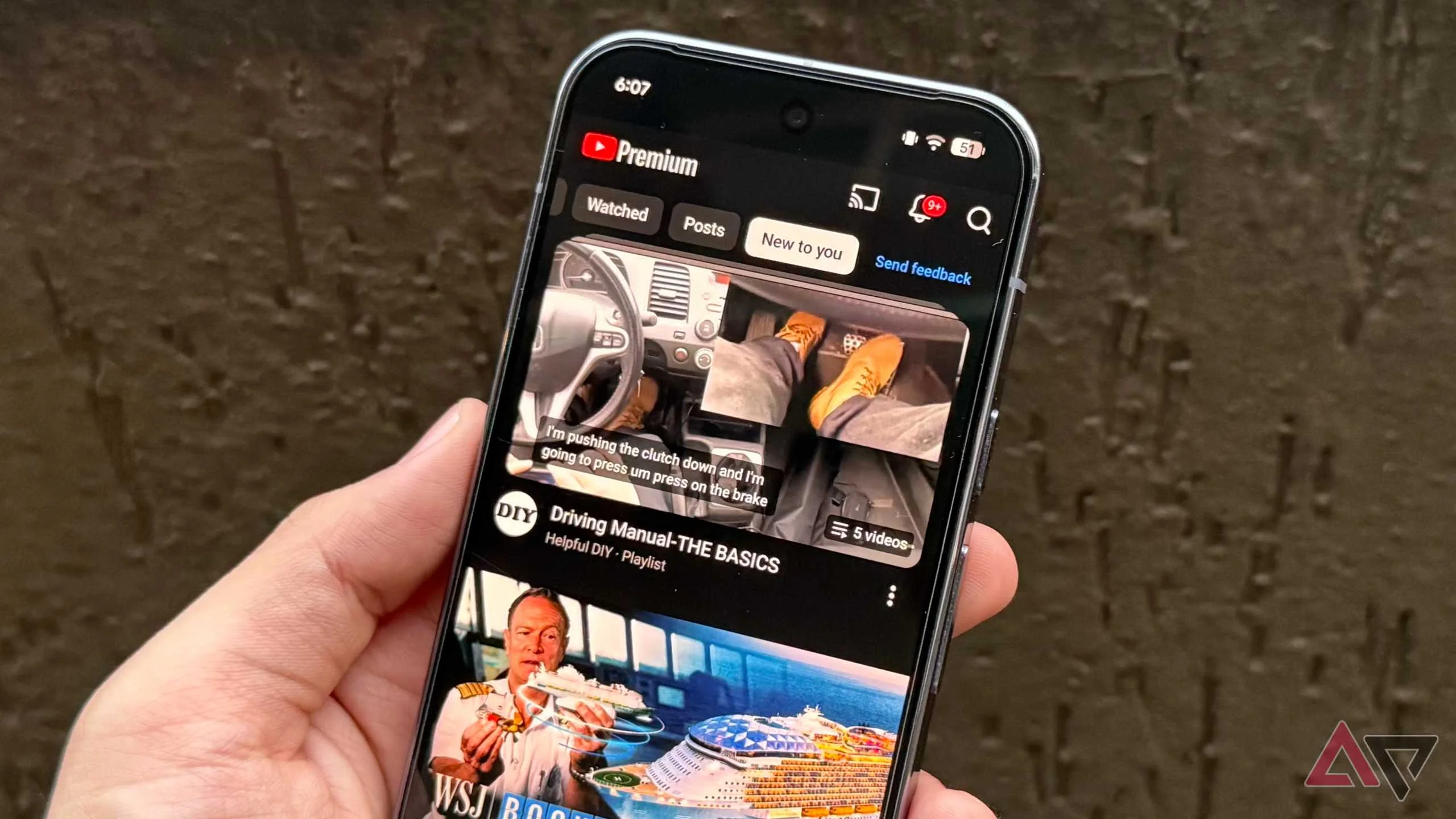
YouTube's recommendation system drives 70% of all watch time through suggested videos alone.
It hardly uses search results even if that's where you start your session. That means the homepage and Up Next feed are where most viewing actually happens, and you shape them directly by your behavior.
You can't fight the YouTube rabbit hole as you might think. Trying to resist it is like Alice trying to climb back up in the middle of her fall. When you're in, you're in and the only way out is through.
After just a few interactions, your feed tightens around content you interact with and recommends what statistically keeps you watching longer.
I used to view endless prank compilations, video game walkthroughs, recipe breakdowns, and conspiracy content. My nephews and nieces also shared my profile to watch Cocomelon and other whimsical clips. My algorithm became confused and recommended everything at once.
I had to clear my watch history, which gradually returned my feed to an improved state. Now, I watch mostly self-development content, plus the occasional search for instrumentals I use for poetry recitals and cover songs.
Recently, I committed to learning a new skill every month. YouTube has been helpful on the journey. Yet again, upskilling isn't something you do passively while the algorithm runs in tandem with your distractions, no matter how small.
I needed to separate entertainment from my learning experience.
It's never too late to start over
It takes only the push of a few buttons
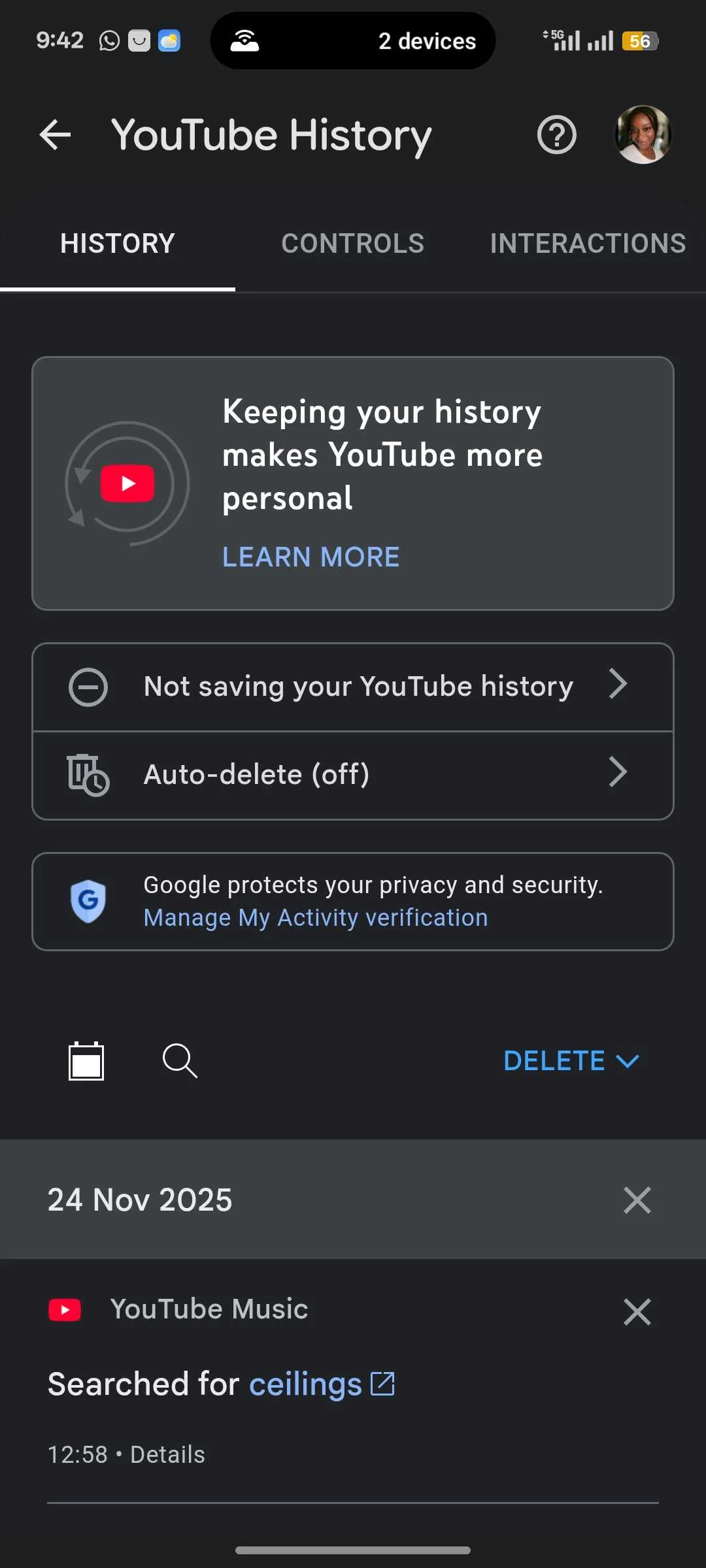
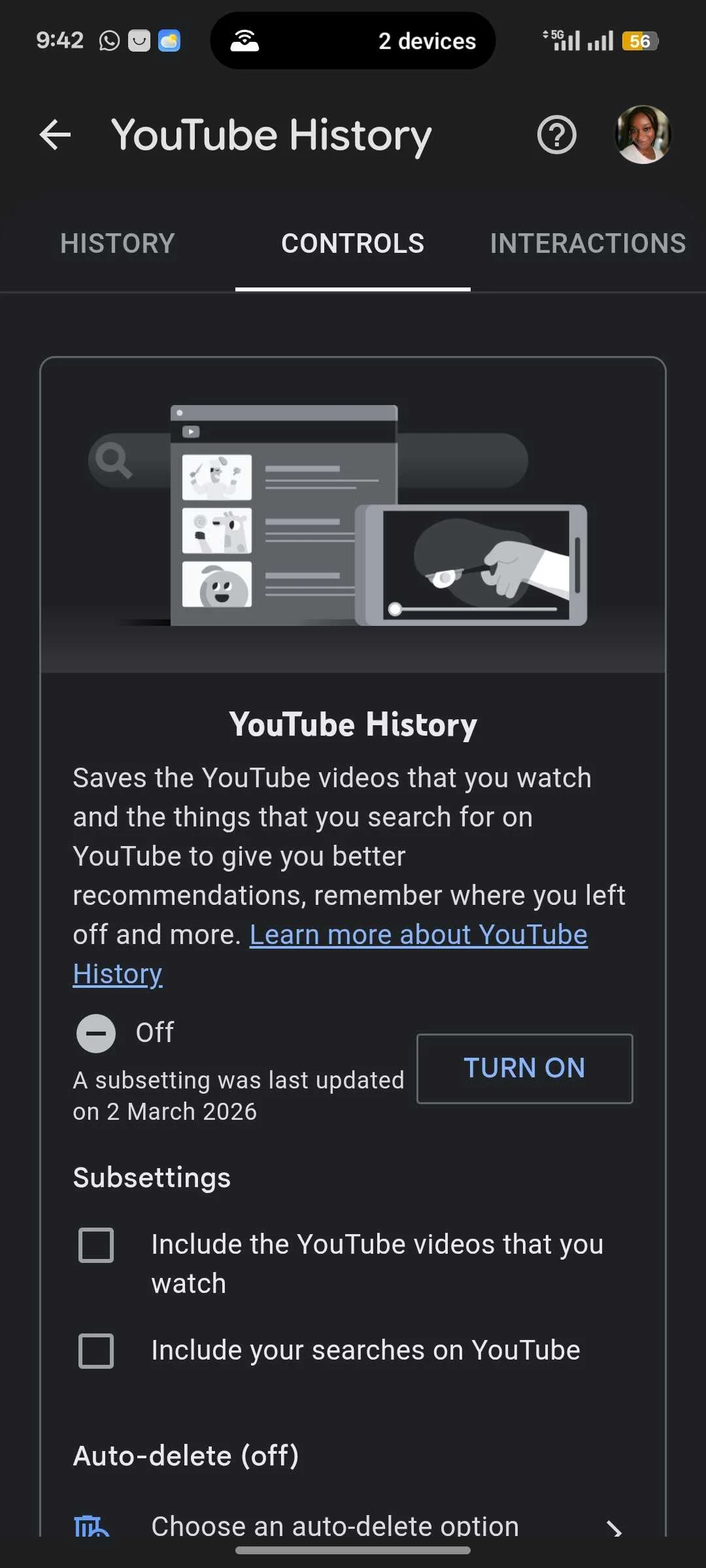
Starting over with YouTube would suggest creating a new account entirely. I went with the alternative route of reopening my old account. Then I wiped its watch history, and unsubscribed from every channel.
Interestingly, I could completely nuke the Home and Shorts menus, so they'll show nothing when I open the app. It required pausing my history, which meant sacrificing the storage of anything I watched.
I also can't rely on the homepage to surface useful content anymore because I cut off its data source. Personally, it was worth it. I relied almost entirely on search because it was more intentional.
Go to the app's settings menu, then select Manage all history. Select Delete to wipe your all-time viewing history or for specific periods. Under the Controls tab, select Turn off YouTube history completely and restart the app.
Intentional viewing produces better results
Tell YouTube what you want to watch, not the other way around
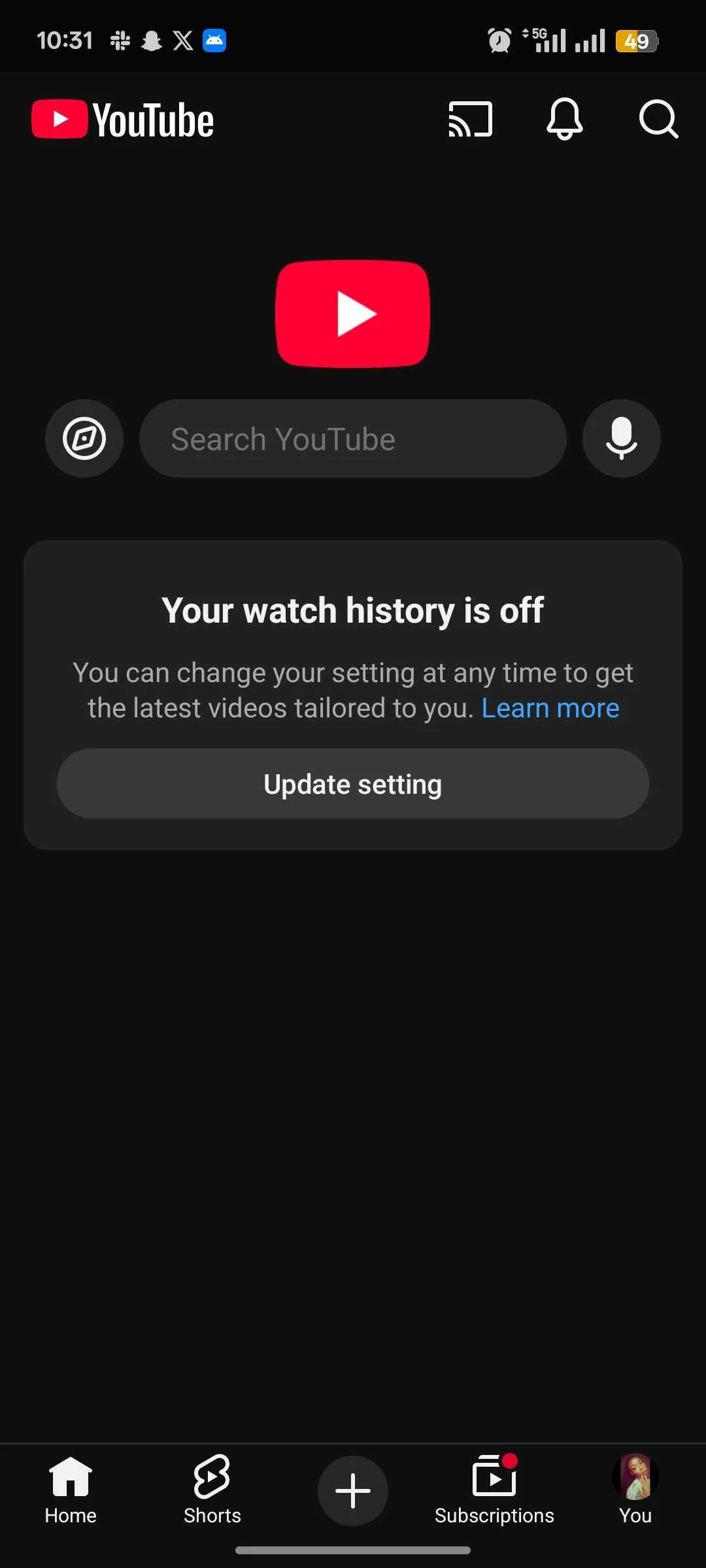
I spent the first 48 hours of my refreshed account controlling the inputs. I watched three to five full-length videos on a topic of interest. Don't skip this step as it signals to the system that this is what you actually value.
After every video, I wrote down notes around three criteria in a dedicated Google Docs file. I'd type the things I understood, something I didn't understand, and one pressing question I had. These factors formed the nodes in my rabbit hole.
If I couldn't clearly state these things, then I wasn't paying attention enough. I'd rewatch the video or find similar ones explaining the concepts.
But the question is the most important part because it replaces autoplay. I use it to search for a specific follow-up video that would keep me from distracting recommendations.
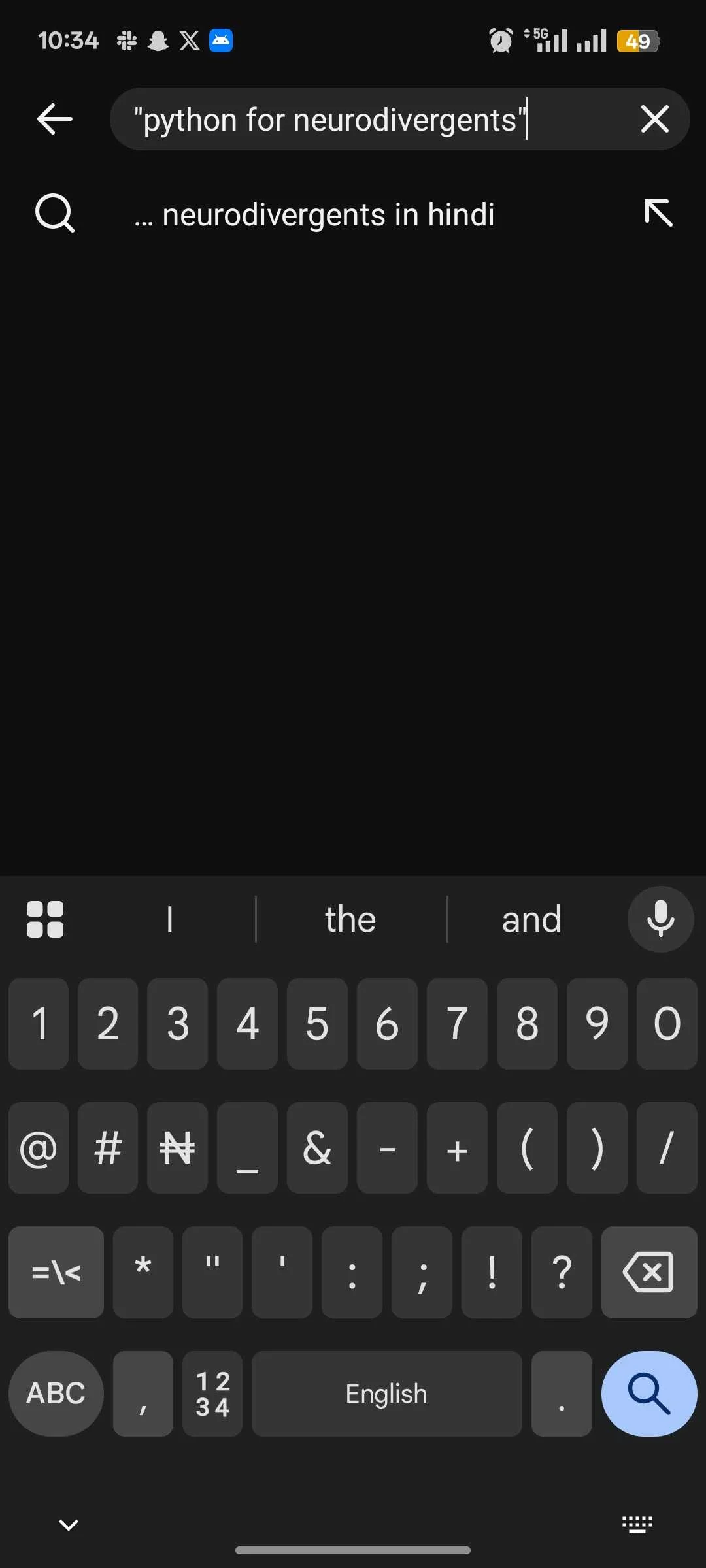
For example, I watched a video explaining asynchronous programming in Python. I understood the basic idea of async and await. But I didn't understand how the event loop actually works. So, I searched for "How does Python's asyncio event loop work internally?"
Put quotation marks around search phrases to get exact video matches. If unwanted results keep appearing, add the minus (-) sign behind them to filter them out.
Curating playlists for each topic also strengthened suggestions. If I'm learning advanced Python, there should be separate playlists for basic or intermediate level content. They also shouldn't contain unrelated content like news.
Otherwise, the algorithm assumes your interests are broad and keeps feeding you random content. It also helps to immediately remove an unwanted video from the watch history.
Although YouTube doesn't say you have to delete anything that fast, you'll want to correct any mistakes as it happens to avoid unraveling your new strategic collection.
After all, the algorithm learns from your behavior and doesn't know your intentions.
Know when to stop content consumption
You don't want to fry your brain cells
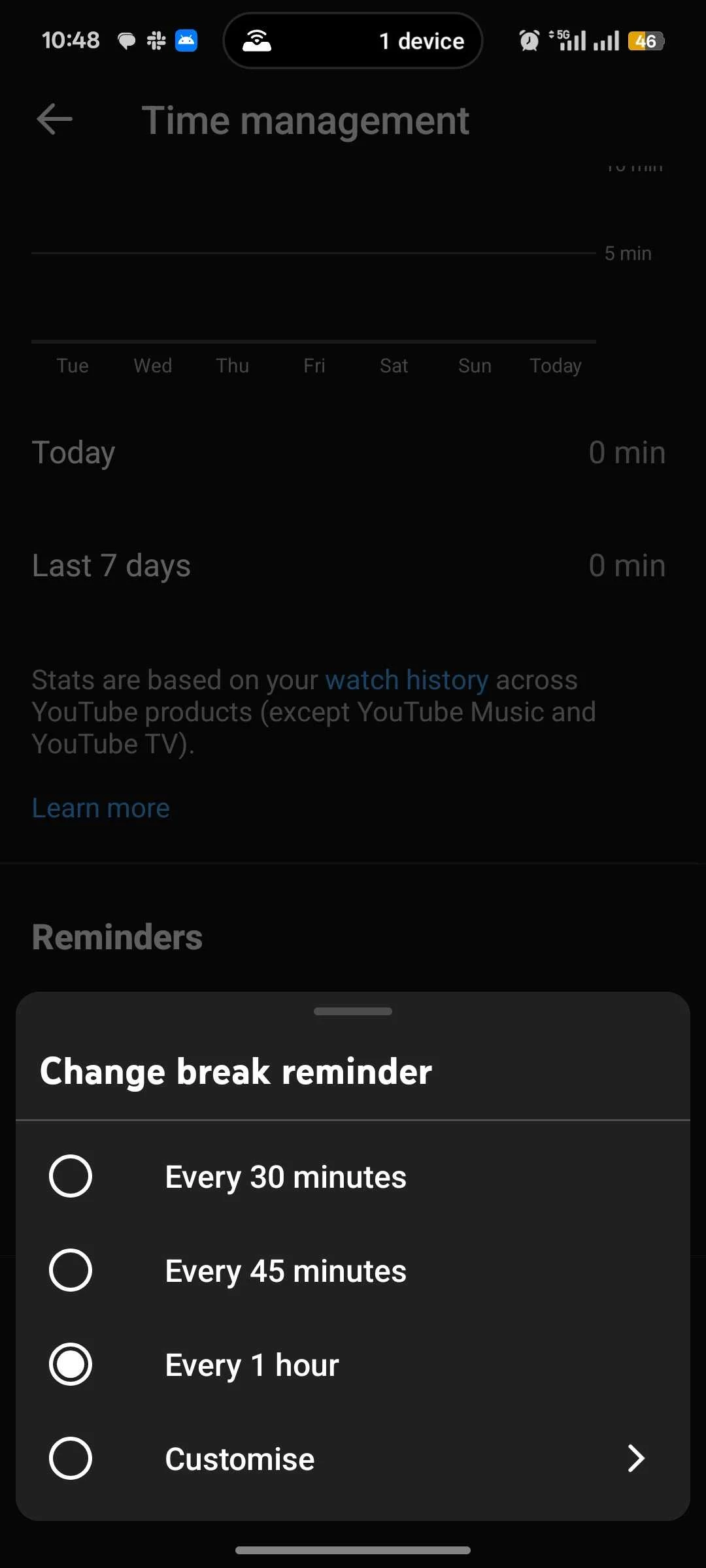
Learning can be interesting. But you can watch 10 videos and still not truly understand a topic. You should know when to step back and give your brain space to rest to avoid overloading your brain.
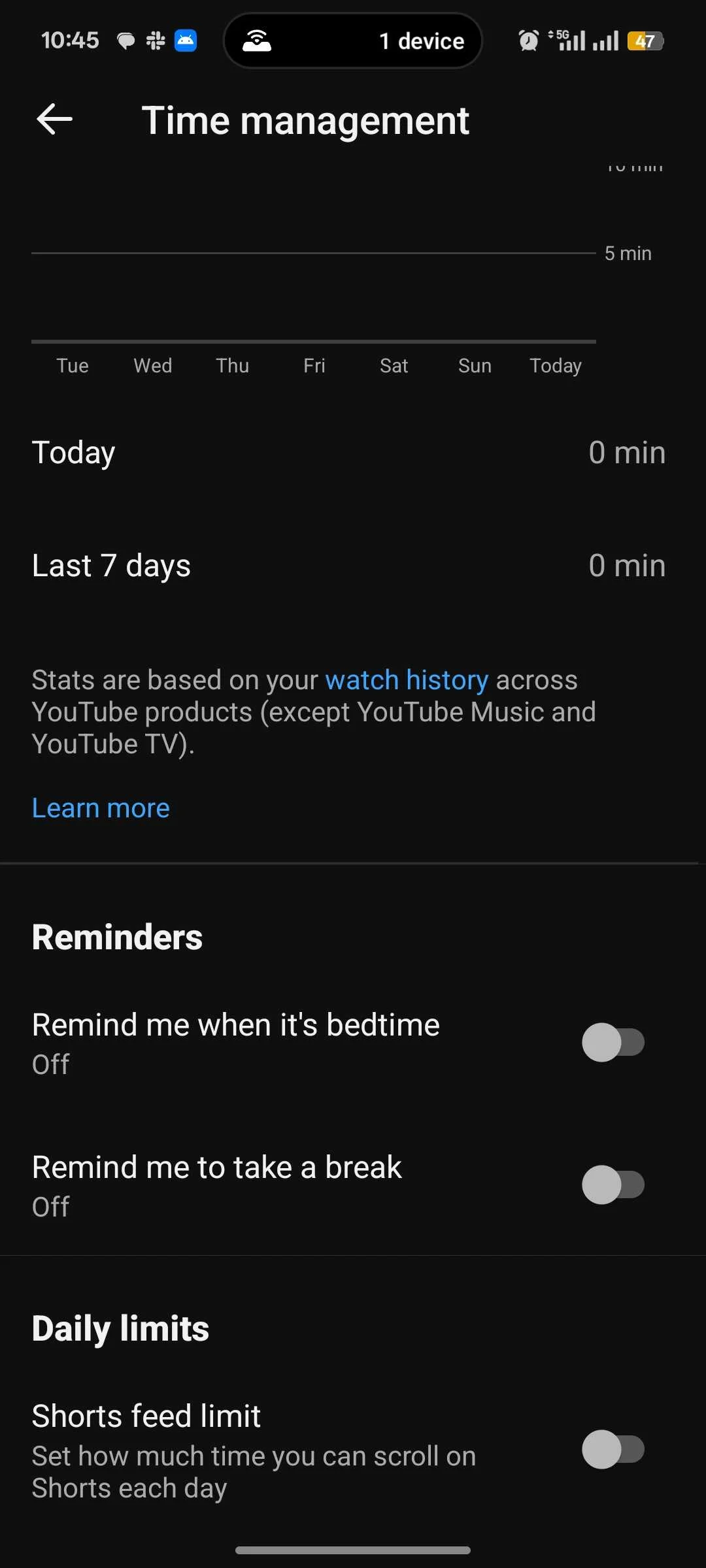
If you struggle to quit doomscrolling, YouTube has tools that help. The Time management menu in settings shows a breakdown of daily and weekly activity. If you choose to disable your watch history like me, you won't see it because there's no data to aggregate.
Leave the watch history on to set bedtime and break reminders. This way, you won't lose track of time inside long-form content, especially when videos autoplay into each other.
You can also cap how much time you spend on Shorts between 15 minutes and 2 hours per day.

The little-known YouTube Music setting that fixed my playlists for good
After I turned off autoplay, I stopped worrying about my vibe being disrupted
Make YouTube earn its place in your life
Just as much as your behavior fuels your video suggestions, you can also become what you watch.
If I hadn't quit low-quality content earlier, I would've unconsciously trained my brain to be shallow.
I now audit my feed like it's someone else's. If a stranger sees my homepage, I want them to know what I value and take me seriously.
You, too, can fix your YouTube feed with the provided steps and enjoy smarter content.
