
I stream music all day long. As a compulsive music listener, I usually have fresh tracks, old playlists, and new albums running in the background while I work, cook, write or hit the gym.
If it's not vinyl, I usually use Spotify.
Now, for years, Spotify's default quality has felt perfectly serviceable. I knew I was not getting the best possible sound, but I didn't think I was missing anything.
So, when Spotify introduced its HiFi Lossless tier, I turned it on mostly out of curiosity to see what the big deal was.
I expected some minor bass extension and perhaps less hot treble. Instead, I found myself keeping it enabled because it fixes small but real frustrations with the listening experience that I didn't know I had.
But first, what's the big deal? The problem is pretty simple. Compressed audio makes tradeoffs to hit size constraints. It reduces file sizes so that music streams smoothly, but that process removes some detail from the original recording.
I never noticed it because audio compression is largely pretty good today. But after I switched to lossless streaming and listened through my high-end headphones and speakers, I started hearing details that had been dulled down.
And no, it's not placebo. The difference is very much noticeable with premium headphones.
That change in being able to hear details I didn't know existed is what changed how I listen to music.

This little-known Spotify feature is the reason I will never switch to YouTube Music
This one hidden feature keeps me loyal to Spotify
What Spotify HiFi actually changes in your listening experience
A noticeable difference in vocals and instrument separation
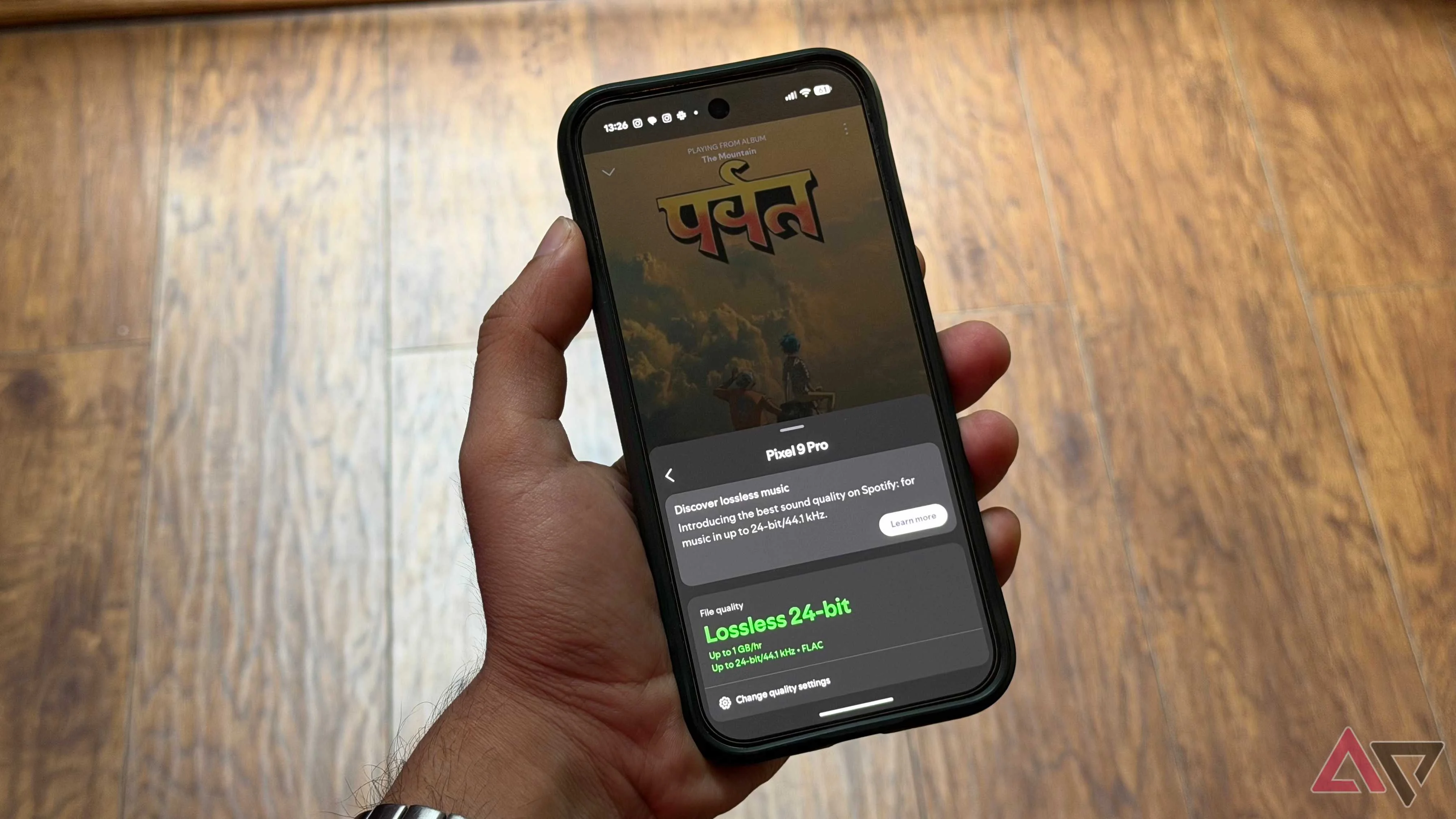
Spotify's HiFi mode streams music in a lossless format which means it delivers the full recording, as it was mastered without trimming away data to save on bandwidth. In practical terms, this means CD quality audio instead of compressed streams.
In the streaming era, we took a step back from high-quality music to manage bandwidth and data caps better. But as technology has caught on, that's not really a limitation anymore.
If all that sounds technical, the effect is actually straightforward. There's more texture, more separation, and just a bit more headroom between elements in the same song.
One of the first places I noticed it was in the vocals. On compressed streams, some voices feel slightly flattened, especially when layered with effects and heavy instrumentation.
With lossless enabled, vocals sit more clearly in the mix. That's where you notice the biggest difference. On compressed streams, vocals can often get lost and come across as more suppressed in the mix.
Now, I can hear layers like the artist breathing between phrases, or a slight rasp or warble in the delivery. These details were always present, but compression often dampens the effect. Uncompressed audio makes them sound more present.
Instruments benefit too. The acoustic guitar has more body and resonance. Cymbals sound full and piano notes carry more weight and a more organic feeling.
Complex tracks, like the aforementioned acoustic music, are where you really start feeling the music feel less crowded. Instead of every audio track fighting for breathing room within the same compressed dynamic range, there's more breathing room, so to speak.
The difference isn't night and day, and these differences matter most when I'm actually paying attention and doing so-called critical listening.
If I am sitting down with a pair of wired headphones connected directly to my laptop or through an external DAC, or even through my high-end speakers using my Wiim Ultra streamer and Spotify Connect, the differences are pretty audible.
When switching over to Bluetooth earbuds, I can't really say that I hear much of a difference. Bluetooth itself compresses the signal enough to make the gains inaudible.
What's ironic is that after years of listening to compressed streams, it hasn't taken all that long for my ears to adjust.
Just a few days of exclusively listening to lossless streams, I can immediately make out the difference when I go back to standard streaming.
It's not as if the music is unlistenable, but I can feel the difference in quality.
Lossless streaming makes you more intentional about how you listen
Match your audio quality to the gear you use

Having access to lossless streaming has also changed my listening habits. More importantly, it also means being a bit more selective about curating your experience.
For example, when I am commuting, I often connect my phone to that car using a wired connection instead of Bluetooth. My car's audio system is good enough to make the difference apparent.
However, when I'm at the gym, I'll make the switch back to regular quality. The added benefit isn't worth it when I'm sweating away on the treadmill or the weight rack with a pair of Bluetooth fitness earbuds.
Elsewhere, in my study and my living room, I use bookshelf speakers with high-end audio streamers paired to them.
Using Spotify Lossless has really elevated the music experience and I actively seek out albums that have been mastered well enough to give them justice.
It's turned music from an important, but mostly passive hobby to an active experience that I curate.
It's about removing friction between you and the music
Spotify's lossless mode isn't going to immediately make you an audiophile or audio snob. I'm not one either. Compressed audio has its uses.
But when I'm sitting at my desk or in my lounge chair listening to music over high-quality speakers, I want the best possible experience.
If I have the option to get an uncompressed stream that delivers the best possible audio to my speakers, why wouldn't I? It removes a layer of compression between me and the music, and I'm all for it.