- US
- US Money
Last year, donations on GivingTuesday reached an impressive $3.6 billion
Independent StaffTuesday 02 December 2025 14:40 GMT
 ClosePolish club in London sort through masses of donations for Ukraine after people queued for hours to donate
The latest headlines from our reporters across the US sent straight to your inbox each weekday
Your briefing on the latest headlines from across the US
Your briefing on the latest headlines from across the US
Email*SIGN UPI would like to be emailed about offers, events and updates from The Independent. Read our Privacy notice
This year’s GivingTuesday, the annual charitable event following Thanksgiving, arrives with heightened stakes for US nonprofits navigating a complex economic landscape and shifting donor behaviors.
What began as a simple hashtag in 2012 has evolved into one of the year’s most significant fundraising days, yet charities face considerable uncertainty regarding public generosity.
The #GivingTuesday hashtag originated as a project of the 92nd Street Y in New York in 2012, and the organization became independent in 2020. It has since expanded into a global network of local entities that champion giving within their communities, often aligning with locally relevant dates and holidays.
The GivingTuesday nonprofit now also convenes researchers focused on everyday giving and compiles data from diverse sources, including payment processors, crowdfunding platforms, employee giving software, and institutions offering donor-advised funds.
Soaring prices could influence the giving patterns of small-dollar donors, potentially reducing the amounts they contribute or the number of organizations they support. However, President Donald Trump’s tax and spending legislation, enacted in July, introduced a new charitable deduction of up to $1,000 for individuals and $2,000 for married couples for most tax filers.
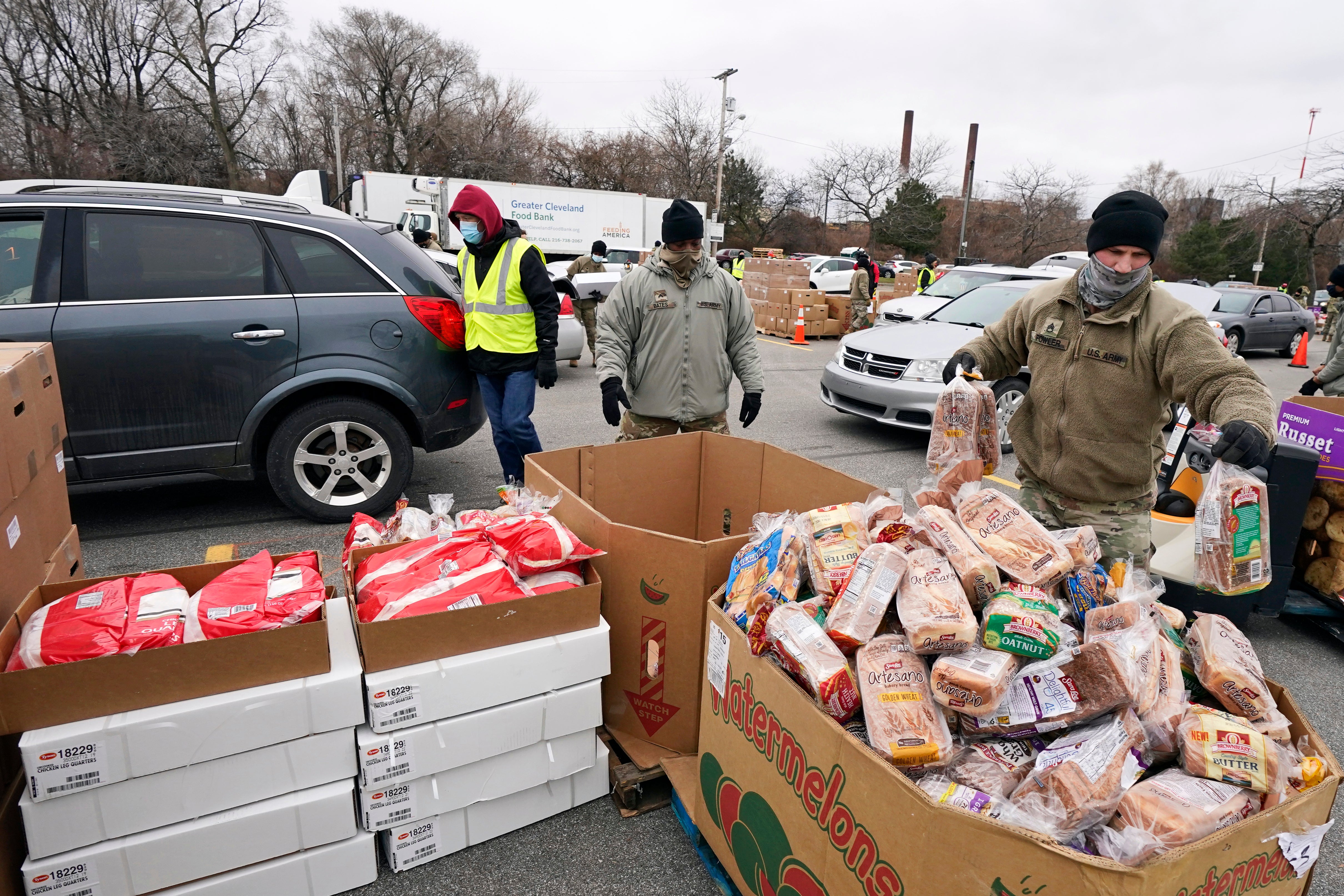 The #GivingTuesday hashtag originated as a project of the 92nd Street Y in New York in 2012 (Copyright 2021 The Associated Press. All rights reserved.)
This provision could incentivise more households to participate. For more substantial donors, a robust stock market typically signals greater generosity. These major benefactors now constitute an increasingly vital share of overall charitable donations and are statistically more inclined to give than less economically secure households, according to a study by the Indiana University Lilly Family School of Philanthropy in partnership with Bank of America.
Concurrently, nonprofits are highlighting a range of new challenges to potential supporters. Many human service organizations report surging demand for their services while simultaneously grappling with cuts to government grants, notably last month's freeze of Supplemental Nutrition Assistance Program (SNAP) benefits. In response, numerous charities are promoting programmes that match or even multiply donations – in some cases, by a factor of five – to demonstrate an amplified impact for every dollar given.
Fundamentally, the hashtag was conceived to foster generosity, and the nonprofit continues to advocate for giving in its broadest sense. For charities, GivingTuesday serves as a crucial opportunity to raise funds and engage their supporter base. Many will be familiar with the deluge of email and postal appeals that coincide with the Tuesday after Thanksgiving.
Virtually all major American nonprofits organize fundraising campaigns, with numerous smaller, local groups also participating. Organizations are not required to be affiliated with GivingTuesday, the central body, to run a campaign; they can participate, though GivingTuesday does offer graphics and advice. This approach ensures it remains a grassroots effort, with groups and donors engaging as they see fit.
When it comes to donating on GivingTuesday, there is essentially no incorrect method for choosing which nonprofit or cause to support, volunteer with, or champion. Asha Curran, CEO of the GivingTuesday nonprofit, suggests observing what friends, relatives, or connections have supported and considering matching their gift. "It’s like a double act of generosity," Curran explained. "You’re giving to the cause and you’re also saying, ‘I really care about what you care about.’" Donors might consider contributing to community-based organizations, where the impact will be felt locally, or selecting a nonprofit aligned with a personal cause.
Various organizations also rate charities or provide analysis on effectiveness, though opinions on what constitutes 'effective' can vary widely. Many nonprofits particularly value donors who commit to smaller, regular monthly gifts over a single lump sum at year-end, as these predictable contributions aid future planning. Direct giving to individuals via crowdfunding sites or mutual aid networks – often small, informal groups addressing local needs – is another option.
The success of GivingTuesday can be measured in various ways, but it has undeniably expanded far beyond its initial social media origins. The day has solidified into an enduring and widely recognised event, aiming to place charitable giving, volunteering, and civic participation at its core, both in the US and globally. For years, GivingTuesday has been a primary focus for nonprofit fundraising, with many orchestrating matching donations from major benefactors and leveraging their networks of supporters. It marks the commencement of the crucial end-of-year fundraising period, as nonprofits strive to meet their budgetary targets for the subsequent year.
In 2024, donations on GivingTuesday reached an impressive $3.6 billion, representing an increase from the prior two years.