 Travis Langness/SlashGear
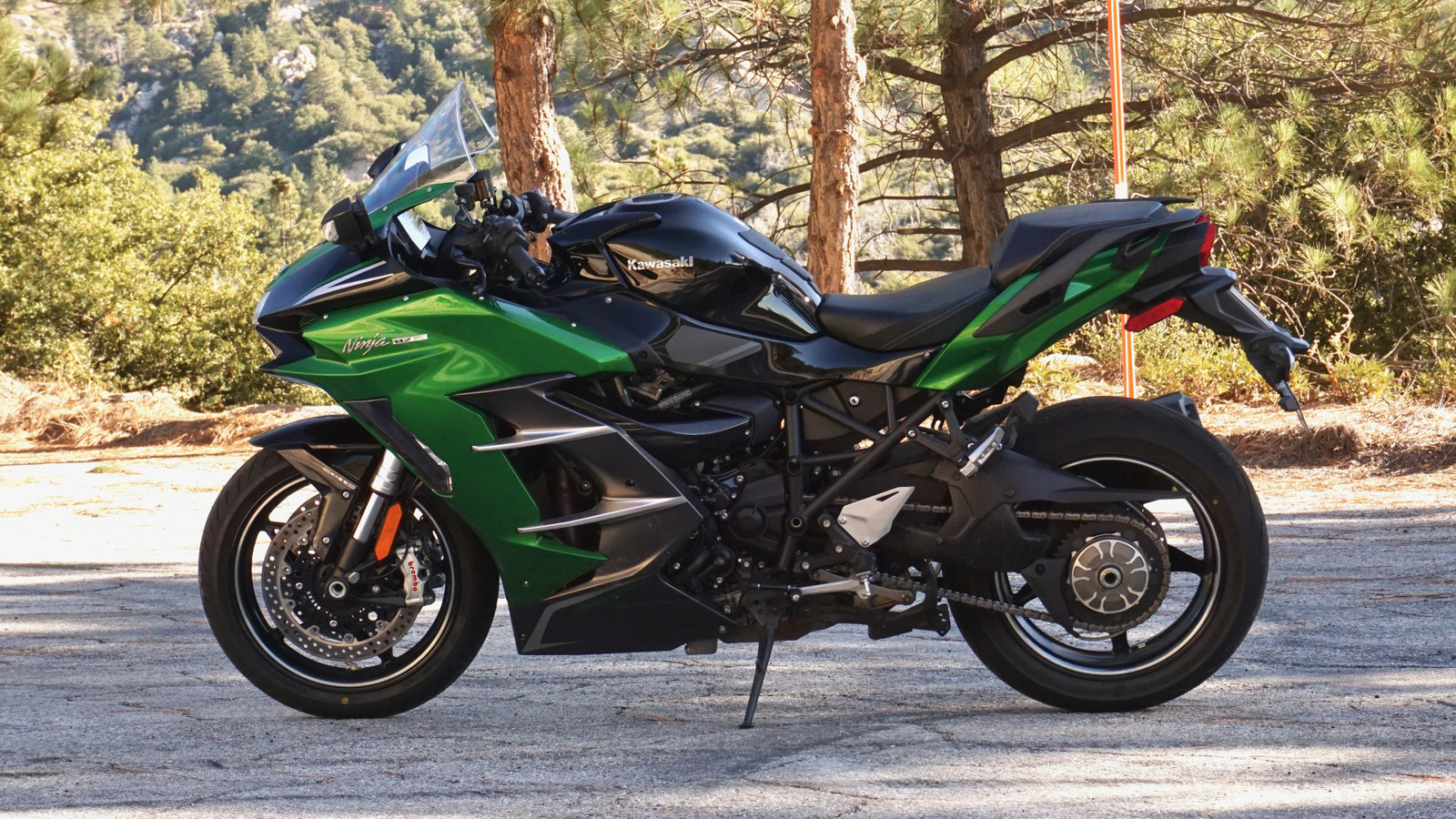
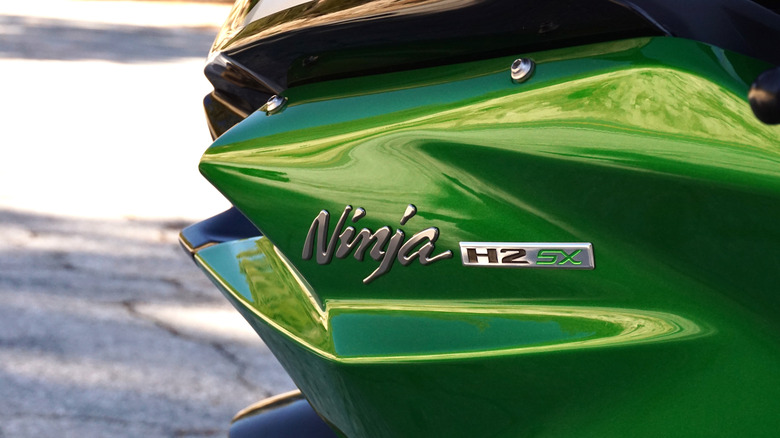
When you add up all of its parts, the Kawasaki Ninja H2 SX SE looks a lot like an attempt to make the perfect all-around bike. In Kawasaki's world, Ninjas are their sport bikes, H2's are their supercharged (also known as Hypersport) bikes, and SX is the label given to their sport touring bikes. Finally, SE stands for Special Edition, which is the only trim level you get on this particular version of the H2.
The Ninja H2 SX SE (which we can simply call the H2 SX from now on) has big power, but it's also extremely comfortable. It's well-equipped and it has some of the latest tech you'll find with any two-wheeled machine, but it's also agile and sporty enough for any weekend ride in the mountains. It's one of the most expensive bikes that Kawasaki makes, but it's also the least-expensive and most accessible way to get your hands on Kawasaki's rare supercharged four-cylinder engine.
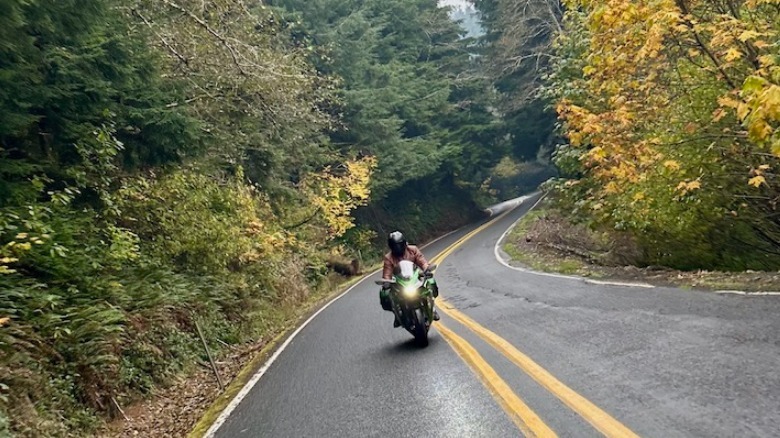
Kawasaki loaned me an H2 SX for a testing period of over two months. I got groceries in it, took it to local bike nights, rode through the canyons, and I even loaded it up in the back of my cargo van for a riding trip in Portland, Oregon. And at the end of those eight weeks of glorious riding, I was convinced: the H2 SX is much more than just the sum of its parts, it's one of the best sport touring motorcycles money can buy.
Unique power delivered in a unique way
 Travis Langness/SlashGear
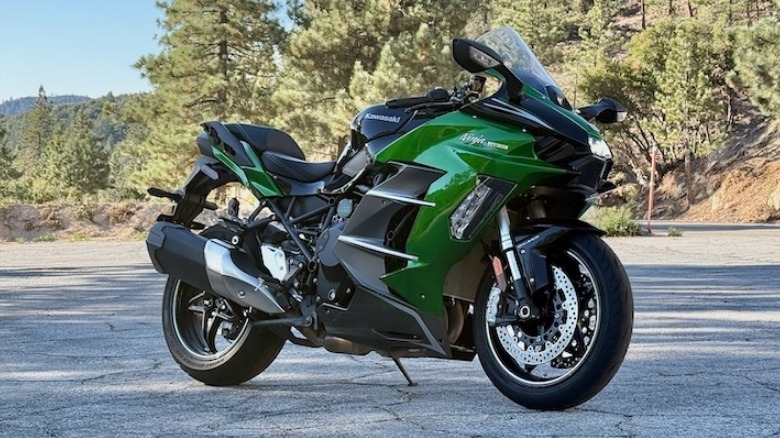
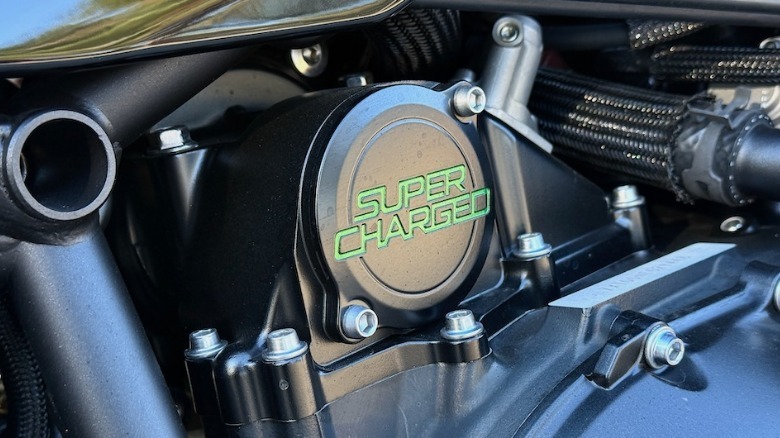
The 998cc four-cylinder engine powering the H2 SX gets the same kind of boost that other Kawasaki H2 models get: a centrifugal supercharger. It's the H2 calling card, and right out of the gate it sets this bike apart from just about everything else out there. The combination of liter-bike displacement and forced induction is good for as much as 322 horsepower in Ninja's flagship H2R bike, but in the street and road-trip friendly H2 SX, power levels are much lower. The H2 SX puts out 207 hp and 101 lb-ft of torque, which might seem mediocre by H2R standards, but that's still more than enough to put it amongst some of the most powerful supersport motorcycles on sale today.
 Travis Langness/SlashGear
There's a relatively limited history of forced-induction motorcycles, and while we wait on Honda's V3R 900 to arrive, the Kawasaki Ninja H2 lineup is the only place you'll find a forced induction motorcycle engine from any major manufacturer today. So, it's probably likely that even the most seasoned motorcycle veterans have never ridden a bike with a supercharger. Unlike the brutal, ultra-high-revving, screaming nature of most 1,000cc sportbikes, the H2 SX's acceleration doesn't feel particularly violent or aggressive. It's purposeful and undramatic in its execution, but it's still frighteningly fast.
The supercharger changes everything
 Travis Langness/SlashGear
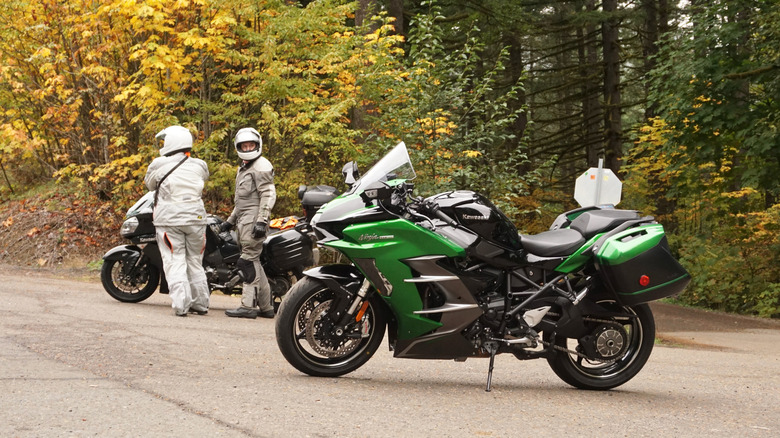
In just about any gear, at just about any speed, there's a massive amount of torque available with the twist of your right wrist. Cruising in sixth gear, I was able to roll onto the throttle without ever downshifting and pass just about any moving object. Engage a quick blip of the shifter down to fifth gear and suddenly I'm a rocketship. Dare myself to pop the quick-shifter down another gear or two on the highway and the front end gets light in a hurry, begging me to go wide-open-throttle until my nerves shut down any further pursuit of speed. If you can find an open stretch of road that's long enough, and you're bold enough to tuck beneath the windshield for the ride of your life, it's like nothing else on two wheels.
 Travis Langness/SlashGear
It's not just high-end power either. Stopped at a set of lights in first gear? The H2 SX will jump forward like a cheetah leaping towards unwitting prey. Launch control does an admirable job of keeping the power in check and preventing wheel spin, but things can get out of hand in a hurry if you aren't careful. In first, second, or third gear, the H2 SX has no problem lifting the front wheel off the ground without any clutch-dump violence required. Accelerate up to about 6,000 rpm then let off the throttle and you get hilariously-addictive whistling noises. The tame exhaust notes play a distant second fiddle.
Handles smaller than it is
 Ash Good
At 590 lbs, the H2 SX is certainly not a lightweight sportbike. Compare it to something like Kawasaki's own 463-pound ZX-10R and the H2 SX seems seriously heavy. But the H2 SX is actually lighter than the Kawasaki ZX-14R which checks in at 593 lbs. What's more, the H2 SX is pretty light on its feet considering its power and heft.
Through corners, the higher handlebars of the SX trim make it a bit easier to maneuver, with quick tip-in. The handlebars are high enough that slow speed turns are easy to execute. Even with a pretty wide berth, the H2 SX can get through tight lane-splitting spots or navigate crowded parking lots. If you plan on doing that kind of commuting, though, it's worth removing the side cases to accommodate any narrow squeezes.
 Travis Langness/SlashGear
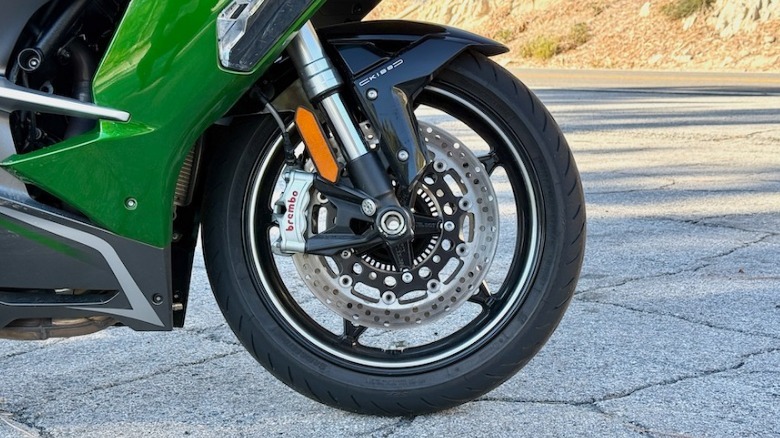
Stable cornering is where the SX shines brightest. At properly extracurricular speeds, the 190-series rear Bridgestone Battlax Hypersport S22 tire felt confident all the way to the edges. If I owned the H2 SX, I wouldn't spend my weekends rotating around the tank and trying to touch my knee down on the inside of a corner, but it's fast enough and agile enough to keep up with much lighter sportbikes. And when you need to stop in a hurry, impressive clamping power is provided by the four-piston Brembo front calipers (and two-piston rears).
Elite levels of comfort
 Travis Langness/SlashGear
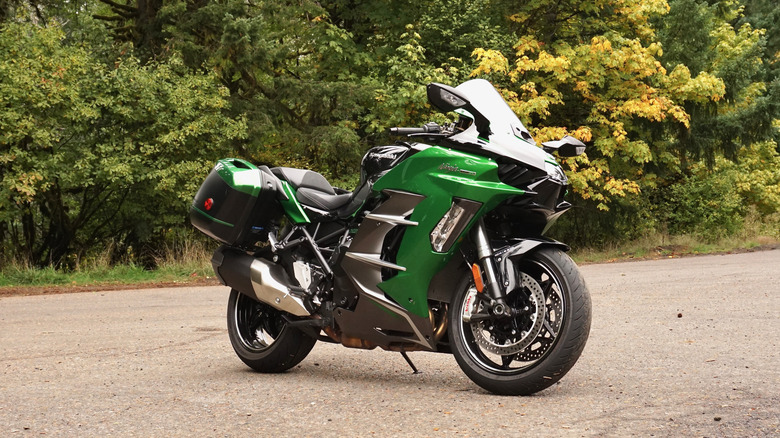
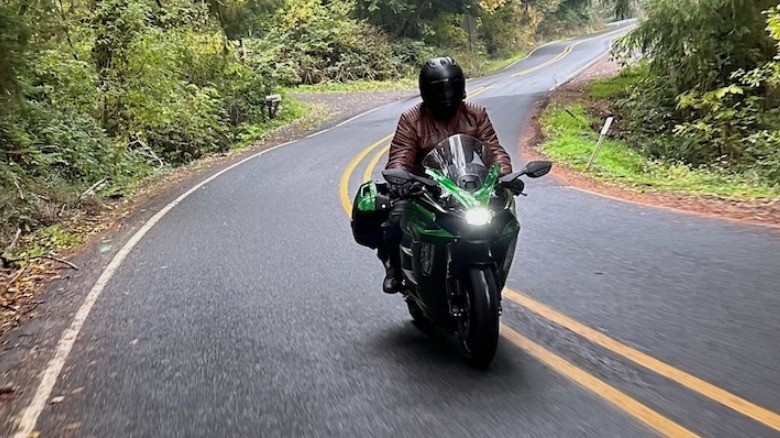
Another one of the H2 SX's many tricks is its long-distance comfort. The big Kawasaki expertly combines agility with a smooth ride. The H2 SX's adaptive suspension is controlled via KECS, also known as Kawasaki Electronic Control Suspension, and can be set to three different levels: Hard, Normal, and Soft. Those suspension settings correlate with the riding modes of Sport, Road, and Rain, but they can also be set individually with the H2's customizable Rider mode. During most of my time with the big Kawi, I left the H2 in either Sport or Road mode and both of those settings were forgiving.
 Ash Good
Sport mode is the stiffest suspension setting, but even that wasn't punishing over rough stretches of road. And over several hundred miles of marginally maintained highways, there was no need to dial things back. The H2 SX's seat is well padded too, leading to zero discomfort even on extra-long and otherwise brutal riding days. The heated grips worked surprisingly well during my test, providing my hands with plenty of warmth through summer gloves on brisk days. As has been the case with most heated grips I've tested, though, the warmth couldn't make it through thicker gauntlet gloves or my big winter gloves. That small gripe, however, was no surprise. Essentially, heated grips on most bikes (H2 included) act as an excellent convenience feature for those days where the weather has you making borderline gear choices.
Riding position and wind protection
 Travis Langness/SlashGear
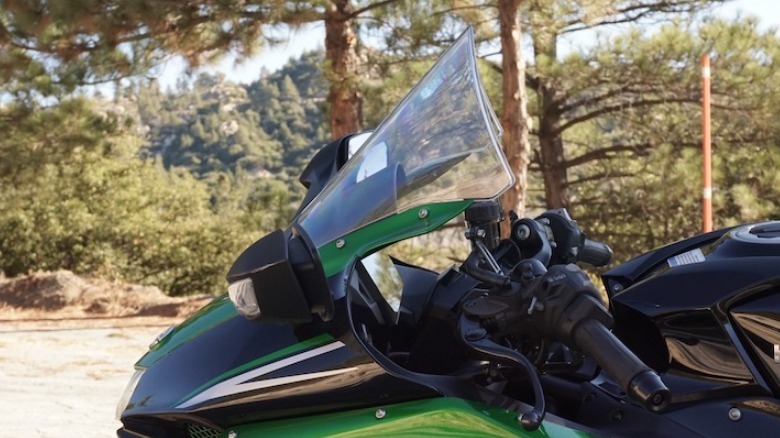
Kawasaki calls the H2 SX's riding position "semi-upright" and that's a pretty accurate representation of how I sat once I was in the saddle. The handlebars are high enough that I was able to sit upright on long stretches while easily reaching the controls. The handlebars are also low enough that I could lean forward, tuck my head beneath the windscreen, and crank open the throttle. This riding position provides an excellent balance for riders who want something sporty when the mood hits and something comfortable for all the commuting miles in between.
 Travis Langness/SlashGear
Normally, after a long day of riding any number of leaned-forward sportbikes, my wrists are a bit tired from the amount of weight they're supporting, but that wasn't the case with the H2 SX. The big, nicely bubbled windscreen helped reduce riding fatigue as well. There was adequate wind protection from when I was slightly hunched over, but if I sat up straight and tall, I could get a bit of air flowing through my helmet to cool me down – another point in the "balanced" column.
A big screen and lots of buttons
 Travis Langness/SlashGear
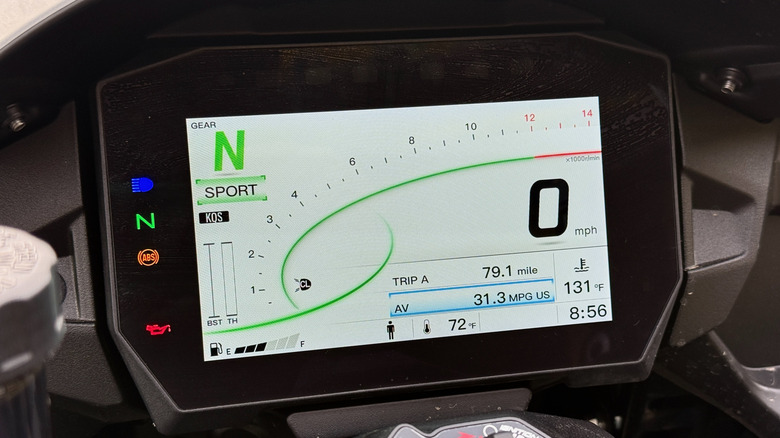
Thoroughly modern, the H2 SX comes with a number of high-tech features to augment its speed and comfort. Most of the tech features are controlled via a large 6.5-inch TFT rider screen. The screen itself has some pretty high contrast blacks and whites. It's also bright enough to be seen clearly in direct sunlight, even when I'm wearing a tinted visor. The screen does contain quite a bit of information, though, so getting used to the locations of the various displays might take you some time.
 Travis Langness/SlashGear
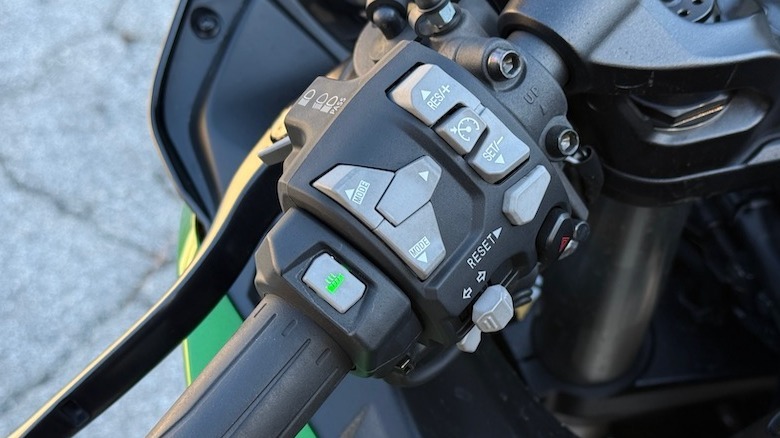
After several weeks of riding the H2 SX, I still struggled at times to understand the handlebar controls and their relationship to the screen. There's a lot of information and settings to be accessed via the rider screen and nearly just as many buttons to navigate them. Both handlebars have a series of buttons that serve multiple functions. Some functions are accessed via pressing the buttons, others accessed via pressing and holding. A four-direction set of arrows and a center command button (like the one you get on some Hondas) might be a bit less confusing.
Rare rider aids make things even easier
 Ash Good
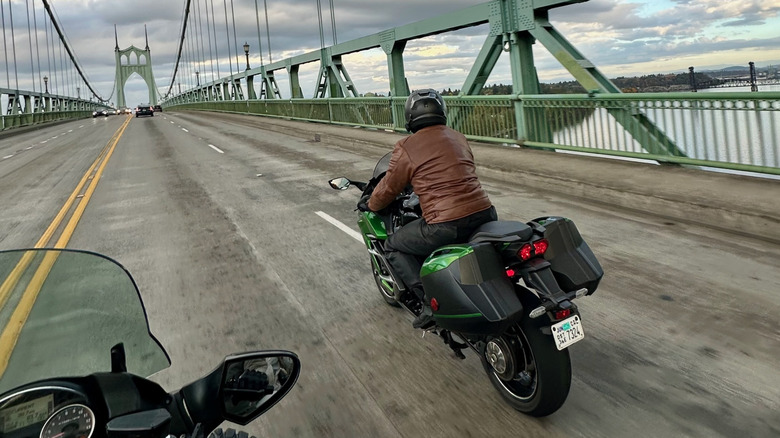
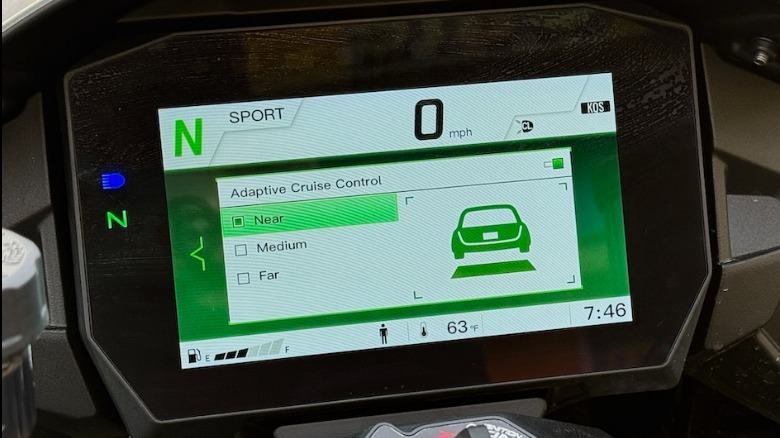
Once you've mastered drilling down into the various menus on the H2 SX's screen, you can control things like the radar cruise control settings, where you can adjust the distance sensitivity of the H2 SX's adaptive cruise control. Yup, you read that right. The H2 SX has radar (adaptive) cruise control that adjusts to the speed of vehicles in front of you.
The system can be set to three different following distances and while it's a bit unnerving to use it at first, I eventually learned to trust it, especially on long highway stretches without much traffic. The same system provides forward collision warning alerts, which are just as helpful, without much intrusion into the riding experience.
 Travis Langness/SlashGear
Blind-spot monitoring is another feature I never thought I'd want on a motorcycle, but the H2 SX proved me wrong there too. There aren't blind spots on motorcycles, right? Just look over your shoulder. But having the H2's side mirrors light up with a little blind spot warning was surprisingly comforting. It meant I had to turn my head less when riding, knowing there was a vehicle beside and behind me that would make a quick lane change unsafe. A USB port would be nice, but the H2 SX lacks one of those. Instead, there's a power outlet on the dashboard that serves the same purpose of charging your devices (so long as you buy an adapter).
A dose of practicality
 Travis Langness/SlashGear
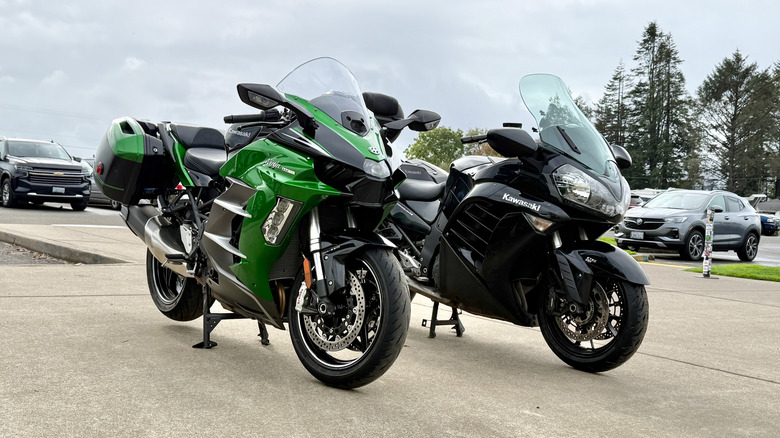
One of the functional differences between the standard, sportier H2 and the H2 SX (aside from the gap in horsepower) is the H2 SX's focus on usability. The semi-upright handlebars, the big windscreen, the rider aids (cruise control, blind-spot monitoring), and the detuned version of the engine all make the SX a bit more approachable as an everyday bike. Another feature that added a bit more practicality to my riding were the large side cases.
 Travis Langness/SlashGear
The 28-liter side cases are large enough for some extra gear and several small items, but it turns out that they're a bit too small for two critical items: my helmet, and my full-size MacBook laptop. A smaller travel laptop might fit, but it would be a tight squeeze. For larger items, investing in a top case would be the right move. The side cases are pretty easy to pop on and off, with a simple one-key system. Naturally, the center stand is a great addition too, especially if you regularly wrench on your own bike.
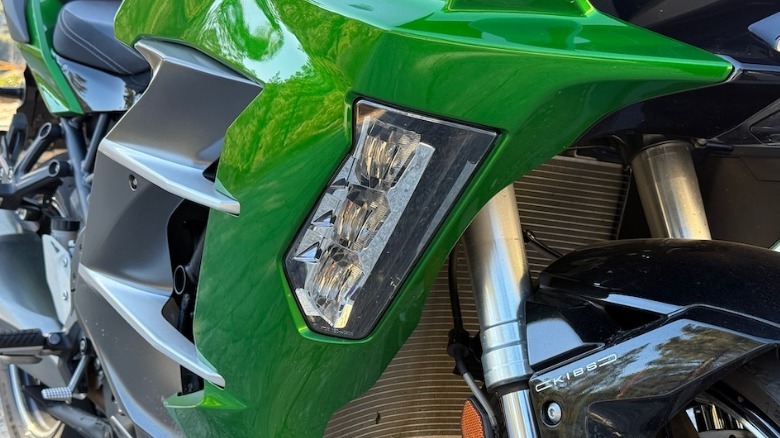
When you're constantly testing the H2's acceleration via little bursts of speed and supercharger noises, fuel economy suffers. But somewhat surprisingly, it offers over 30 mpg on open stretches of highway, provided you can keep the RPMs low enough. The last little convenience feature worth noting are the excellent cornering lights that provide real, tangible illumination as you're going through dark corners. They're big, but they're worth the real estate on the bike.
Kawasaki Ninja H2 SX verdict
 Travis Langness/SlashGear
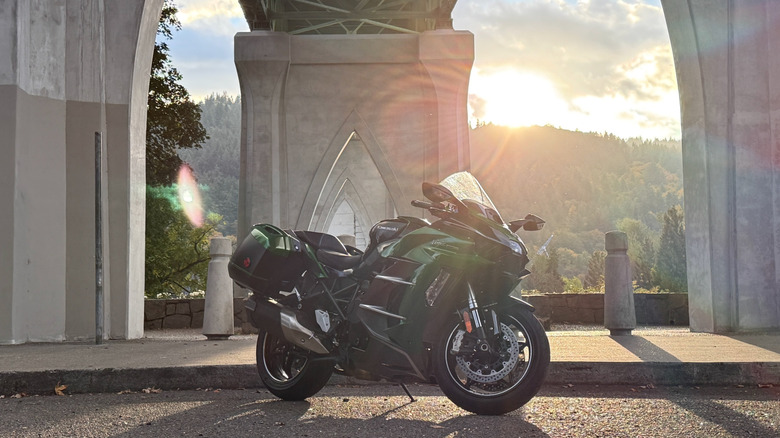
The H2 SX has a price tag that pairs well with its hefty power rating. MSRP for the 2025 H2 SX is $29,940 (including $840 destination fee – 2026 models increase by $899), which is similar to the pricing of many special-edition liter bikes out there. The Honda CBR1000RR-R Fireblade SP, for example, starts at $29,774, the Yamaha R1M starts at $28,674, and the Ducati Panigale V4 S checks in at $34,595 (including $1,295 destination fee). Those bikes are all laser focused on track performance, though, and the H2 SX is much more comfortable.
 Ash Good
Instead of those ultra-fast bikes, I think some of the H2 SX's stiffest competition comes in the form of the Honda Gold Wing. The Gold Wing is similarly priced and it feels similarly unique with its big six-cylinder engine. The Ninja 1100SX SE might even be worth considering too, as a fast, capable sport touring bike that's also a Kawasaki (and half the price), but it doesn't feel nearly as special as the H2. It's hard to justify the H2 SX's big price tag as what essentially amounts to the entry-level version of the supercharged bike, but entry level or not, it's still preposterously fast and attracts attention everywhere it goes. It's unrivaled in the way it delivers power, while remaining comfortable enough for long road trips and daily commutes. But more than all that, the Ninja H2 SX SE feels special every time you ride it, in ways very few other bikes do.