“When you label something Black, Hollywood tends to shrink its potential.”
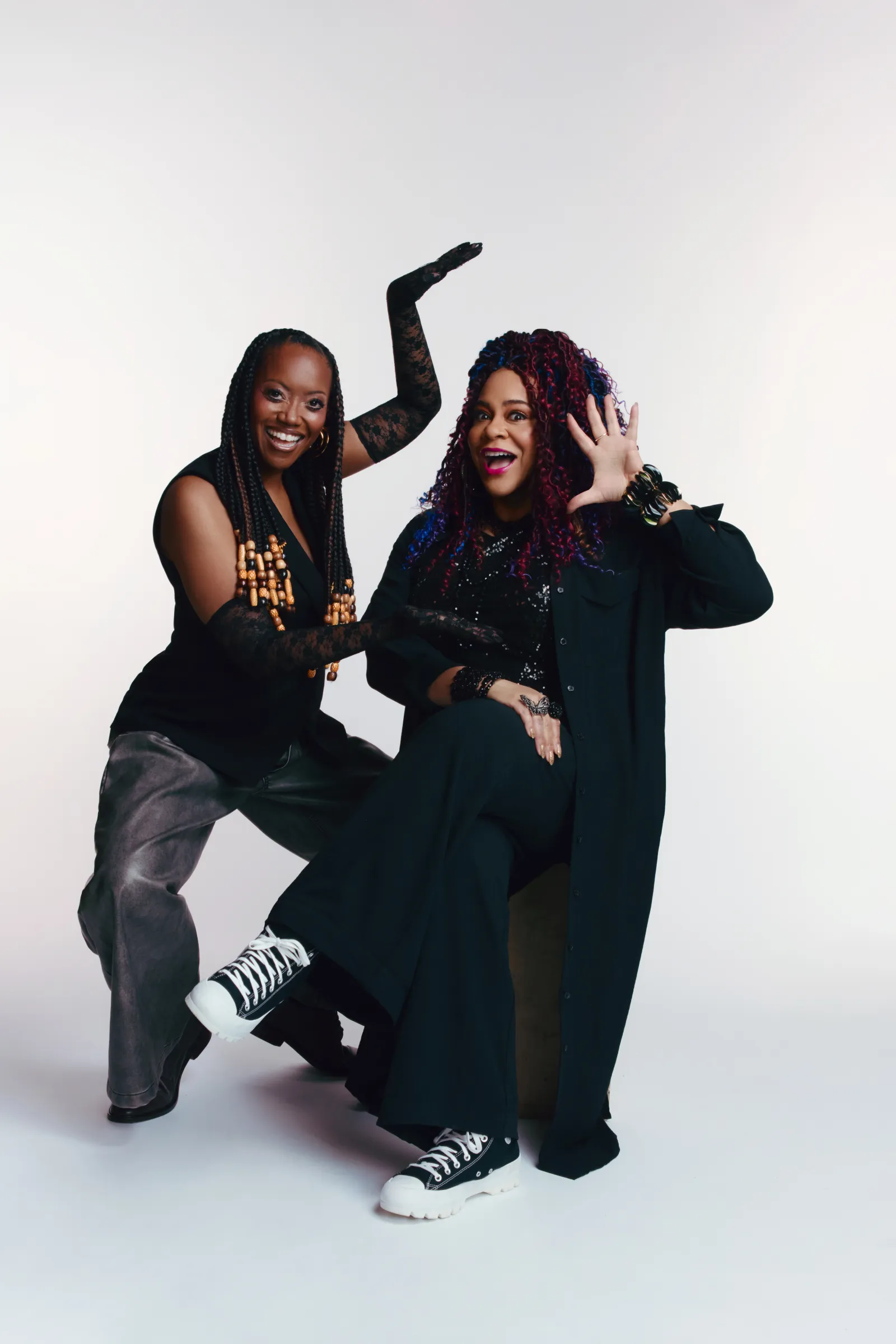
Erika Alexander and Kim Coles on their podcast ReLiving Single, the “limitless creativity” of Living Single and the sitcom’s enduring impact on pop culture.
SUBSCRIBE TO THE PARTING SHOT WITH H. ALAN SCOTT ON APPLE PODCASTS OR SPOTIFY AND WATCH ON YOUTUBE
Editor's Note: This conversation has been edited and condensed for publication.
How does the response to ReLiving Single feel?
Erika Alexander: Grateful. We already always knew that there was a real fan engagement and love for the series. It's past its 30-year point and it's now going into 33 that it's been on the air. And I think it hasn't been developed. So when something came along and it was like what? I've always loved that, and why shouldn't we be talking about that? Then suddenly all this energy needed some place to go. People had been creating shirts and their own series around it in commercials and ads and all sorts of things and then naming their kids after us. They're old enough to be saying that they've named after us. So we're very gratified. The other thing is we have a story to tell. I mean, things move so quickly nowadays, and we're in a space where there's internet and computer and it was just coming online when we were younger, phones and things. So the idea that we've sort of been a bridge to the new era is powerful. It's an interesting place to be, and you wanna be a part of the archive that says what it was like and then also be able to be young enough to say—and this is what we know for sure and this is what if we could do it have done it better—then we could certainly maybe use that intelligence. But also there's a unique one-to-one experience with back in the day having many more viewers to see you do your work, and now it's like it's a challenge. And so I think people look to us to be the ghosts of Christmas future, and that's what we are. It's nice to be in that space.
Kim Coles: I would say ditto to all of the above. I always come back to my favorite comment of all time, which echoes over and over and over again, is this is something I didn't even know that I needed. This is better than I thought it would be. It's something I've always wanted and didn't know it would be this. This is so much better than I could have ever imagined. And so they're on the journey with us. They've been there all along, and we certainly tap in as we can, but to have a centralized place for them to come feels delicious.
Well, I think fans really respond that you guys' love Living Single just as much as we do. Are you feeling that from the fans?
Erika Alexander: Yes. We hope people see how far we've come and how much these stories still matter certainly because we have a conversation around Black joy, Black creativity, Black community, the timelessness of that, and I start to also put into the conversation of we're not siloed. It's not Black joy, it's joy. It's joy of Black people. It's community through a Black filter. Saying that things are a Black show is a way to divide the community that enjoyed it and saw it as a show that you could love and was speaking to you. So, I say shows with Black cast, that type of thing. I'm grateful and I do think that what people see is a form of survival, of finding things that resonate with you and being able to talk about them as if they're yours. It's important that the American story is a very deeply interesting, diverse story. No matter how people try to destroy that conversation. Living Single is a testimony to what is great about, if anything, in America is storytelling and who gets to tell those stories. So really, really fascinating journey.
Kim Coles: Yeah. And to sort of drill that down or maybe I'll say synthesize that or drill that down even more, we're talking stories of women, stories of being in your twenties and becoming and figuring things out and dating and sex and in my case, my character got married, and just figuring that all out. Those are universal themes. And again, as Erika was saying, told through what would be called a Black lens, but they're really universal themes. Everyone goes through their twenties and deciding what's next and deciding what your integrity will be, and friendships. And so those things never go away. Those are universal. And if someone comes into that world, they will see themselves. Even [different] body types. I mean, all of it is universal if you just come on and play with us. And so we get to talk about that. We get to go, as Erika always says, we get to go deep and wide into that. And I've enjoyed reliving the show from our perspectives. We've known each other for 30 years, but there's things I'm learning about Erika, things I'm learning about her perspective of the show and perspective of things that happened while we were doing it that I didn't know. And every guest that comes on the show is telling us their perspective and every single time is always something I didn't know. And even though we spent a lot of time together, there's things you couldn't have known. And so I'm enjoying that, the unpeeling of the onion, so to speak.
As a longtime fan of the show, over the years there were times I found myself getting very offended when people would call it "the Black Golden Girls." It was always qualified as the "Black" something, rather than just being a great sitcom. While recognizing its importance to the Black community is important, I also want it to be seen as the great mainstream sitcom of the '90s.
Erika Alexander: Yeah. I mean, Black culture isn't a ghetto and to be put in a culture ghetto by a conversation that makes it niche as opposed to mainstream. It's like, the industry starts to treat it like it is one, instead of seeing our stories as universal, as Kim is saying, and you silo them, you underfund them, and then you act surprised when we break out and disrupt the mainstream. But it's like Tony Morrison said, it's a narcissistic thing to think that you are the mainstream and we are not. Black people have always been foot forward into the future, have created the American future culturally, not in a way that is adjacent. It is in the front. It is the reason why America stands so powerfully in the world. And when you label something Black, Hollywood tends to shrink its potential. The artificial walls, all these things, around limitless creativity. We didn't build those walls. We're breaking them. We're breaking them all the time. And so we want the audience, Black, white or otherwise, to talk about us like they were The Jeffersons or The Cosby Show or any of those shows that they don't feel like, "Oh, that was over there." They're like, "Oh, that's my show. Put it on. Turn it up." Those types of things. "Oh, that's my music. Turn it on. Put it up." But it's a very sly way to undermine and again create a division that's we didn't put there, but also that again, has to with marketing, promotion. Who can say it, where it's gonna be. That's the American Fiction story. That's why I love that story, because Cord Jefferson understood that and Jordan Peele understands that, and Alicia Harris understand it. These new auteurs are not playing. And yes, they are Black, but I double-dog-dare you to limit them to a skin tone.
Kim Coles: I was gonna say that it's conditioning, right? And so we have to individually decide—and good luck with this—individually decide to not put it in a box or not allow it to be in a box. I think it's an individual responsibility to go, I'm not gonna accept that that is the Black such-and-such or that is the young so-and-so or the whatever box. It's conditioned. It's given to us that way by the powers that be, and so we accept it. And you know, Erika does talk a lot about not calling it a Black cast, you're calling it a show with a Black cast. But I think the conditioning is so there and in place and the walls are so in place that we individually have to go, as you did, H. Alan Scott. You decided that I'm gonna break through that and go, I'm gonna give this a try and see if it resonates with me. And so we get to decide individually if something resonates with us, right? And that's the work that has to be done, the deconditioning.
I’ve spoken with others about the period in the '90s where it felt like shows with Black casts were being greenlit and given attention. It felt like real growth. And then, with the expansion of basic cable, those shows, around 2000, seemingly disappeared. It felt like a real shift in Hollywood. Now, this came after Living Single, but to go from having a hit sitcom to nothing, it just felt so stark. I wanted to know, did you two experience this? Did it feel that way to you? Network television begin to feel, frankly, whitewashed.
Erika Alexander: Yeah. I remember it. I'll never forget it because when it was happening, I spoke about it a lot. That's when I started being very frustrated. There was, to your point, if you want to see bias at work, real bias, you have to try labeling a popular series as a white show. I say, Fine, let's call that a white show. Have people lose their minds. It's like they'd be looking at you like you're speaking another language. You have no problem labeling ours and that tells you exactly how the industry creates cultural ghettos. And then suddenly when the explosion of different channels came, they were literally able to start to create these walls. Oh, that's a commercial for that. But also, they're also negotiating from a point this low. No longer are you getting the same amount of money for the commercials inside of there. You're not even looking at the data anymore. You're saying, "Oh, it's a Black show, well that's worth that much."
Residuals are less, et cetera, et cetera.
Erika Alexander: Residuals are less. Everything. That's why I say the danger in there is that if we started saying, "Oh, that's that white show." Again, that's fine, but we can call sports Black shows. We can call most of sports Black shows. Let's just do it. Let's go for it. And it's hard not [to] get political when you have these conversations because it's a political conversation that has to do with justice, and justice you fight wherever you can. It's is almost ground zero. The story you tell and the story that we enact in the world will affect you eventually. If you try to place people inside of something that they are the only ones, they will be attacked, they are vulnerable. And that's, to me, a dangerous place to be. I do think that if we treat whiteness like it's the default, and if you saw that during those times where suddenly there was a CW, the WB and all these other things that were carrying most of the so called "genre shows" or the other shows, then you could do if you follow the money, you could do a real study about equity bias and just downright unfairness in not only the industry, but in United States and around the world.
Kim Coles: I've told this story before, so Erika, forgive me. During the time that we were doing Living Single, I remember going to the bank and this little old Jewish man, and I'm saying old specifically because we were told that we had this certain demographic and he didn't look anything like anyone who we were told was watching the show. In line, he squeezed my arm, "I love you girls. You're all so beautiful. You remind me of when I lived in New York [City]. I love you girls." He absolutely resonated with who we were, the characters, the space that we were in. And so, I knew that was my indication that other people are watching, other people are enjoying, and other people are resonating. We get to the 2000s, I'm gonna be honest and say that I didn't have the language or the knowingness of how to fight this. I didn't know how to fight what I saw was happening. Most of my actor friends were not working as much, right? I wasn't getting jobs. Couldn't get work. And never mind the people, "We love you on that show," but there's nothing. There just was much less available. And so I didn't have the language for it. I didn't know how to fight it. How do you fight the powers that be? And so I did something very different. I was like, "Well, so if those people don't want me, if I'm not gonna get those jobs, what other gifts, talents and abilities do I have that I can then just take directly to the people?" And so, I didn't have the ability how to speak to it, to know how to change it, to know what to even language it. Erika is so eloquent and languaging it in that way. I was like, "If I am a performer, if I'm a comedian, I'm an actor, I'm a storyteller, how can I use those gifts and talents and ability and then start teaching other people how to do it?" So while waiting for Hollywood to call, I had a coach at the time who said, "You broke up with Hollywood." It's like, "No, I just was like, ‘Y'all don't want me over here.’" Let me go someplace because I know that I'm viable. I know that I want to share with the world, and I know that I want to teach other people how to do it themselves. And so I kept myself afloat by teaching other people how to have a voice, share their story, create their own legacies. And off they go and write books or become speakers or become coaches and teachers themselves. While I waited for my more eloquent and elegant friends to do what they could to change what they could in the business. I was like, "I'll be here if y'all want me, but I'm gonna be over here doing this other work." We all want to find our way to fight the powers that be, but I didn't know how to, so I found my own way of creating something else. And when those opportunities come, I'm grateful, I'm joyful, and this is again going very, you know, singular, I always show up in excellence and bring every bit of excellence to the party. And that's all I know how to do.
I've always said, at least within my own lane, like sometimes just existing is a political statement. Sometimes just trying to exist in the person that you are, people want to make you a political statement and your existence is just a political statement for other people's points of view sometimes, you know?
Kim Coles: I always talk about deciding what your yeses and your nos are. We as performers deciding what work that we won't do. There was work sometimes, but there were things I didn't want to do, things I didn't want to say, and that just existing in that space gets to be a sort of a line in the sand, your stake in the sand in that way. And that's powerful, too. And so you get to choose how you will be in this world. And it's like, y'all go figure that out because I can't fight that, but I know that I can do this. And that's where I choose my power.
Queen Latifah was recently on, and it basically broke the internet. So A, why did it take so long? And B, what was that like having Queen Latifah on?
Kim Coles: I can't tell you why it took so long. I'll say we talk. The six of us talk. We're in communication with her. So, I don't know why it took so long for that, but oh boy, all the anticipation. It was like being home. This is the first time the three of us had been in a space together like this. I always referred to us as the Three Musketeers because we were ridiculous. It was a return to the joy that has always been there. She came to play and she came to reminisce and it was delicious. There's no words.
Erika Alexander: Well, it didn't take so long. We started this, and we are just finding our footing. Kim Fields was the first to come on. Her schedule allowed it for her to come on that early. And plus, it takes a while for people to see what we're doing and how we're doing it. It takes a second for us too, see how we're gonna incorporate cast members to start to tell the story. So first we needed to introduce ourselves to the audience as us. Hi, I'm Erika Alexander. They know me as Max, Kim Cole's known as Sinclair. We go to a zero episode to say, before there was this, there was us at the audition. So we're trying to create an arc. And so I think what you're seeing is not random. It is very intentional that we had a way to go and how to build up to some of the heavier conversations. And we always knew that she wouldn't be at the front end. She would definitely be more toward the middle or the back. That's also her schedule, because she was on Equalizer and she's doing all these other things. So frankly, I think she came in as soon as she was able. And she also was enjoying the show and seeing how it was being framed. So I'm grateful to her that she made sure that she got in. Other than that, we had other cast members who were coming. Also the show is being shaped by the subject. By the way, when she was first on the show, she says that she really hadn't acted really that much. And so, it's better to talk to her toward the end of that so we can have a conversation about how, again, not only we're grounding ourselves, but also some of the other players are being played more, they're being more well-defined because Yvette [Lee Browser] is writing I think a little bit more intentionally for some of the members who had more experience. So Kim Fields is very much in the front of the show a lot. I come in as Max, and so there's all these things you have to think about. Now having said that, Latifah breaks the internet all the time. That's who she is. She's the internet breaker. She's the queen. We know who she is. She's also the baby of the group. She's somebody that we can play with, she can relax and be herself in this space. She has a very unique relationship with Kim Cole as they shared a dressing room. The show was also built around those two. So they are the origin story of this. So we had somebody to comment and be there to talk about the show and how it got to start from a unique point of view and then Queen comes in to fill that up. But also we get a chance to tell stories on her and people understand why she's an icon. It gets a chance for us to set her up and for people to see how we admire her. And so I'd like to think that her leadership and talent and her vision in Flavor Unit [Queen Latifah’s crew of emcees and DJs from the early '90s that has since become an entertainment production company and management company], the entrepreneur thing she's built for herself and Shakim Compere, it shaped culture, and it uniquely shapes all of us. We loved Queen before she was on the show, and we talk about that legacy, but pride and gratitude, and so she's setting a standard and we're benefiting from doors that she's opening, and she's able to come on our show and discuss that. And frankly, she was right on time.
So many things about the show are iconic, particularly the theme song. Considering this, how often are you asked about a reboot? Would you ever consider a reboot?
Erika Alexander: I've always said that I wasn't the person who wanted to do a reboot. Because I like moving forward. It's funny because here we are doing a ReLiving Single podcast. But part of moving forward was telling stories about the 30 years in between, talking about the industry, the things that you're asking us about, the changes in television, our performance, comedy, all of these things, being able to revisit that. Now, having done this, I see that there may be room for a discussion. But how? It's in the execution, and it's a very tricky thing because the first thing people do is they want to compare you to somebody you're not. But we've got now, at least this season, to tell them who we are. So that may be a little less disruptive than just sort of seeing, hey, that person is well, we're different people. And that means that it doesn't matter what we're playing. We play those characters differently. And I think there's a discussion that'd be cool. I like to see maybe a movie. I like to see an animated series. I mean, we all got very unique voices. There's a lot of different ways to do these things. It doesn't have to be in the format people think, and they can still delight in it. So I'd like to say I'm more open to it now, maybe because I feel like I've had more of a say as a person, as a human being, but also looking into Living Single from here. Hindsight is insight, and that's a different Erika talking. And when you ask that question, you're asking a different person now.
Kim Coles: The reason why I wanted her to go first is I know that she was for many years, "No, thank you, I go forward, I don't go back." And I was the one like "Oh, my God, I'm ready right now. Where's the set? Let's go, I'm ready. We all still look good. Let's do the show."
You're a comic through and through, Kim. Eager to get on that stage.
Kim Coles: Let's go! Come on, what are we waiting for? And listen, a chance to work and play with my family and friends again and to get a check? Come on. And now having done this show, this podcast, I won't say I'm less eager, but I don't need it as much. I feel so fulfilled in having played with my family again in the way that I've had a chance to that I don't have the need for it. If it happens, it would be delicious. It would be wonderful. It would be a great opportunity. But I don't have the need for it. And if it never happened, I would actually be okay because we're giving them something new and something old and something borrowed and something blue, like true blue and light blue, right? So I'm not wed to keep going. I'm no longer wed to needing to have a reboot. If it happens, it would be awesome. And there's a lot that goes into it. There's a lot we're talking, the six of us, and what does Yvette want to do and want to say? And it was a fan that actually wrote on a comment one time, people were like, "I want a reboot." And somebody said, "No, I don't. They live in a perfect space in my mind, and that's where I'd like to leave it." And so having done this, I'm okay if it never happens because this is so fulfilling. So we've switched a little bit.
What are both of you excited for outside of the podcast that's coming up next?
Kim Coles: I'm hoping that my Disney show comes back, Vampirina. I play Dean [Merriweather] on Vampirina. I've never worked with kids before. I was so scared. I was like, "Oh God, they're kids." They're amazing and they're pure and I miss them. And so I'm hoping that Vampirina gets picked up again. And I am still coaching and teaching and I have something called the Story and Stage Society where I teach women especially who have visionary ideas to get their stories and get their books and get their platforms out into the world. So, I so much enjoy that and auditioning. We've got some other things percolating behind the scenes I can't talk about yet. But I'm excited about being creative and using humor and heart in everything that I do.
Erika Alexander: Well, I probably need therapy because revisiting all of this has been really a mind blower. Look at all them outfits and the makeup and everything, man. I'm gonna have to really pray, have some heavy processing. This thing has been therapy, so that's great. I feel really again in gratitude the way it's been supported here lately for the past few years, I've had some really fantastic invitations from amazing directors like Cord with American Fiction, Alecia Harris’ movie Is God Is coming out and I'll be in that and that's cool. I was in Invasion, and that's Simon Kinberg. I love sci-fi. That was great to be invited there. So with The Fall and Rise of Reggie Dinkins, it's a Tina Fey, Sam Means, Robert Carlock series with Tracy Morgan and Daniel Radcliffe and Bobby Moynihan. I mean, I've had a deep dive into a different type of comedy, and I've had to just let go and not try to apply anything that I knew before, which is totally great, 'cause I'm all right with that. I don't need to know. I just try to do what's in front of me and do the best performance I can. And that's been really good for me, to have that kind of workout. It's like strength training. It's also mind training. It's also patience training. So that's great. And with Color Farm Media, that's my company. There's a lot of opportunities that we're looking forward to, not just in the space of showbiz, but as advocates and to speak to value, value of the most marginalized communities, work with the groups in grassroots and in spaces like that because this world has become so difficult and complicated and to have those conversations, but you need to step up and have them, not for ourselves, for the people who come after us, to show what it is like to fight and have difficult conversations. Definitely looking to scale that, expanding internationally, definitely building partnerships, certainly with tech and entertainment and through impact. We're developing new IP with different partners, data-driven tools, curriculum, all of that. We call ourselves the Motown of TV, film and tech. And so I wanna be a global cultural engine. I wanna have conversations that travel across film and storytelling and ecosystems and not just projects. So I've got to in that way discipline myself to finish things. And so what I'm looking forward to is finishing some of those things so they can be stepping stones to other things. And being grateful to Kim and this opportunity with her to have this conversation. Thank you, Kim, because you have been a delight, and I know it hasn't always been the easiest thing for us to get this on its feet. People need to know that we're doing our best. But we are doing it with a friendship and a sisterhood, and I'm grateful for that.
Request Reprint & LicensingSubmit CorrectionView Editorial & AI Guidelines Add Newsweek as a preferred source on Google to see more of our trusted coverage when you search.
Recommended For You
 TV‘The Traitors’ Season 4 – Release Date, Where to Watch3 min read
 TVNew on Disney+: Full List of Movies, Shows in December 20253 min read
 TVNew on HBO Max: Full List of Movies, Shows Hitting the Streaming Platform in December 20254 min read
 TVNew on Prime Video: Full List of Movies, Shows Hitting the Streaming Platform in December 20252 min read
 TVNew on Peacock: Full List of Movies, Shows Hitting the Streaming Platform in December 20254 min read
 Celebrity NewsJudge in Erika Jayne Lawyer Case Calls Out ‘Sensational’ Accusations4 min read
Related Podcasts
Trending
 WeatherList of Schools Closed Tuesday as Snowstorm Hits4 min read
 TennesseeTennessee Special Election: Behn Teases Another Run After Losing to Van Epps2 min read
 Winter StormWinter Storm Warning As 12 Inches of Snow To Hit: ‘Delay All Travel’3 min read
 ViralCat Arrives at Vet for Neuter, Staff Not Ready for What’s in the Carrier3 min read
 ImmigrationGreen Card Update: New Changes for Holders in December6 min read
Top Stories
 NewsUkraine War Live Updates: Russia Says No ‘Compromise’ Peace Deal Reached2 min read
 NewsDonald Trump Reacts to Tennessee Special Election Results4 min read
 NewsVideo of Hegseth Telling Military Not to Follow ‘Illegal Orders’ Resurfaces1 min read
 NewsDonald Trump’s Major Medicaid Cuts for Abortions Blocked4 min read
 WorldDonald Trump’s Honduras Gamble Hangs in Balance as Election Results Turn4 min read
 PoliticsRepublican Ousted By Democrat In Georgia1 min read