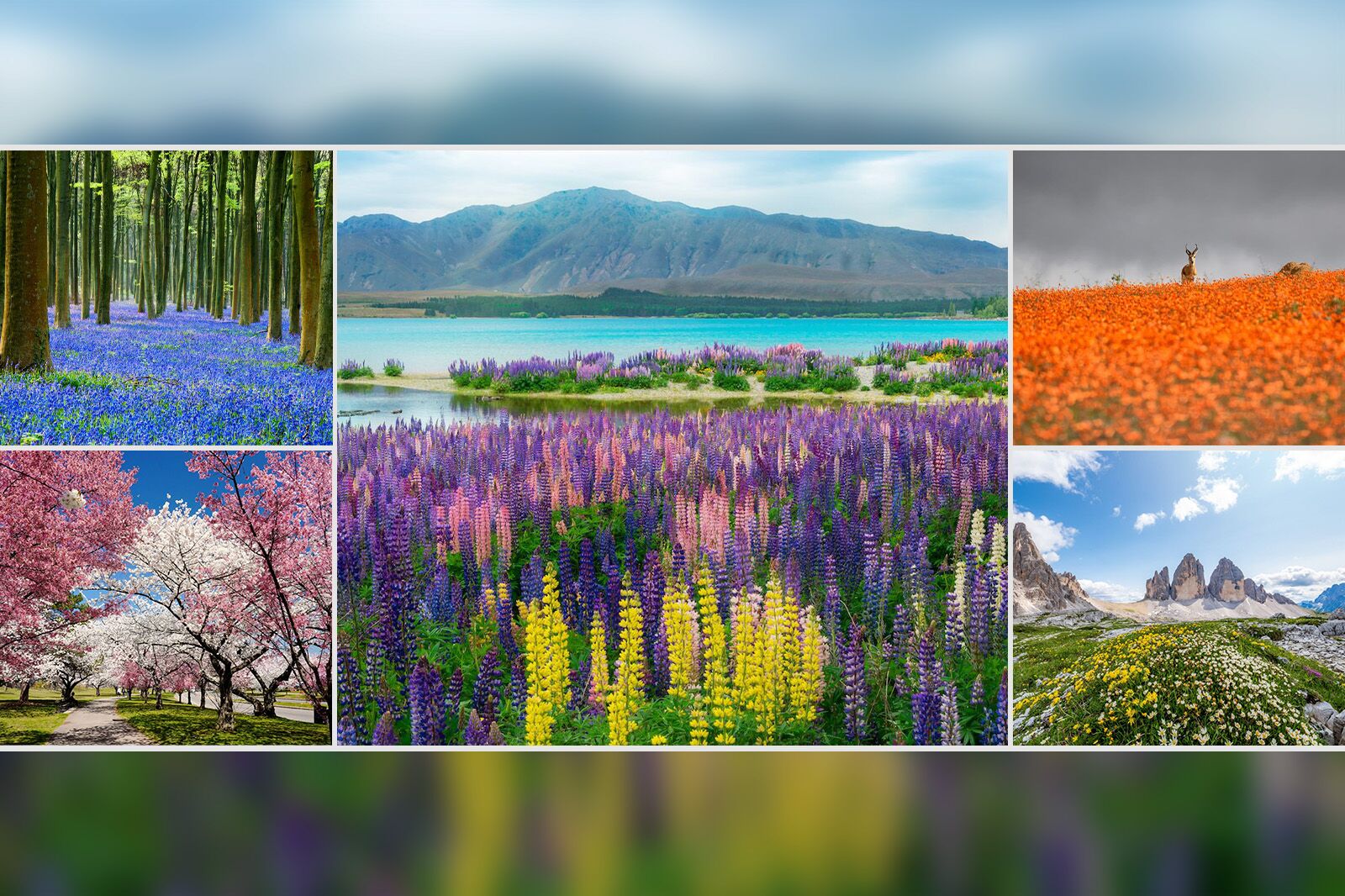
Wildflower seasons don’t arrive all at once — they move across the globe in waves. As winter recedes in one hemisphere, hillsides, deserts, and alpine meadows begin to shift from muted browns to dense fields of color. When the Northern Hemisphere peaks in spring and summer, the Southern Hemisphere is only months behind. The result is a rolling calendar of blooms that makes it possible to plan a trip around wildflowers nearly any time of year. Here are 11 stunning blooms worth traveling the world for.
Northern Hemisphere | Southern Hemisphere
Northern Hemisphere
Alpine Wildflowers, Swiss Alps and the Dolomites
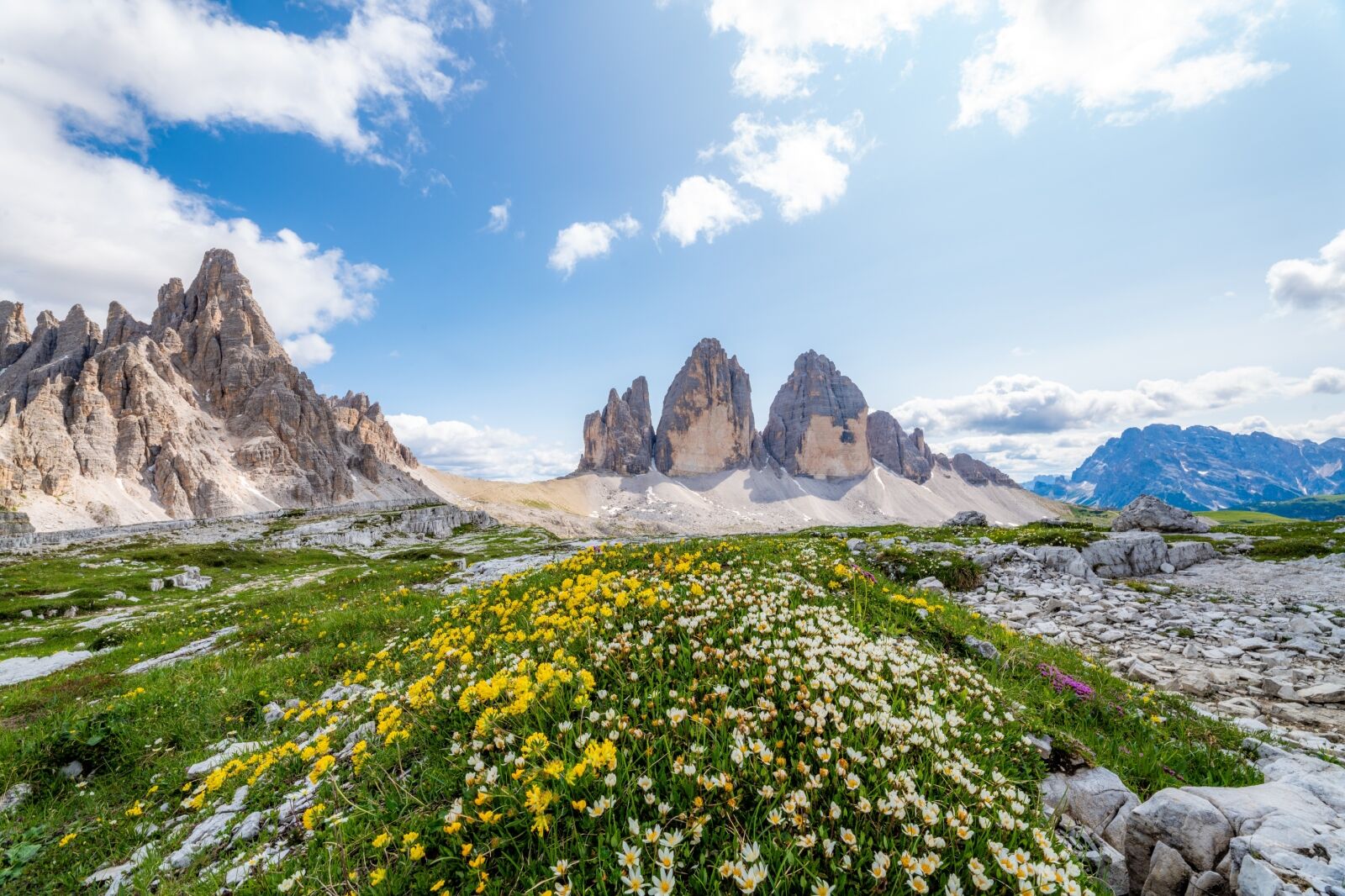
Photo: iacomino FRiMAGES/Shutterstock
Where to see them: In Switzerland, the meadows around Zermatt, Mürren, and the Jungfrau region; along the Five Lakes Walk above Zermatt; and near Grindelwald and First. In Italy’s Dolomites, look to Alpe di Siusi; the meadows below Tre Cime di Lavaredo; and trails around Val di Funes and Alta Badia.
When to go: Mid-June at lower elevations; peak bloom typically late June through late July, with higher-altitude trails flowering into early August, depending on snow conditions.
When the snow retreats from Europe’s highest peaks, alpine meadows across the Swiss Alps and Italy’s Dolomites burst into bloom. From June through July, slopes that were blanketed in white just weeks earlier fill with edelweiss, alpine asters, gentians, arnica, and globe flowers. Elevation of course determines timing: lower valleys begin flowering in early June, while higher passes and ridgelines peak later in the summer. Unlike desert superblooms that depend on rare rainfall, these alpine displays arrive reliably each year, though the exact week of peak color shifts with snowfall and spring temperatures. Extensive trail networks, mountain huts, and cable cars make these blooms surprisingly accessible, even for travelers who aren’t experienced hikers.
Bluebonnets, Hill Country, Texas
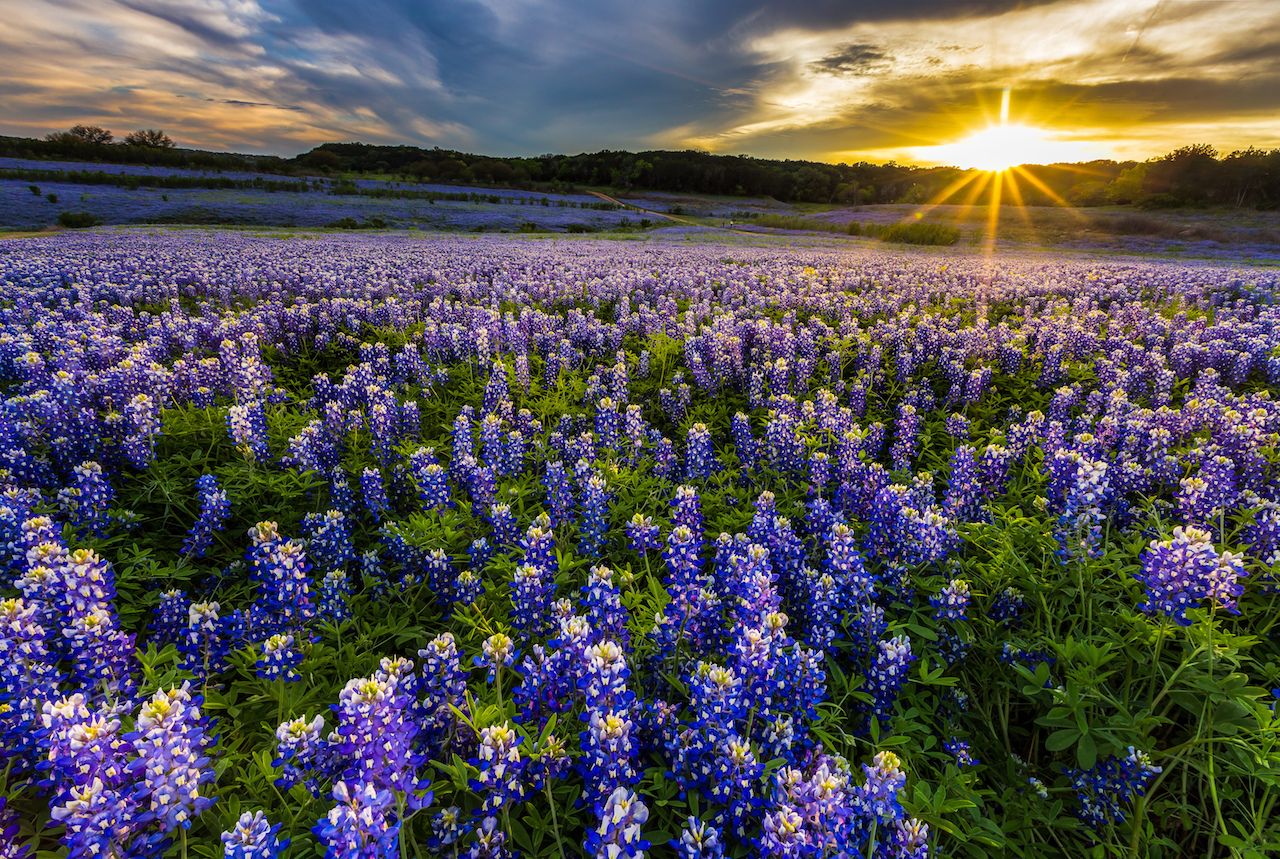
Photo: kan_khampanya/Shutterstock
Where to see them: Willow City Loop near Fredericksburg; Highway 281 between Marble Falls and Burnet; Ennis Bluebonnet Trails east of Dallas; and roadside pullouts and desert trails in Big Bend National Park.
When to go: Late March through mid-April in most years, with peak bloom often landing in early April, depending on winter rainfall and temperatures.
Texas’s Hill Country makes headlines most springs when bluebonnets blanket roadsides and ranchlands across Central Texas. While the almost-purple wildflower puts on a show every year, the intensity of the bloom depends on fall rains and mild winter temperatures. In strong seasons, fields stretch for miles along Highway 16 near Fredericksburg and around Willow City Loop, while Big Bend National Park can see sweeping desert displays that include bluebonnets alongside Indian paintbrush and desert marigold. Farther east, Ennis maintains its designation as the home of the state’s official bluebonnet trail, with more than 40 miles of mapped driving routes through peak bloom areas. Because timing shifts slightly each year, checking local wildflower reports before planning a trip can make the difference between scattered patches and full fields.
More like this
Cherry blossoms — across the US
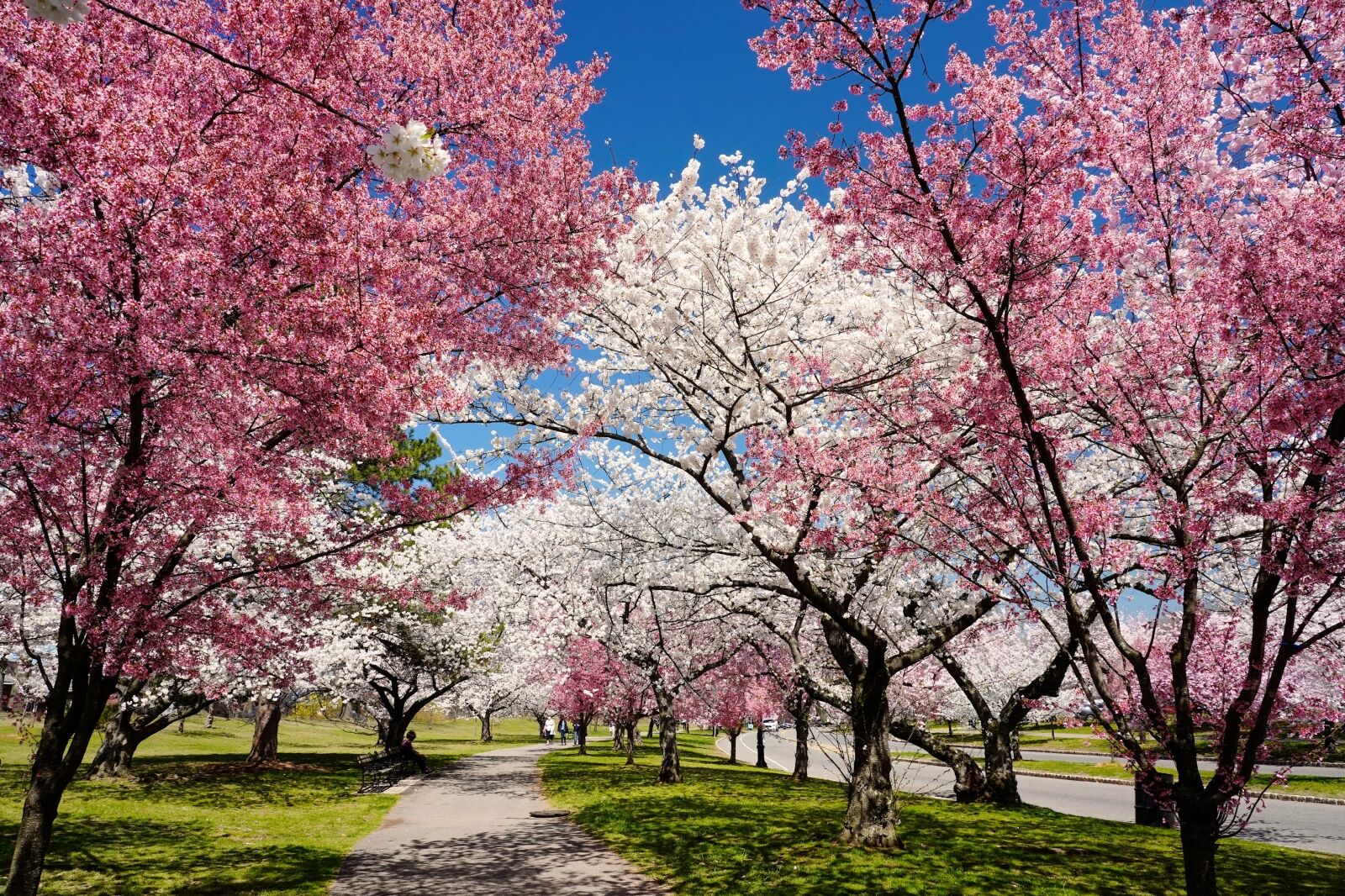
Photo: gary718/Shutterstock
Where to see them: Washington, DC, around the Tidal Basin, National Mall, and US National Arboretum; Macon, Georgia, which calls itself the Cherry Blossom Capital of the World and reports more than 300,000 Yoshino trees; Newark, New Jersey’s Branch Brook Park, home to one of the largest collections of cherry trees in the country; Seattle’s University of Washington Quad and Washington Park Arboretum; New York City’s Central Park and Brooklyn Botanic Garden; Portland’s Tom McCall Waterfront Park; Traverse City’s orchard-lined peninsulas in Michigan; Denver’s Cherry Creek neighborhood and Denver Botanic Gardens; Nashville’s Public Square and Centennial Park; and San Diego’s Japanese Friendship Garden in Balboa Park.
When to go: Late March through mid-April in most cities, with southern locations such as Macon blooming as early as mid-March and northern cities peaking in early to mid-April. Because bloom windows can shift by a week or more depending on temperature swings, check local bloom trackers before booking travel.
Cherry blossom season signals the start of spring across much of the United States, when pale pink and white petals briefly overtake city parks, waterfronts, and public gardens. The bloom is fleeting, typically lasting one to two weeks depending on weather, and peak timing shifts each year with late-winter temperatures. While Washington, DC, remains the country’s most famous display, dozens of cities now mark the season with festivals, cultural events, and blossom trackers to help visitors plan around peak color. For a broader look at destinations nationwide, see Matador’s guide to cherry blossom across the US.
Crested Butte, Colorado
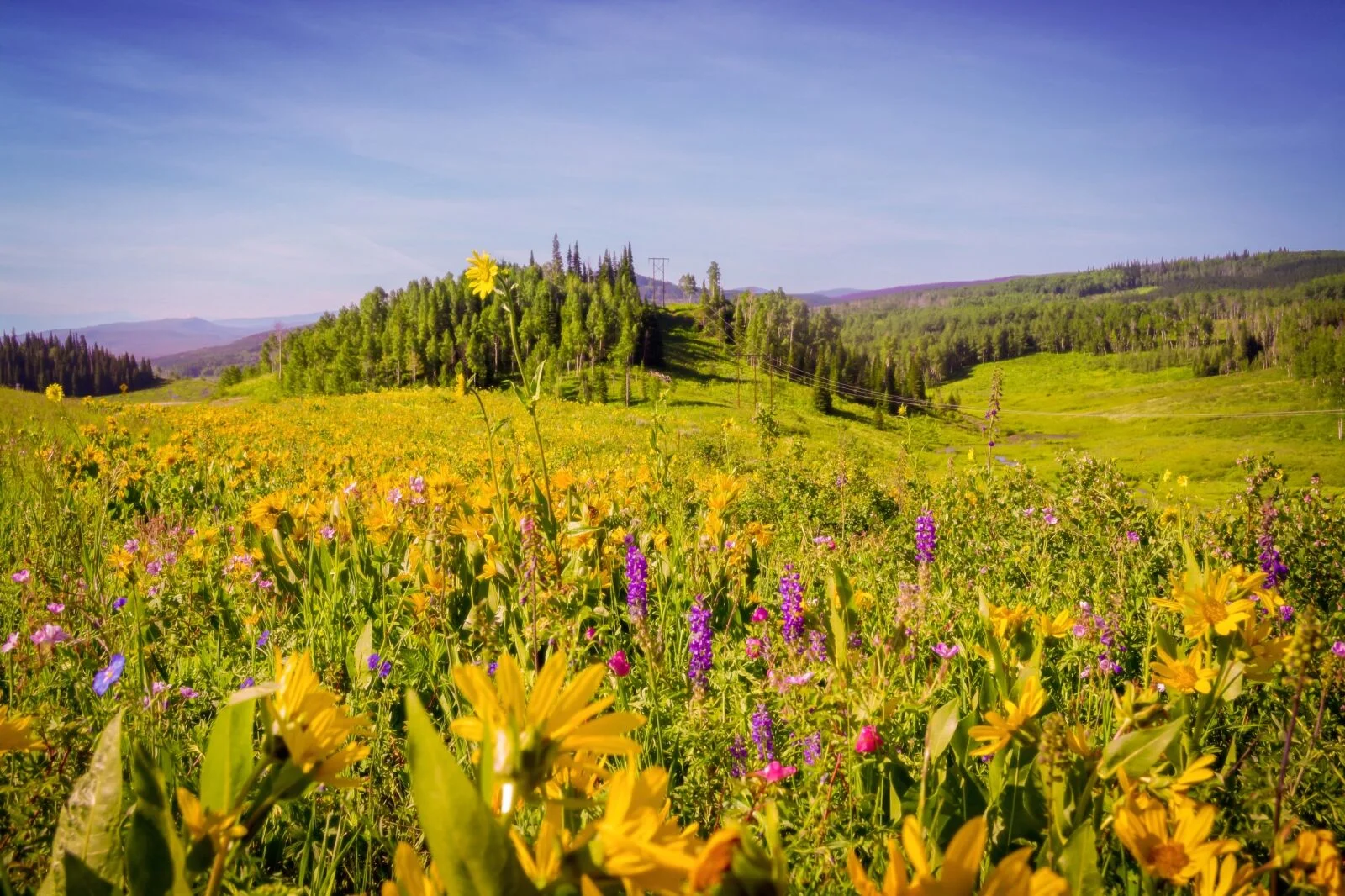
Photo: aburdin1/Shutterstock
Where to see them: Snodgrass Mountain Trail, Rustler Gulch, Judd Falls, Washington Gulch Road, and the meadows along Gothic Road toward the Rocky Mountain Biological Laboratory. For higher-elevation displays later in the season, hike from Schofield Pass or explore the trails off Kebler Pass.
When to go: Late June at lower elevations; peak bloom is typically mid-July through early August, depending on snowpack.
Every July, the high meadows around Crested Butte erupt in color, earning the former mining town its nickname, the Wildflower Capital of Colorado. Snowmelt from the Elk Mountains feeds dense fields of lupine, Indian paintbrush, columbine, mule’s ear, and sunflowers that spread across hillsides and fill alpine basins. Elevation is the key here: blooms start lower in late June and climb uphill as summer progresses, meaning you can often “follow” the flowers for several weeks. The annual Crested Butte Wildflower Festival, typically held in mid-July, offers guided hikes, photography workshops, and identification walks, though you don’t need an event to see the show. Trails begin right from town and extend into Gunnison National Forest, making this one of the most accessible large-scale alpine blooms in North America.
More like this
English bluebells, United Kingdom
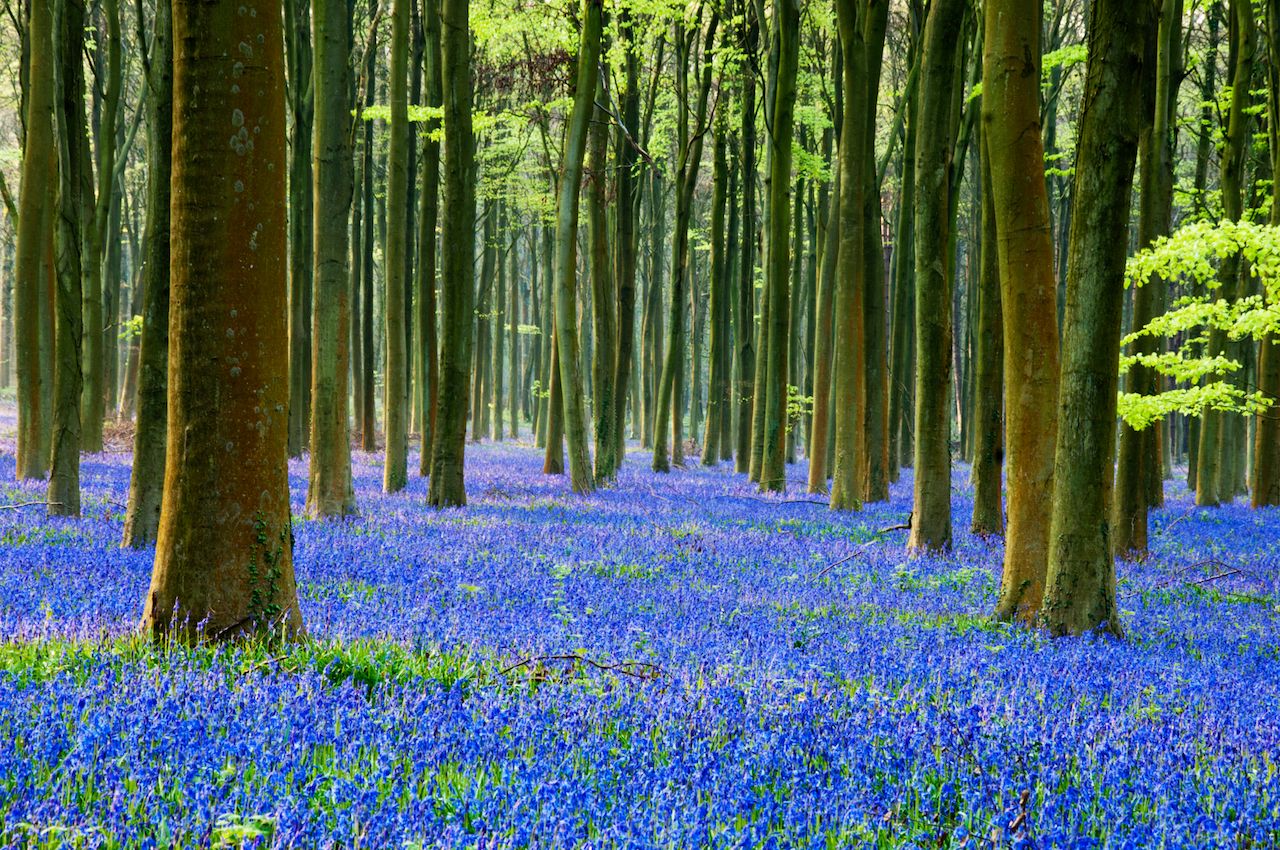
Photo: J Need/Shutterstock
Where to see them: Ashridge Estate (Dockey Wood) in Hertfordshire; Wakehurst, West Sussex; Micheldever Wood, Hampshire; and Clumber Park, Nottinghamshire, to name a few. The National Trust has a comprehensive list of the best bluebell walks, no matter where you are in the UK.
When to go: Mid-April through May, with peak color typically falling in the last two weeks of April, depending on spring temperatures.
All across the UK, bluebells begin blooming midway through April and they don’t let up until May. The purplish, perennial flower blankets ancient woodlands from Northern Ireland, Scotland to Wales and England, but some of the most reliable displays are in England’s old beech forests, where centuries-old tree cover creates the shaded conditions bluebells prefer. The Chilterns are a classic day trip from London, especially at Ashridge Estate’s Dockey Wood, where carpets of bluebells spread across the gently rolling woodland each spring. Farther south, Wakehurst in Sussex and Micheldever Wood in Hampshire are known for dense displays along clearly marked paths. Because many of the best blooms are in protected ancient woodland, visitors are encouraged to stick to trails as trampling can damage bulbs that take years to recover.
Marigolds, Uttarakhand, India
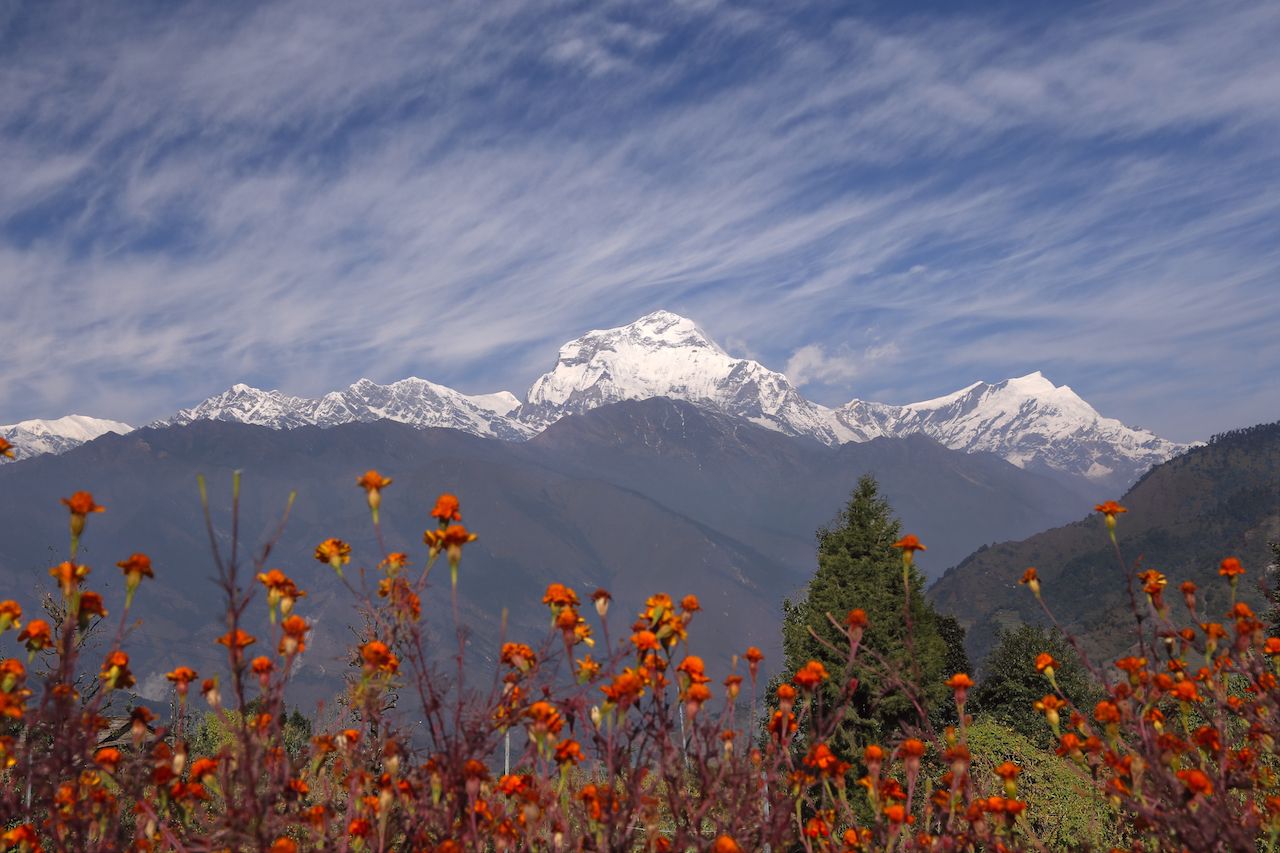
Photo: Olga Lipatova/Shutterstock
Where to see them: Along the main Valley of Flowers trekking route from Govindghat to Ghangaria and into the national park’s marked trails, where most visitors explore on foot over one or two days.
When to go: The park typically opens in early June and closes in early October, with peak flowering usually in August and early September during the height of the monsoon. Entry is restricted to daylight hours, and permits are required at the park gate.
Though the Himalayas typically conjure images of snowy peaks, pockets of mountainous northern India also see remarkable wildflower blooms between June and October. Nowhere is the display more celebrated than Uttarakhand’s Valley of Flowers National Park, where alpine meadows fill with color during the monsoon season. The park forms part of the Nanda Devi and Valley of Flowers National Parks World Heritage Site, recognized by UNESCO for its high-altitude biodiversity. Orange marigolds are a common sight, alongside Himalayan blue poppies, cobra lilies, primulas, asters, and dozens of orchid species. The bloom builds as summer rains intensify, transforming the valley into one of India’s most striking seasonal landscapes.
Mount Rainier Subalpine Meadows, Washington State
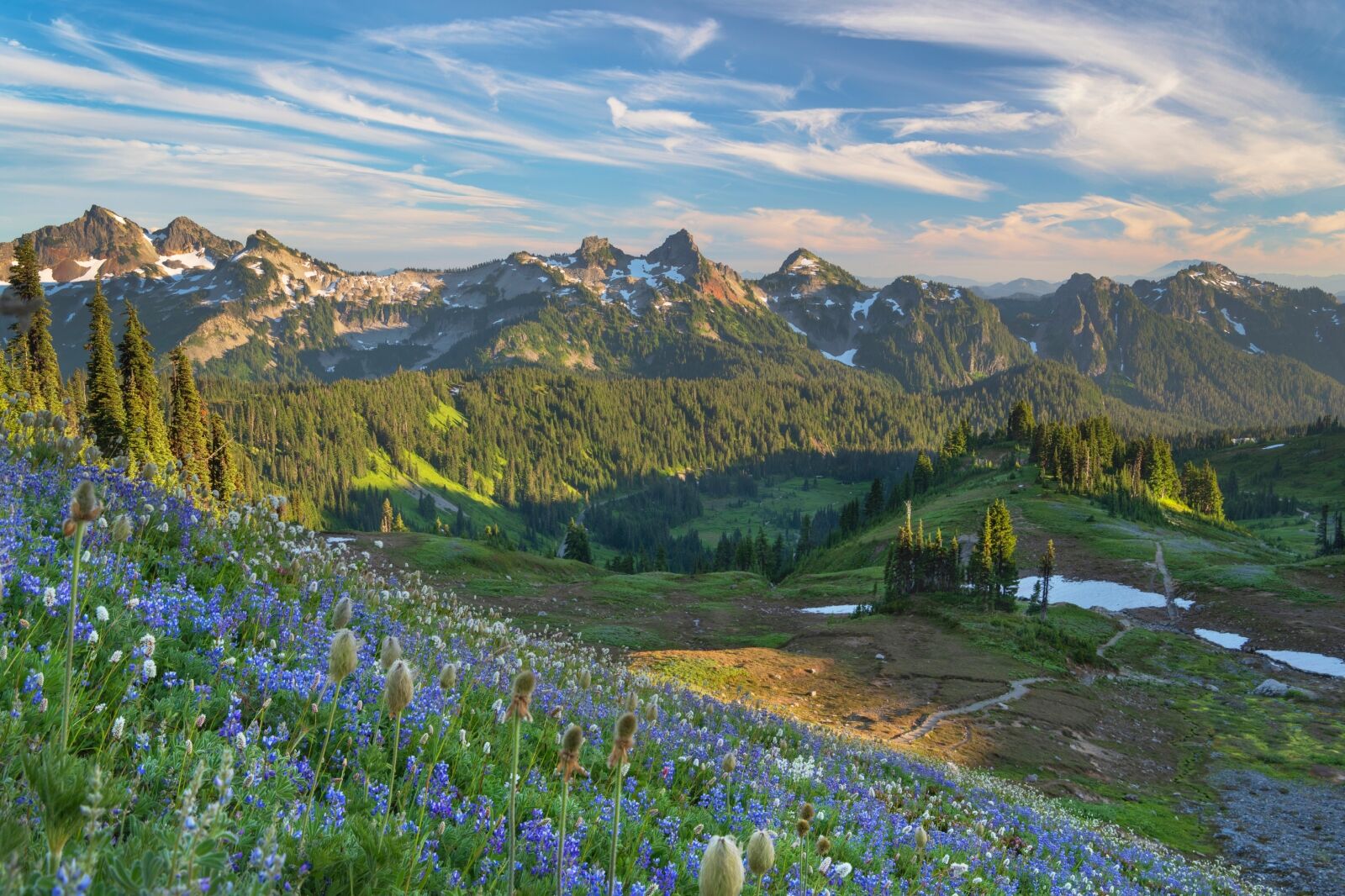
Photo: Danita Delimont/Shutterstock
Where to see them: Paradise area trails, including Skyline Trail and Nisqually Vista; Sunrise Rim Trail; Naches Peak Loop (just outside the park’s northeast entrance); and the meadows along Tipsoo Lake.
When to go: Late July through mid-August in most years, with peak bloom often landing in the first two weeks of August, depending on snowmelt.
By mid-summer, the snow begins to recede from Mount Rainier’s flanks, revealing some of the most concentrated subalpine wildflower displays in the US. Thanks to the mountain’s elevation, bloom season doesn’t begin in earnest until late July, when meadows at Paradise and Sunrise fill with avalanche lilies, magenta paintbrush, lupine, beargrass, and asters. The timing shifts each year depending on winter snowpack, but once the thaw moves uphill, the flowers follow in waves. Because Rainier rises more than 14,000 feet above sea level, you can often track the bloom upward over several weeks, starting at lower elevations and progressing to higher trails as summer advances. Clear days bring views of glaciers and snowfields as a backdrop, though weather can change quickly even in August.
Rhododendrons, Ireland
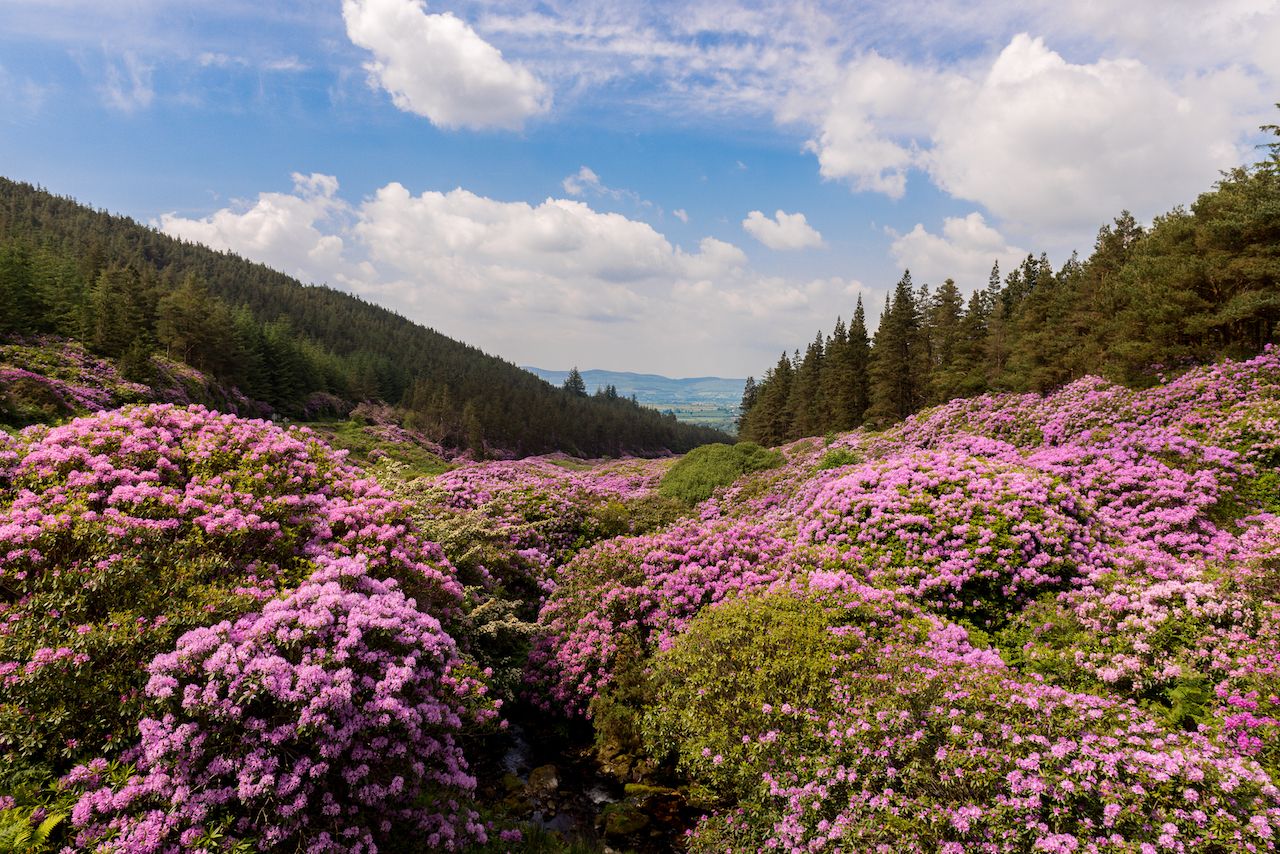
Photo: FRDMR/Shutterstock
Where to see them: Vee Pass (R668) in County Tipperary; areas around Kenmare in County Kerry; and selected sections of Killarney National Park, where access remains open along marked trails despite eradication efforts.
When to go: Mid-May through mid-June in most years, with peak color typically landing in late May, depending on spring temperatures.
Rhododendrons bloom across parts of Ireland each late spring, their clusters of pink-purple flowers drawing visitors to scenic drives and upland valleys between May and June. The species most often seen in the wild is Rhododendron ponticum, introduced in the eighteenth century as an ornamental but now regarded as one of Ireland’s most widespread invasive plants. It thrives on acidic soils in woodlands, bog margins, and mountain slopes, forming dense thickets that outcompete native vegetation and suppress the regeneration of oak and other indigenous trees. Nowhere has the impact been more visible than in Killarney National Park, where long-running removal efforts aim to restore native woodland even as the blooms remain a striking seasonal sight.
Killarney is hardly the only place to see the flowers. In County Tipperary, the scenic drive over Vee Pass between Clogheen and Lismore is known for hillsides washed in color when conditions align. Around Kenmare in County Kerry, roadside stretches and woodland edges can also be thick with blossom in late spring. Visitors should be aware that many sites are actively managing the plant, and some areas may be fenced or under restoration as part of ongoing control programs.
Southern Hemisphere
Atacama Desert Bloom, Chile
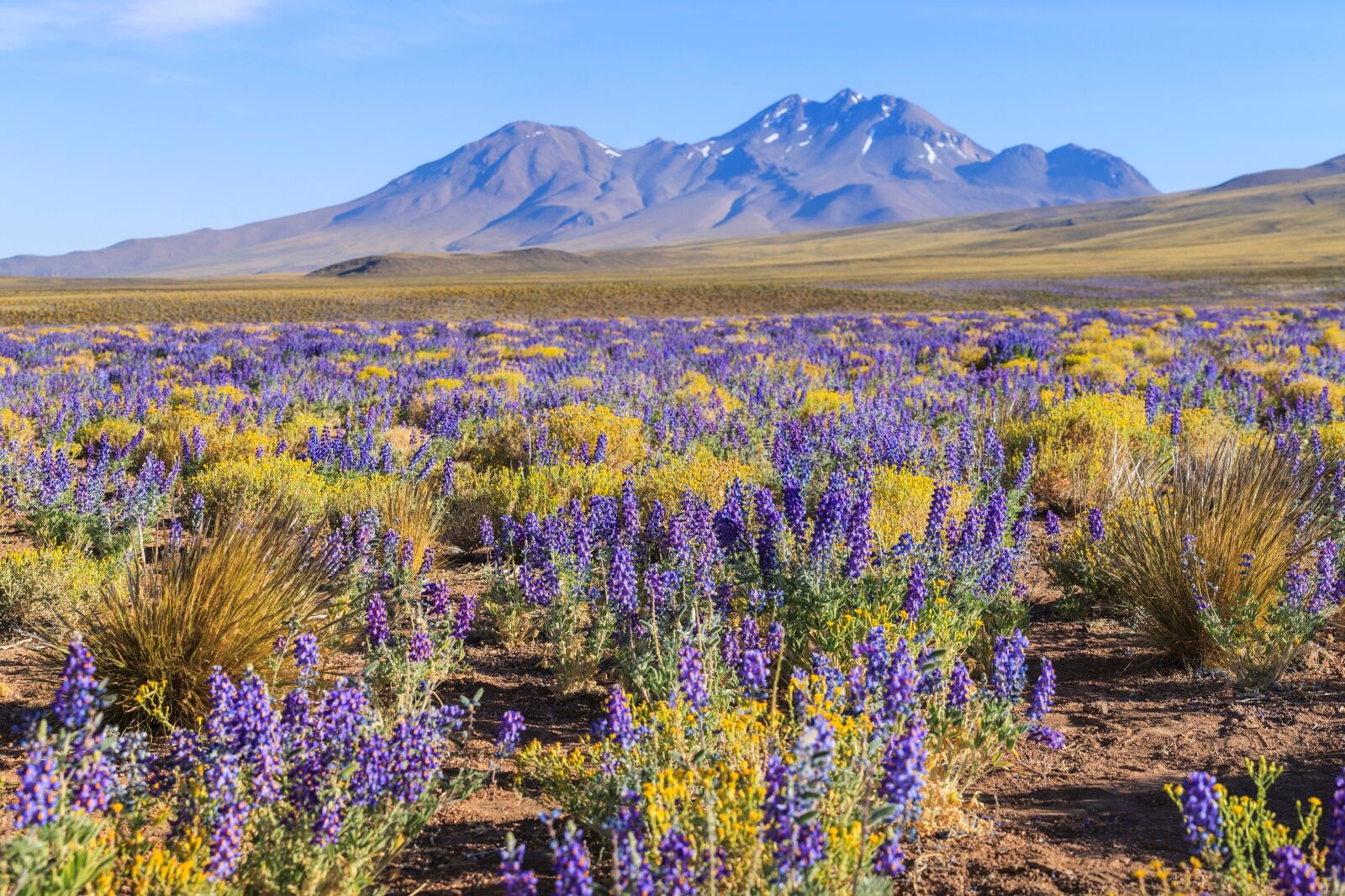
Photo: sunsinger/Shutterstock
Where to see them: Llanos de Challe National Park; stretches of Route five between Vallenar and La Serena; and coastal areas near Caldera and Huasco, where blooms often meet the Pacific.
When to go: September through early November in bloom years, with peak typically in October. Monitor updates from Chile’s national park service and regional tourism offices before booking, as significant blooms do not occur every year.
Something extraordinary happens in northern Chile after rare winter rains: the driest desert on Earth briefly turns into a patchwork of color. Known locally as the desierto florido, the Atacama Desert bloom appears only in years when sufficient rainfall falls between May and August, triggering dormant seeds that can lie underground for years. When conditions align, usually between September and early November, vast stretches of sand and scrub fill with pink pata de guanaco, violet añañuca, white suspiros, and bright yellow nolanas. The spectacle is concentrated in the Atacama and Coquimbo regions, particularly along the coastal desert south of Copiapó, where fog and moisture from the Pacific help sustain the display. Because bloom years are unpredictable and vary in intensity, timing and location matter far more here than in most wildflower destinations.
Lupins, Lake Tekapo, New Zealand
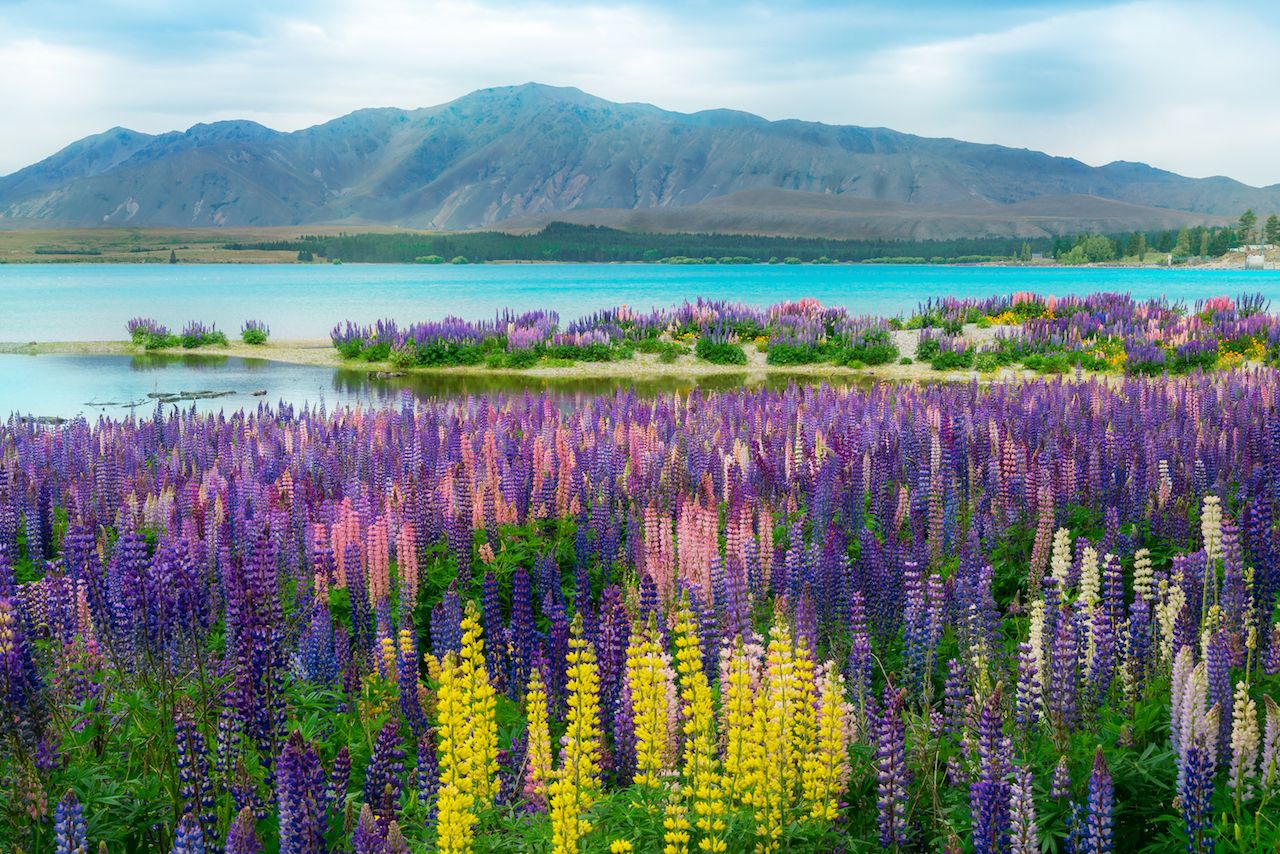
Photo: Blue Planet Studio/Shutterstock
Where to see them: Lake Tekapo’s shoreline near the Church of the Good Shepherd; stretches of State Highway 8 between Lake Tekapo and Lake Pukaki; and along sections of the Tasman River and Mackenzie Basin backroads.
When to go: Mid-November through late December, with peak color usually in late November and early December, depending on seasonal conditions.
Lupins grow across much of New Zealand, but the flowers that ring the South Island’s Lake Tekapo are the most photographed. Each year between mid-November and late December, the shoreline of the turquoise glacial lake fills with tall spikes of purple, pink, blue, and white Russell lupins, set against the Southern Alps. The timing coincides with early summer in the Southern Hemisphere, and on calm days the flowers frame views of the Church of the Good Shepherd and the surrounding peaks. The display shifts slightly each season depending on temperatures and rainfall, but late November typically brings the fullest color around the Mackenzie Basin.
While the blooms draw visitors from around the world, lupins are not native to New Zealand. Introduced in the 20th century, they have spread widely through the Mackenzie Basin, where they compete with indigenous plants and alter riverbank ecosystems. Local authorities continue to debate and manage their spread, balancing tourism interest with conservation concerns.
Namaqualand daisies, South Africa
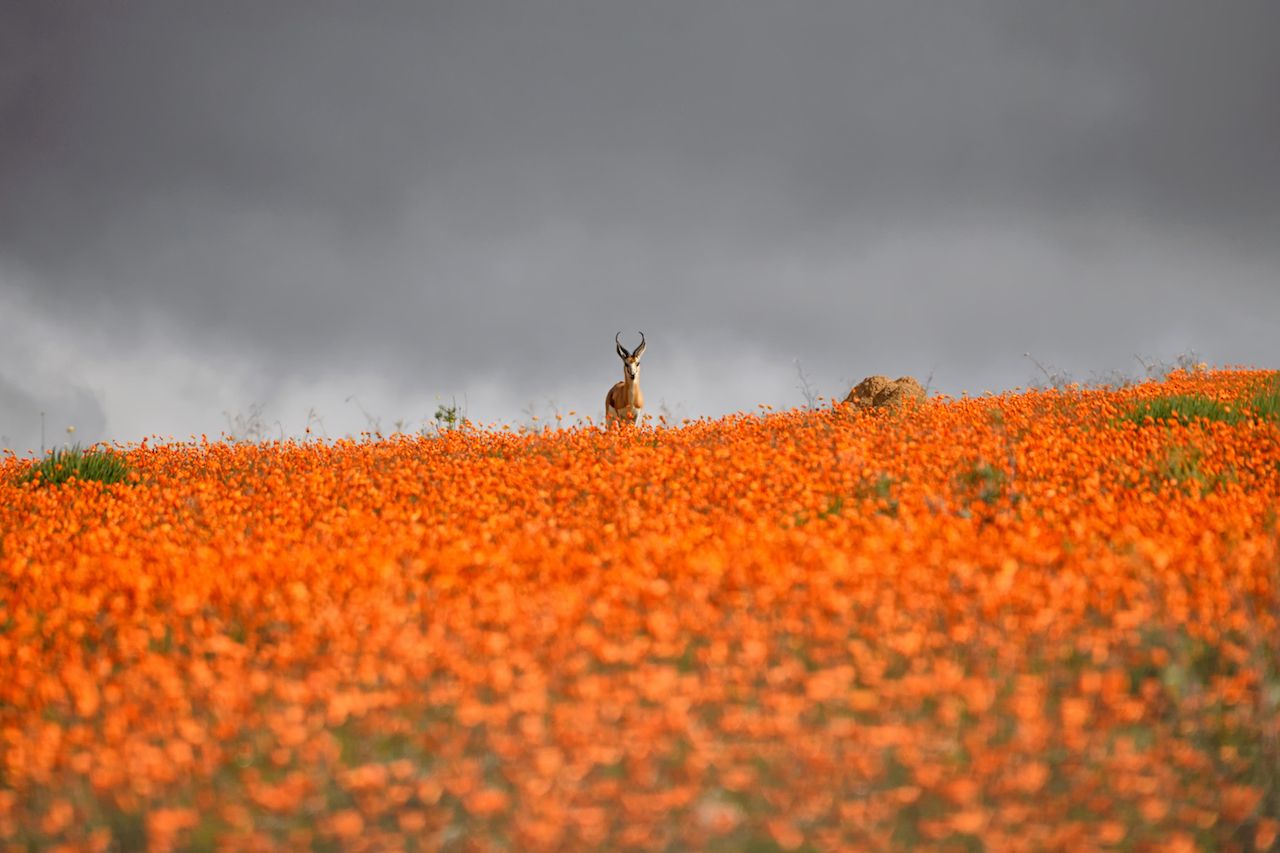
Photo: Cathy Withers-Clarke/Shutterstock
Where to see them: Namaqua National Park near Kamieskroon; Goegap Nature Reserve outside Springbok; the Skilpad section of Namaqua National Park for especially dense displays; and stretches of the N7 between Garies and Springbok.
When to go: Mid-August through September in most years, with peak bloom often concentrated in a two- to three-week window depending on winter rainfall. Plan to visit between late morning and mid-afternoon, when the flowers are open.
Something remarkable happens in August and September near the Namibia–South Africa border: the orange, arid sands of Namaqualand give way to fields of even brighter orange daisies. After winter rains sweep across the Northern Cape, millions of Namaqua daisies, along with yellow gazanias, pink and white vygies, and other hardy annuals, blanket the landscape. The display shifts each year depending on rainfall, with the most reliable blooms typically found west of the N7 highway between Garies and Springbok. The Namaqualand Flower Route runs roughly five hours north of Cape Town and passes through towns such as Kamieskroon and Port Nolloth, with several protected reserves along the way where visitors can walk marked trails rather than view the flowers from the roadside. The daisies open fully in direct sunlight and close again when skies turn overcast, so timing your visit for a bright day makes a noticeable difference.