- Sport
- Tennis
Nicola Pietrangeli won the French Open twice and had a remarkable Davis Cup record
Andrea MandalaMonday 01 December 2025 09:25 GMTComments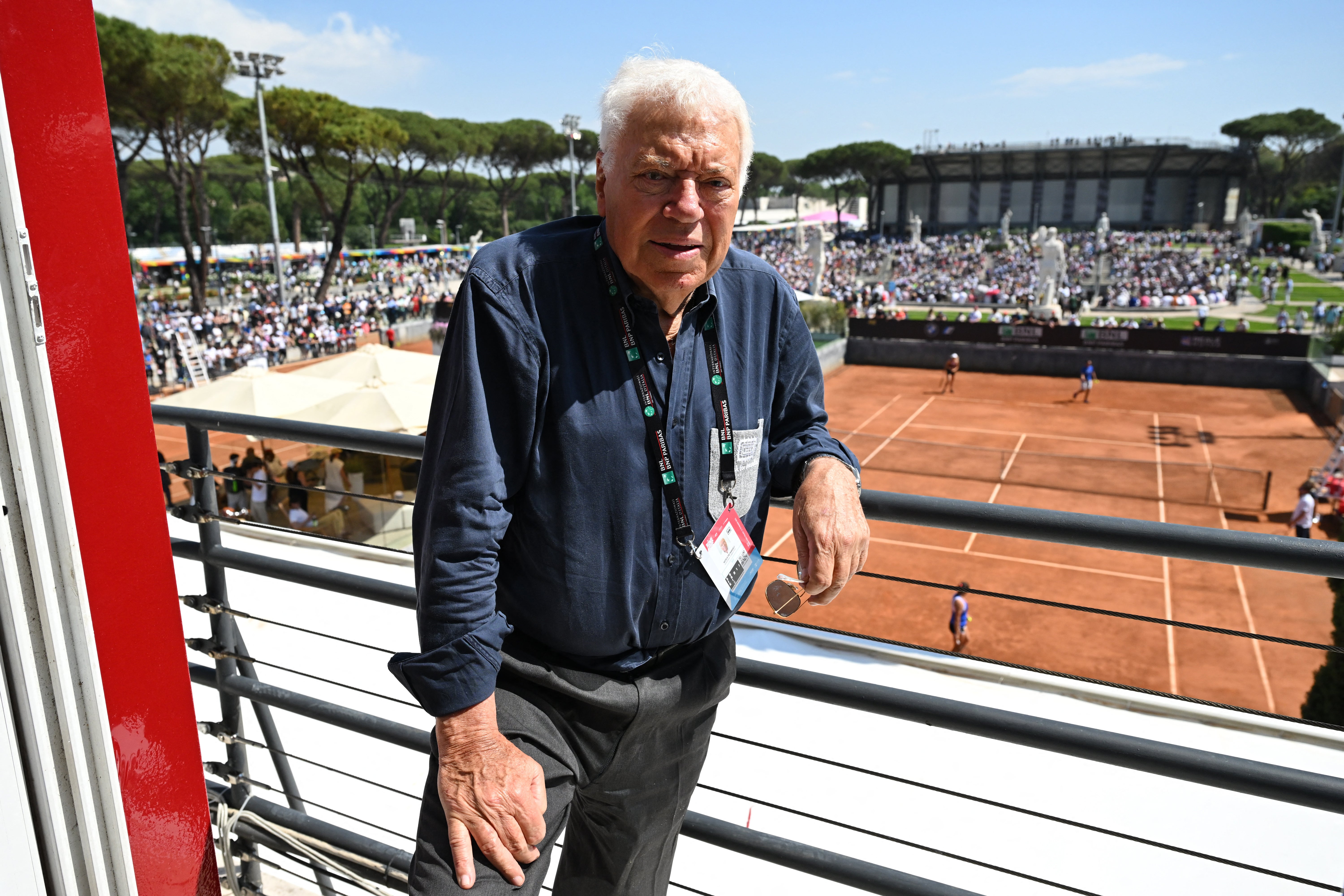 open image in galleryNicola Pietrangeli has died at the age of 92 (AFP via Getty Images)
Join the Miguel Delaney: Inside Football newsletter and get behind-the-scenes access and unrivalled insight
Join the Miguel Delaney: Inside Football newsletter
Join the Miguel Delaney: Inside Football newsletter
Email*SIGN UPI would like to be emailed about offers, events and updates from The Independent. Read our Privacy notice
Nicola Pietrangeli, the Italian tennis legend whose elegant play and charismatic persona captivated a nation, has died at the age of 92.
The Italian tennis federation announced his passing on Monday, noting he had been in declining health following a hip fracture in December 2024. The cause of death was not immediately known.
Pietrangeli’s career spanned an era vastly different from today’s professional circuit, a time when passion often outweighed profit.
This was vividly illustrated during the 1960 French Open final. As he later recounted, he removed his shoes in the locker room during a break, only to find his socks soaked red with blood.
His opponent, Chile’s Luis Ayala, had relentlessly deployed drop shots and lobs, forcing Pietrangeli into a gruelling dance across the clay until the skin on his feet peeled away.
Yet, he returned to the court, playing on raw flesh, and claimed his second Roland Garros crown, earning a modest $150 prize.
Rafael Nadal, the Spanish tennis great, reflected on that bygone era in 2024, stating: "It was truly a completely different world — much less professional. Yet it produced great champions like Pietrangeli, who helped our sport grow and improve in every way, both on and off the court."
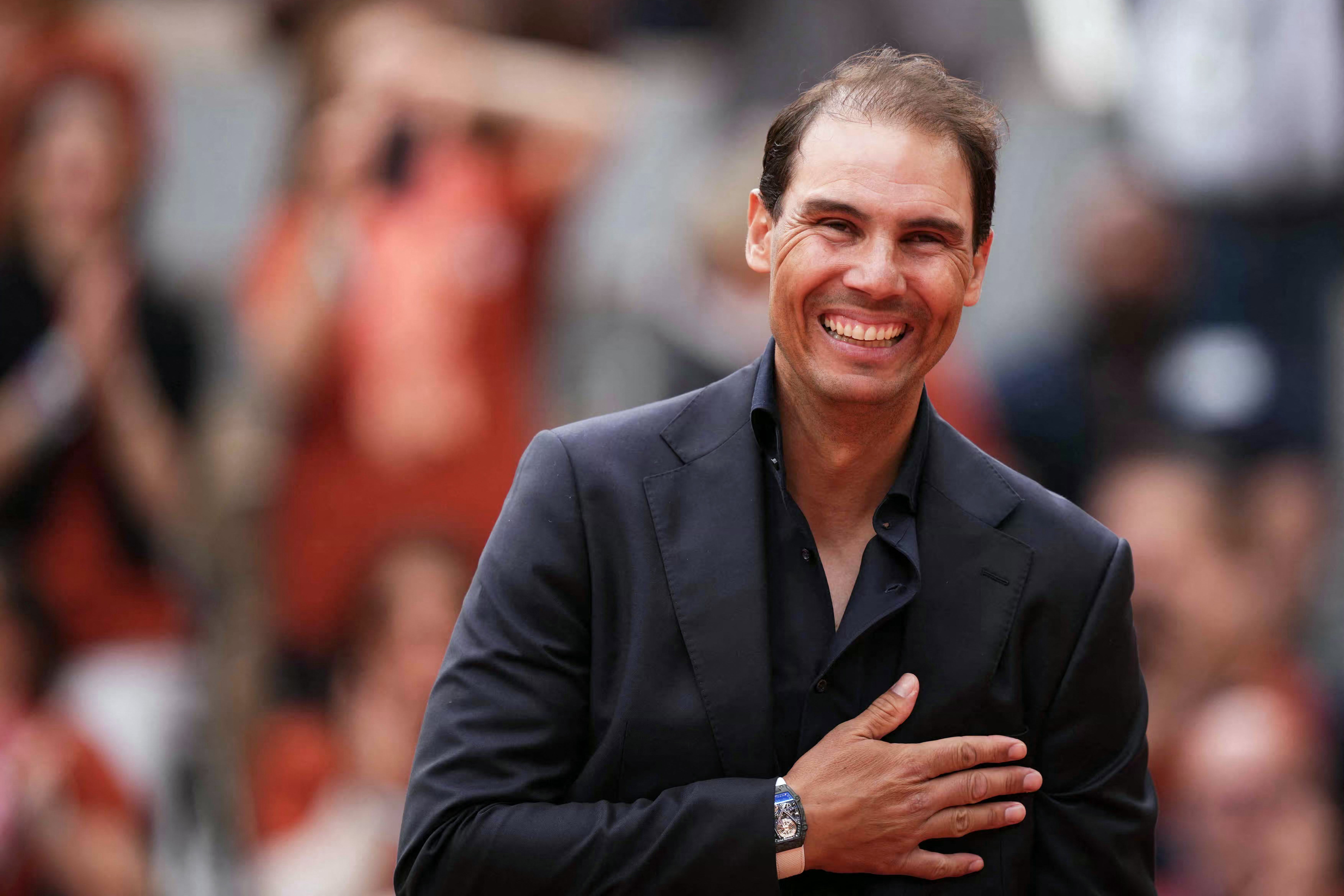 open image in galleryRafael Nadal previously hailed Pietrangeli as a great champion (AFP via Getty Images)
More than just a champion, Pietrangeli was a cultural phenomenon who brought tennis into the national consciousness of Italy.
With his movie-star looks, cosmopolitan charm, and a backhand that seemed to float on air, he transformed the sport from an elite pastime into a national obsession. The Italian Tennis Federation hailed him as "the father of our tennis movement."
Despite his extraordinary talent, Pietrangeli openly admitted he was not one for rigorous practice, thriving in an age where charisma and joy often took precedence over strict discipline.
"I often hear people say, 'If you had trained more, you would have won more.' That's true, but I would have had much less fun," he remarked during the 2024 presentation of the documentary "Nicola vs Pietrangeli," as quoted by the Corriere della Sera newspaper.
His exuberant life saw him become a fixture of the 1960s jet set, mingling with stars like Marcello Mastroianni, Brigitte Bardot, and Claudia Cardinale.
On court, Pietrangeli secured two French Open singles titles in 1959 and 1960, a doubles title in 1959, and a mixed doubles title in 1958.
He reached four Roland Garros finals and a Wimbledon semifinal in 1960. Throughout his career, he amassed 48 titles, including two Rome Masters.
 open image in galleryPietrangeli had a remarkable record in the Davis Cup (GETTY IMAGES)
However, it was in the Davis Cup, the international team event, where he truly excelled, playing a record 164 matches and winning 120 – a feat that remains unmatched.
Italy was a Davis Cup runner-up in 1960 and 1961 with Pietrangeli as a player. But it was as captain, three years after his retirement from playing, that he led the national team to victory in 1976.
This final, against Augusto Pinochet’s Chile, was politically charged, sparking national protests in Italy. Behind the scenes, tensions within the Italian team were also high, with Pietrangeli clashing with star player Adriano Panatta.
He was removed from his captaincy two years later, marking a bitter end to his direct involvement with the Davis Cup.
Nevertheless, his broader legacy remained untarnished. He was inducted into the International Tennis Hall of Fame in 1986, the first Italian to receive the honour.
The Hall of Fame noted his "classic strokes, a conventional game plan, and an economy of effort that made him a supreme clay court player." In a rare tribute for a living athlete, the second largest tennis stadium within Rome's Foro Italico sports complex was named after him in 2006.
Born Nicola Chirinsky Pietrangeli on 11 September 1933, in Tunis, then a French protectorate, his childhood was shaped by war and displacement. His father, an Italian amateur tennis player, met his Russian refugee mother there.
"I wasn’t even ten years old yet. I was great at counting warplanes just by the sound," he recalled in his 2023 autobiography, "Se piove rimandiamo" ("If it rains, we postpone"). "One evening, three bombs fell in our garden."
After the Allied occupation of Tunisia during World War II, his father was interned, and young Nicola began hitting balls on a tennis court inside the prison camp.
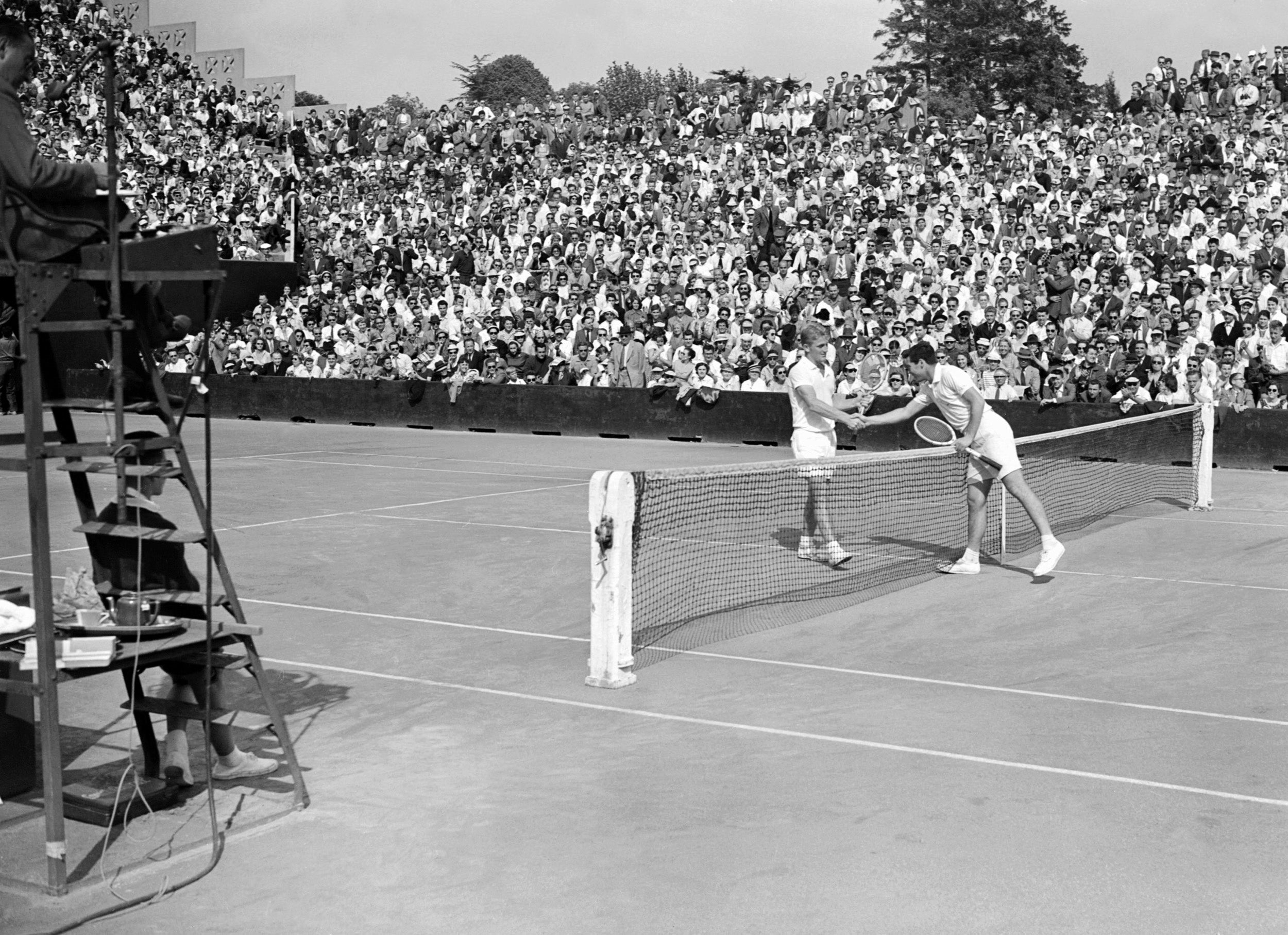 open image in galleryPietrangeli (right) won the French Open twice (AFP via Getty Images)
The family later settled in Rome, where he learned Italian. Until he was 19, he was more proficient at football, even playing for Serie A club Lazio’s youth team, but ultimately chose tennis, believing it would allow him to travel more widely.
He quickly rose through the ranks, playing the Italian Open by 1952 and becoming a Grand Slam champion by 1959, though he harboured a lifelong regret of never winning Wimbledon.
Often labelled a "ladies' man," a tag he always rejected, Pietrangeli was married for 15 years to model Susanna Artero, with whom he had three sons: Marco, Giorgio (who passed away in 2025), and Filippo. He later had a seven-year relationship with TV presenter Licia Colò.
Referring to these and two other significant women in his life, he once said: "I loved all of them. And all four left me (...) I suppose I must have deserved it."
A true bon vivant, he prioritised pleasure over rigour. Italian sports commentator Rino Tommasi observed: "Nicola could not live differently, he would never say no to a party, a dinner, a woman to play a better game."
In his later years, Pietrangeli never lost his appetite for the spotlight, offering sharp appraisals of modern tennis and its stars. While critics accused him of envy towards new generations, he denied these claims.
Following Italy’s Davis Cup victory in 2024, he commented on then world number one Jannik Sinner, stating he was "on the right path to break all my records," but added, "one remains impossible to beat: my 164 Davis Cup matches."
In his autobiography, he even imagined his funeral, wishing it to be held at "his" Pietrangeli stadium in Foro Italico, noting its 3,000 seats, parking, and covered passage for rain.
Pietrangeli remained a beloved, if occasionally cantankerous, figure in Italian sport.
He never stopped watching the game, talking about it, or believing in its magic. "I never played for the money," he once said. "I played because I loved it. And because I looked damn good doing it."
More about
Davis CupFrench OpenItalianRomeJoin our commenting forum
Join thought-provoking conversations, follow other Independent readers and see their replies
Comments