“Working the land is part of our nature,” Sandra Naimán says, showing us around her potato and giant garlic plots on the Chilean island of Quinchao, a hop by ferry from Isla Grande de Chiloé. “We should not fear the outside,” the Indigenous Huilliche farmer explains. On the contrary, local lore warns that going for a walk in the woods of this Patagonian archipelago has the risk of running into an axe-wielding figure with a penchant for abducting young women. But these tales are saved for the stoveside; the daily life of a Chilote is grounded in working the land and sea.
First inhabited by the Huilliche people and the now-extinct seafaring Chono people, Chiloé comes from the word Chilwe (or Chilhué): the place of seagulls. Native tepa and alerce trees compete for soil with the Jurassic-era nalca (Chilean rhubarb) growing abundantly in the island’s rainforests and agricultural plains. Palafitos (stilt homes) pose for photos in Castro while proving practical for their fishermen inhabitants. Sixteen UNESCO-designated churches are almost the sole proof of external influence on an island that fiercely resisted colonization and still feels a world apart from mainland Chile. Villages bear Huilliche names, days unfold around the tides, and Chilotes are fiercely protective of their traditions, which, besides staying on good terms with mythical creatures, are rooted in creating community.
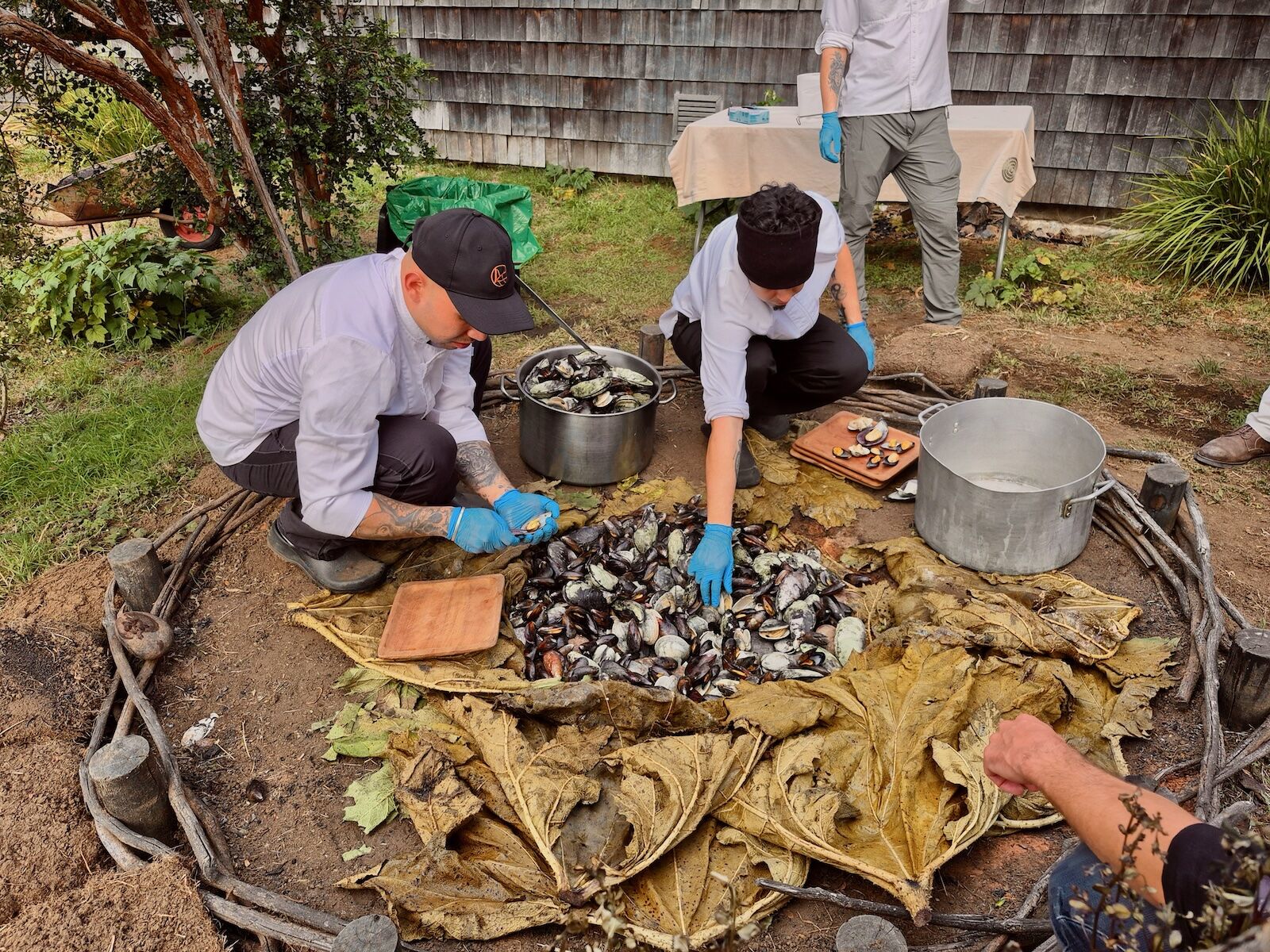
A curanto ceremony. Photo: Hannah D. Cooper
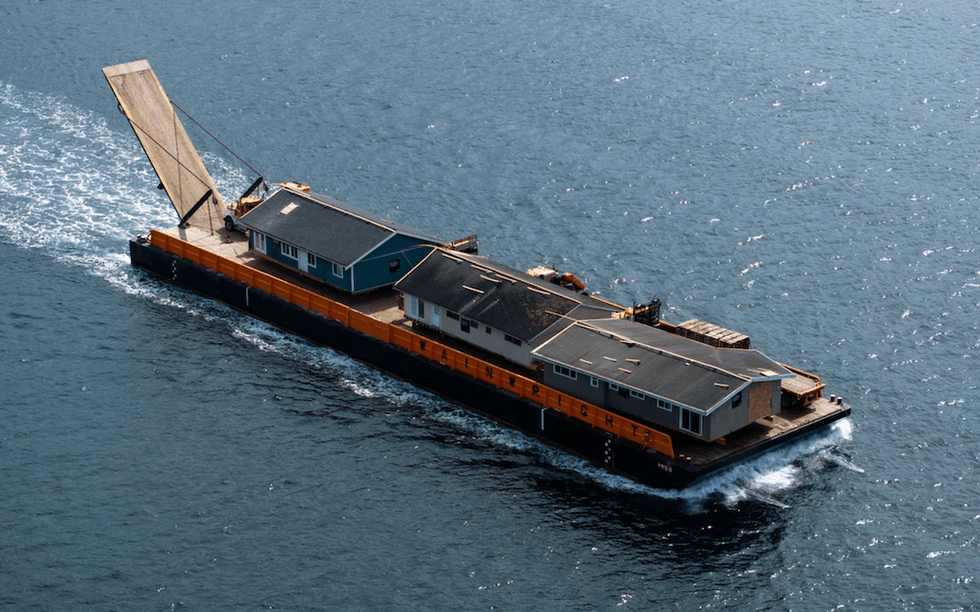
Unique to Chiloé, the minga is an act of mutual goodwill and aid. The most talked-about incarnation sees neighbors mucking in to heave homes from one spot to another, usually due to agricultural or environmental demands. As the guides at Refugia Chiloé would tell me, participation in a minga is less about the deed and more about maintaining solidarity and social belonging (which is why the slow-cooking culinary ritual known as the curanto usually follows).
Sustaining rural communities and Chilote ways is reflected in the work of Sandra Naimán and shellfish farmer Justo García, who at the same time preserve Chiloé’s biodiversity through small-scale agriculture and aquaculture.
Ambassador of the land
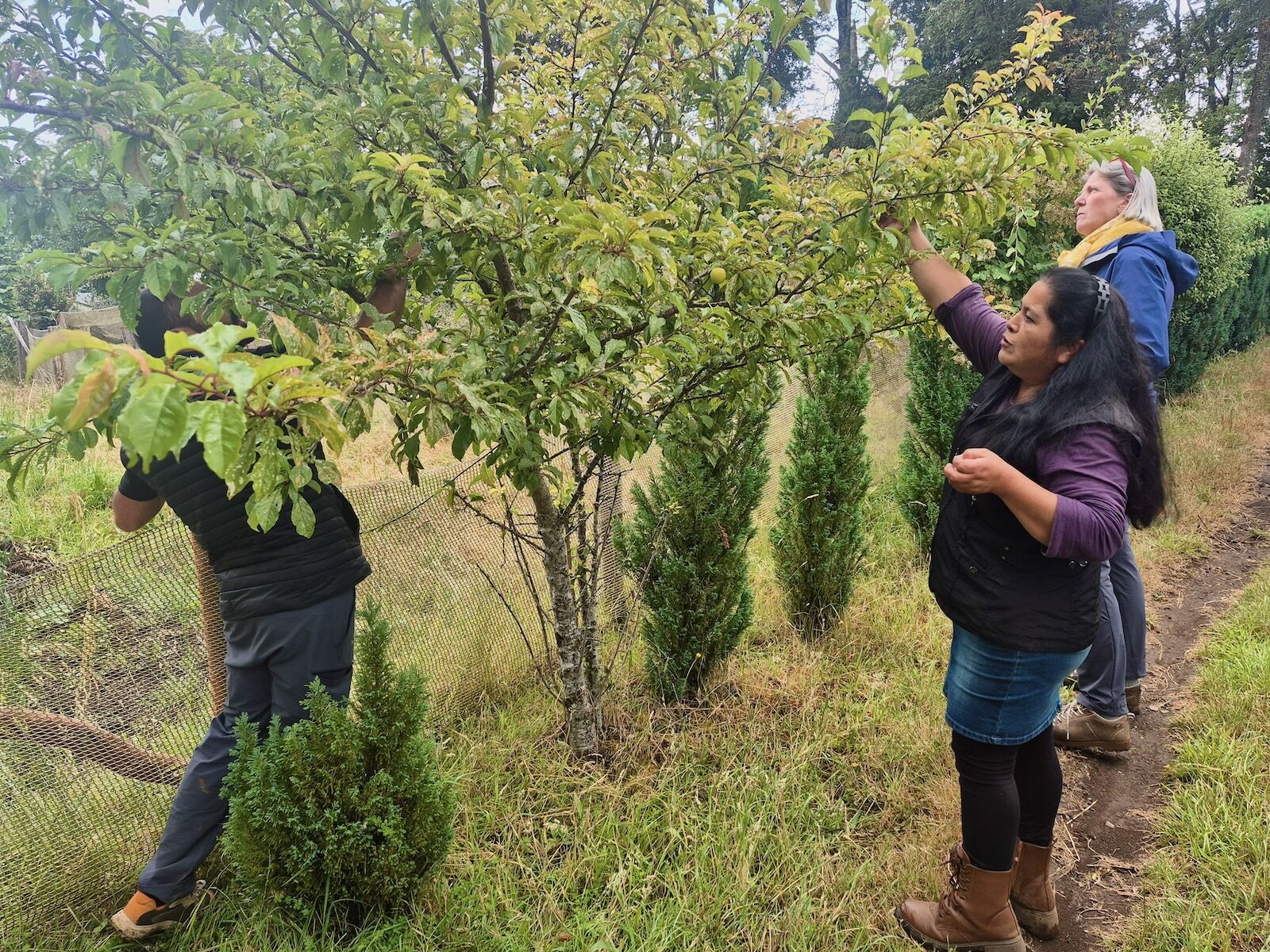
Sandra Naimán, front, picking fruit from her orchard. Photo: Hannah D. Cooper
Refugia Chiloé is serious about its all-inclusive offering. Besides outdoor excursions, this eco-luxe lodge connects travelers with those responsible for the food created by Francisco Castañeda. After leaving school at 14, Naimánshe’s tenure in the salmon industry sparked her passion for organic farming, and she eventually purchased three hectares of land in the backyard of her childhood home. Besides the ancestral knowledge passed down from her grandmother, most of what Sandra knows comes from trial and error.
“Farming takes patience,” Naimán tells our group of three at her Quinchao smallholding. “We can work for months before seeing profit,” she states matter-of-factly, explaining how she tends the land seven days a week, 365 days a year. Steered by the seasons and Chiloé’s fickle weather (we experienced all four seasons during our visit), she is loyal to low-impact techniques like crop rotation. As we walk, she spritzes lettuce with chili water, a natural insect repellent, and points out her system for collecting rainwater (no shortage of that in Chiloé) for irrigation. Naimán’s seedbank is her pride and joy; she is the guardian of native Chilote crop seeds on the brink of extinction. As a mentor within the community, she shares her wisdom via WhatsApp with agriculturally-curious islanders – a modern manifestation of oral traditions — and schools young women in agriculture.
Is it typical of a Chilote woman to run her own farm? Absolutely not. While women of Chiloé do work the land, proprietorship is the remit of male kin. Naimán does 95 percent of the work — sowing, harvesting, and construction — herself, knowing that when she does need a helping hand, she can rely on support from her community. As it turns out, this extends to us, so we roll up our sleeves and join in hoisting weeds from the crops before sitting down for homemade sopapillas.
Sustainable aquaculture in Chilean Patagonia
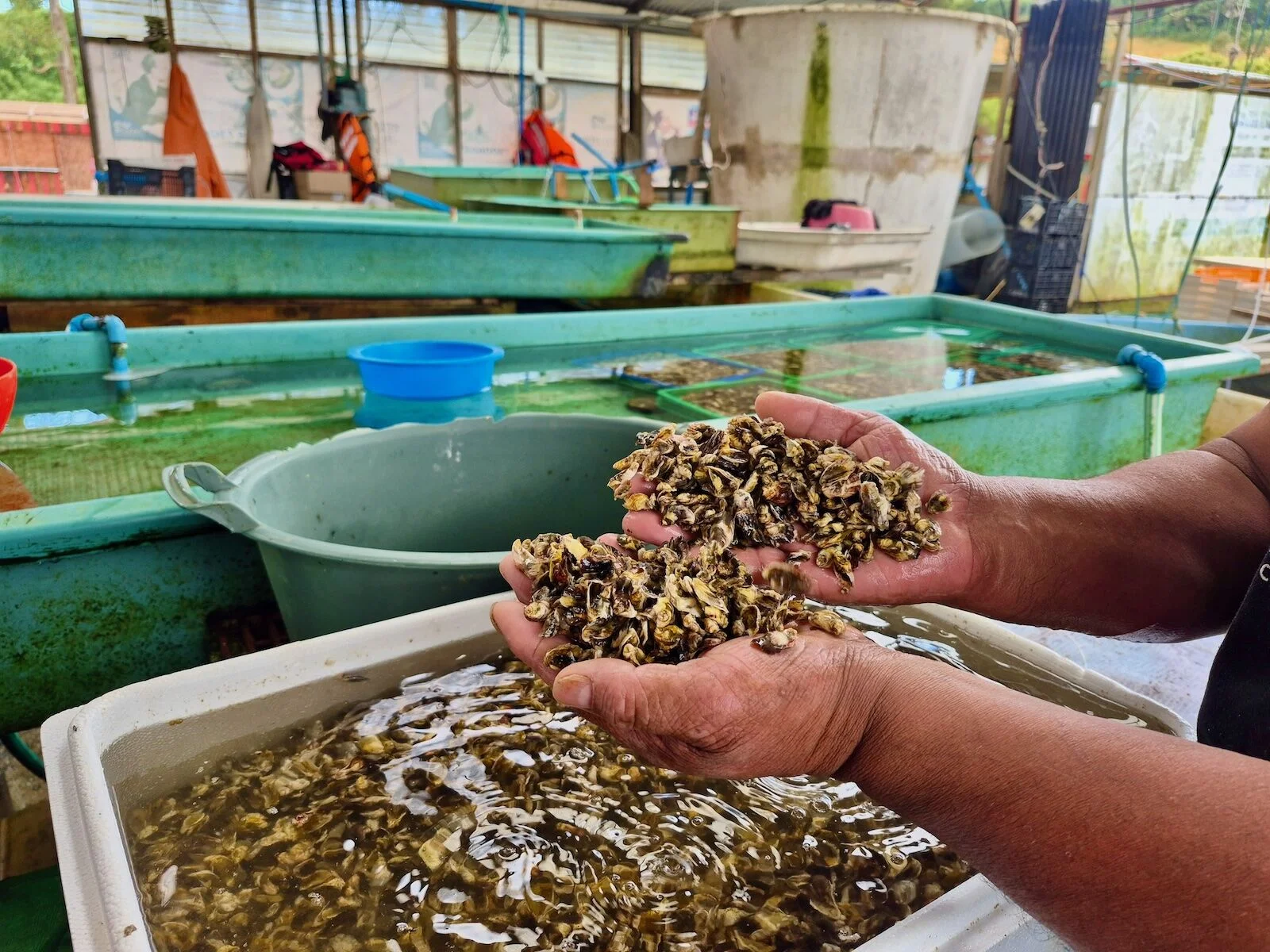
shellfish at Justo Garcia’s farm. Photo: Hannah D. Cooper
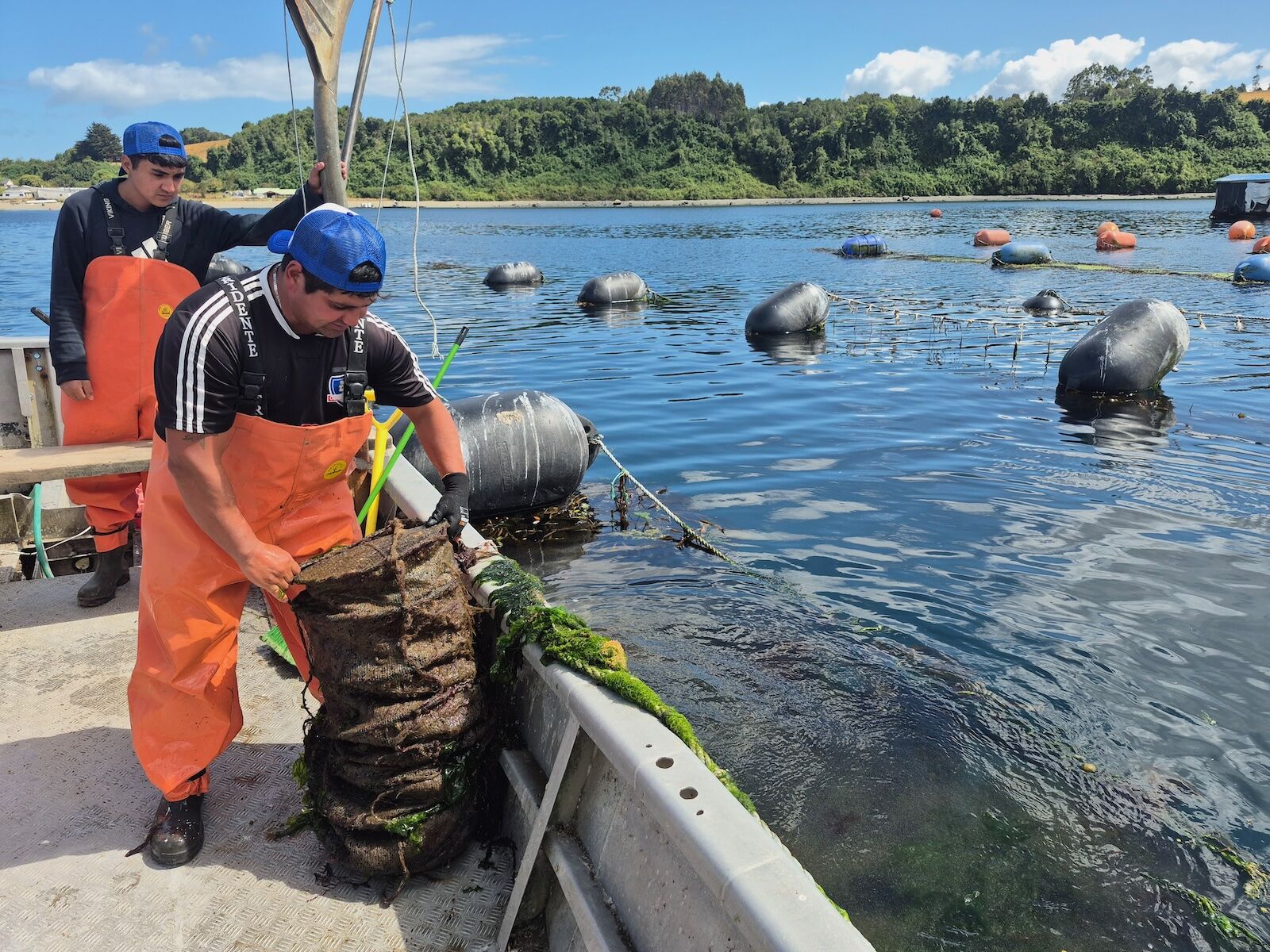
Two hours north of Castro in Manao’s calm bay, Justo García cultivates slow-growing Chilean oysters, fast-growing Japanese oysters, mussels, and ostiones (Chilean scallops). The morning I visited García’s center coincided with a last-minute order of 2,000 units from a restaurant. As his team cleaned and shucked at the speed of light, competing with the radio in breakneck Chilote dialect, he explained how his progressive system of hatchery tanks supports the growth of bivalve molluscs.
“I am always investigating different techniques I can use,” García tells our group, unlocking the door to his laboratory where he produces microalgae to nourish the larvae and spat. Although not the only small-scale aquaculturist in Chiloé, García stands alone creating artificial algae, under his commitment to sustainable aquaculture. The spat reaches maturity in the offshore nursery, feeding on mineral-rich microorganisms from the Humboldt Current without the need for artificial additives. As well as providing a livelihood to Chilote families such as his, shellfish support the marine ecosystem by serving as natural filters and purifiers.
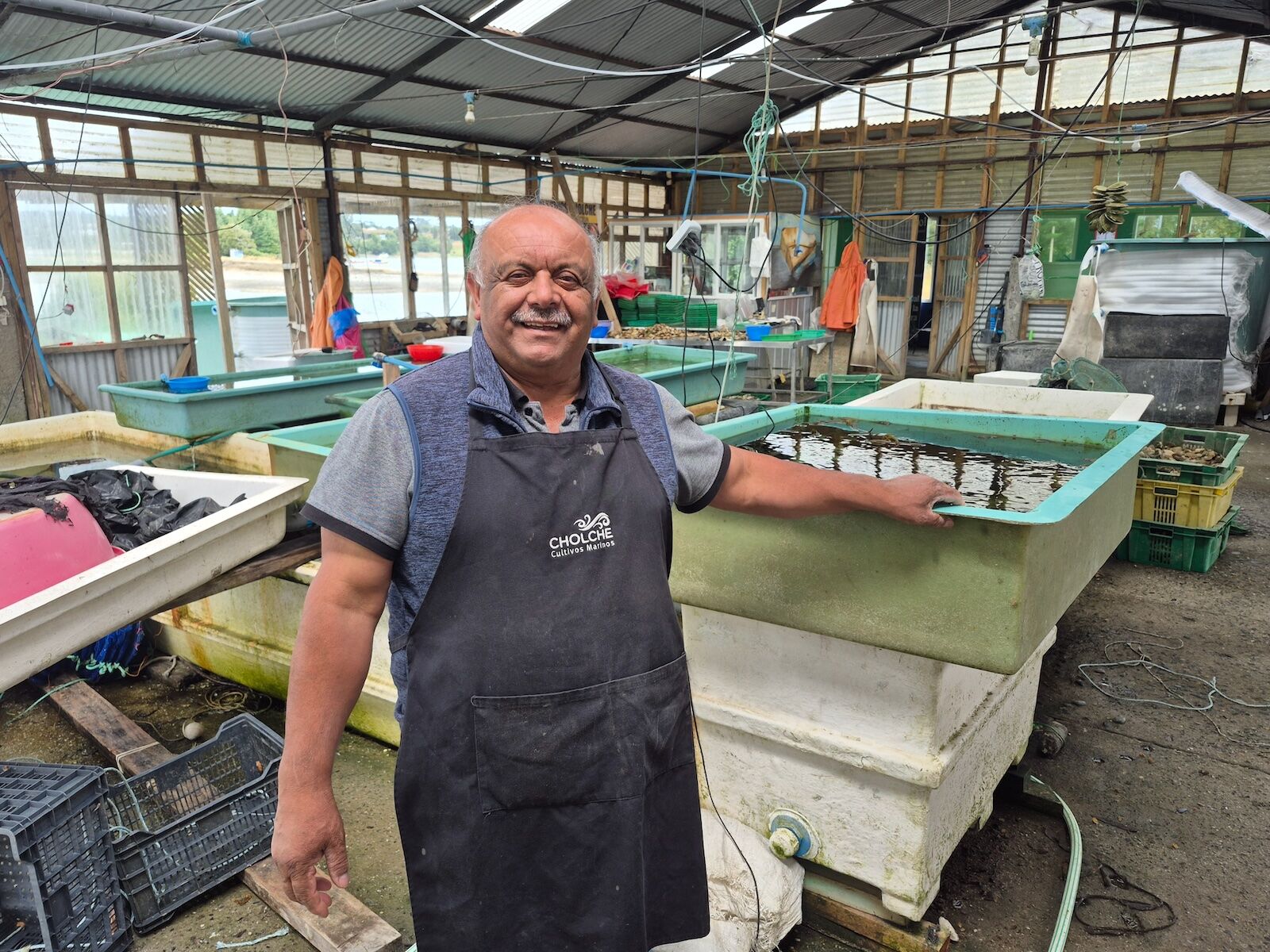
Justo García. Photo: Hannah D. Cooper
“The Chilean oyster is the shellfish most representative of Chiloé,” García says, revealing that the “ostrea chilensis” is found exclusively in Chile (mostly in Chiloé) and New Zealand. And with that, we are handed over to his colleague, Rodrigo, who — with the aid of two college students and a pod of dolphins — sails us to his floating office to try them for ourselves. As we slurp molluscs scooped fresh from the salty waters, Rodrigo explains how he rotates stock between the nets: laborious work carried out by hand, in adherence to artisanal methods.
At the same time he opened his center to tourists four years ago, Justo García instigated what is now an annual festival. Holding this shellfish bonanza in March is for the benefit of the community: this month marks the end of summer and gives students a final hurrah before the new academic year. Tourists are welcome, of course, but this festival is first and foremost for the Chilote people.
Curanto and shellfishing — the island economy of Chiloé
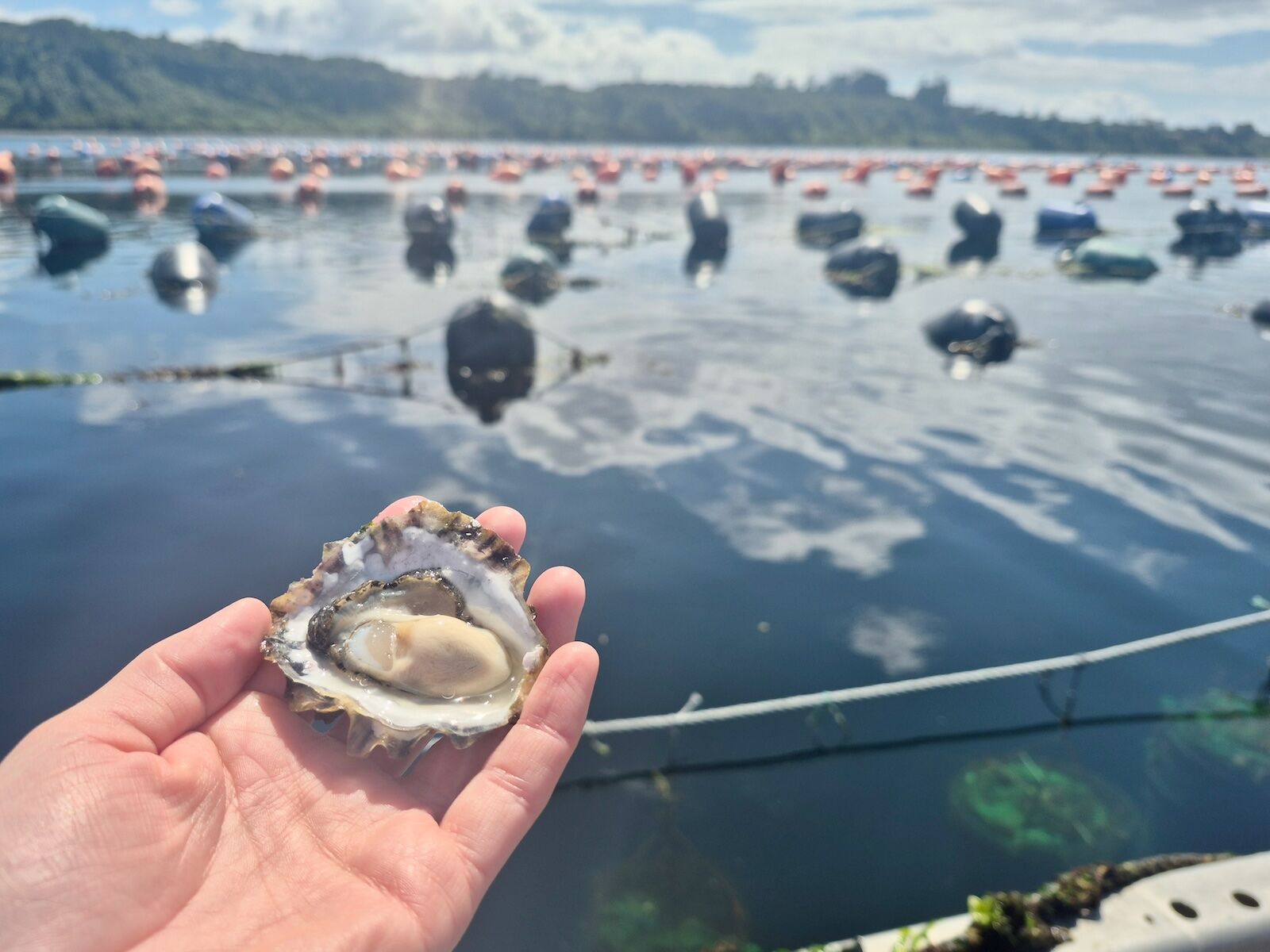
Tasting oysters at Justo García’s farm. Photo: Hannah D. Cooper
Returning to Refugia Chiloé at low tide, I was outfitted with a pair of rubber boots and a “gualato” (Chilote shellfishing rake) and ushered down to the shore to forage for my supper. As seagulls voiced their fury, my guide stressed the importance of leaving smaller clams and mussels, allowing time for them to mature and conserve balance. Pamela explained how shellfishing is part of the island economy, and it’s customary for Chilotes to collect their own mollusks, particularly around the new and full moons when tide patterns expose more of the shoreline.
Potatoes and shellfish (excluding oysters, which will often appear as an appetizer) are key components of that signature dish, the curanto, a ritualistic meal that brings people together and celebrates the island’s native bounty. Besides facilitating exchanges with agriculturists, Refugia Chiloé hosts a weekly curanto al hoyo. A pit dug into the earth is filled with volcanic stones, then set ablaze, topped with a medley of meat, shellfish, and potatoes, and left to simmer under a canopy of nalca leaves.
Coming from the Mapudungun word kurantu for heated stones, curanto marks milestone events and often concludes a minga. Though specific ingredients vary based on what’s in season, the combination of land-grown food and seafood links producers from both sides. Hailing from the days of the Chono people, this slow-cooking practice preserves tradition and allows time to decompress over chicha de manzana (Chilean cider, a Chilote specialty). Think of it as sobremesa, but with an island twist.