- News
- World
- Americas
- US politics
President Trump’s call for giving payments directly to Americans makes passing anything harder for Republicans, but there’s little appetite for shoring up Obamacare even with a deadline imminent, writes John Bowden
Monday 01 December 2025 20:13 GMTComments
 CloseTrump denies he pushed two-year Obamacare subsidies extension
Sign up for the daily Inside Washington email for exclusive US coverage and analysis sent to your inbox
Get our free Inside Washington email
Get our free Inside Washington email
Email*SIGN UPI would like to be emailed about offers, events and updates from The Independent. Read our Privacy notice
What is the Republican plan to avert massive monthly premium cost increases for millions of Americans who buy health insurance plans off the Obamacare public markets? Unclear, at best.
The White House has not rescheduled an event originally planned for last week where the president was expected to roll out a framework for addressing a key deadline for the administration and Republicans: the imminent end of federal subsidies for health care plans on the Affordable Care Act exchanges that were implemented as part of the 2022 Inflation Reduction Act.
Those subsidies expire at the end of the calendar year, and if left unaddressed will result in monthly rates jumping by hundreds of dollars (or more) for millions of Americans. The majority of Americans who purchase plans on the public exchanges receive some form of subsidies to offset costs including both annual premiums and individual deductibles.
Republicans in the Senate have released two dueling health care proposals, led by Senators Rick Scott and Bill Cassidy. In the House, the bipartisan Problem Solvers caucus has a third one. The White House, so frequently the final voice deciding what many in both chambers will ultimately support, has yet to lay out a formal plan while President Donald Trump, in comments to press and on Truth Social, expresses support for making direct payments to Americans to offset healthcare costs.
In short, there is no singular GOP plan. There are many, and with just 30 days to go before the subsidies expire and premium spikes begin, the GOP appears to have made little progress over the Thanksgiving holiday in coming together around a solution.
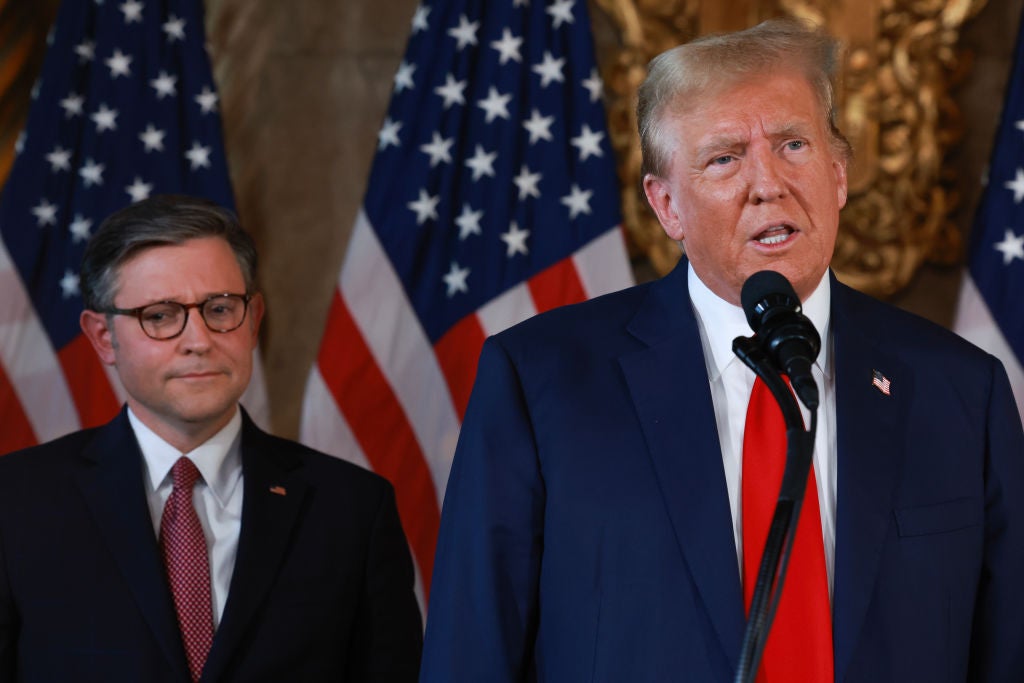 open image in galleryPresident Donald Trump and Speaker of the House Mike Johnson are dealing with the House GOP's latest split from the White House line, this time on the issue of extending Obamacare subsidies. (Getty Images)
A few hurdles are still in the way of Republicans unifying around one plan. For one, any plan needs the approval of enough Democrats to pass the Senate: With a 53-vote majority, Republicans will need seven Democrats to cross party lines. Their opponents are on board with extending the federal subsidies, but have signaled skepticism towards redirecting that money to individual health savings accounts if those funds can’t be used to pay annual premiums.
Then, of course, there’s the House GOP caucus, which has its own narrow margin to deal with and was reportedly responsible for getting the president to call off the announcement of his health care framework last week. Reports indicated that Speaker Mike Johnson informed Trump that a majority of his caucus was opposed to an extension of the Obamacare subsidies that the White House was set to propose.
On Air Force One, the president told reporters that he didn’t support a two-year extension of the subsidies, as had been reported. But he conceded that “[s]ome kind of extension may be necessary to get something else done,” given the short timeframe Congress and the White House have to act.
Senate Republicans including Cassidy, who spoke to Politico, were optimistic in late November that their party would rally around one plan that could satisfy both caucuses.
The resulting pressure to find a solution would force Democrats, Cassidy argued, to get on board.
“The president is there. He wants to do it,” Cassidy told the outlet. “You tell me who is at fault if something is not in place? Not Republicans. We have a deal and a plan. We are working hard to make sure something happens.”
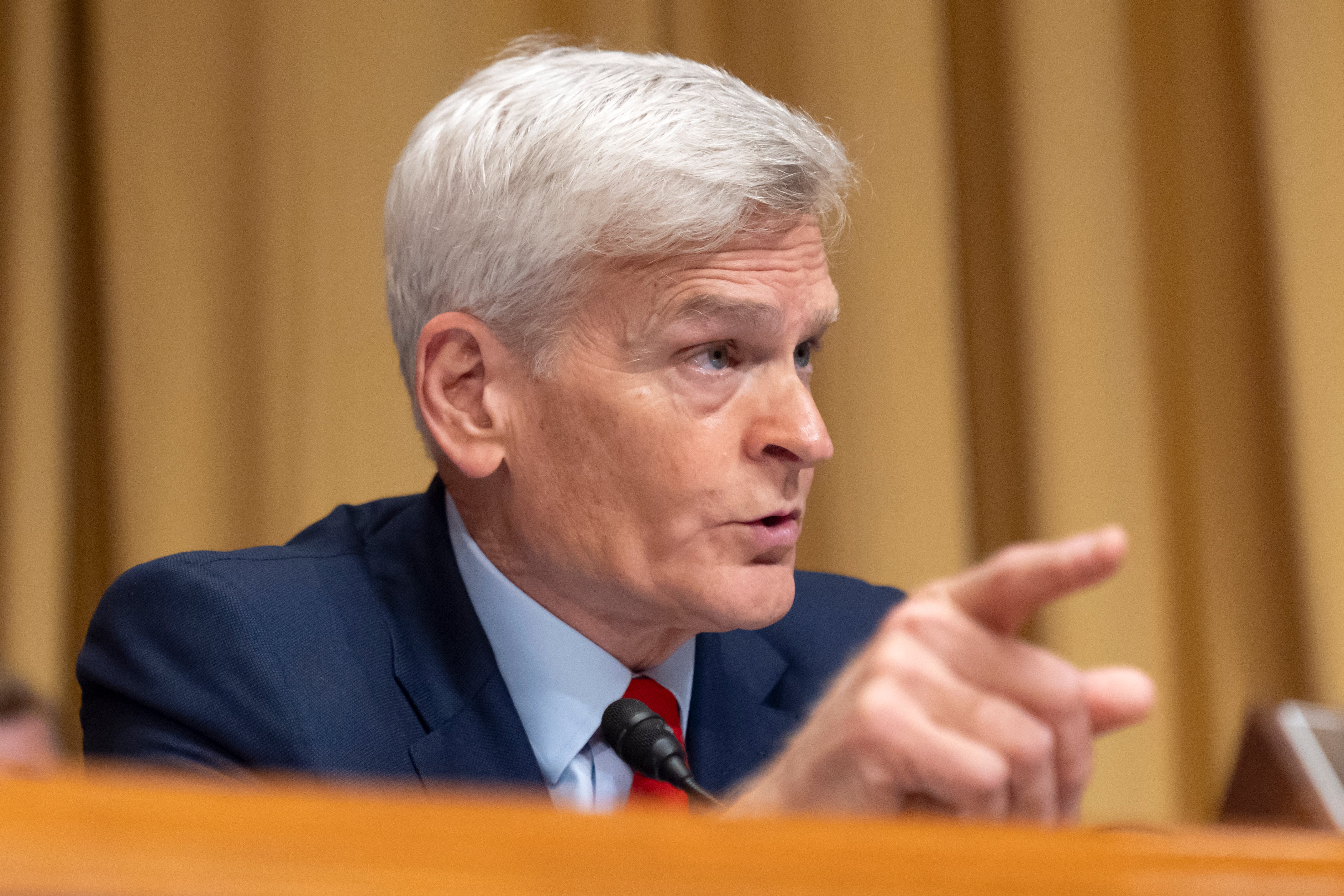 open image in gallerySeantor Bill Cassidy is behind one of two Senate GOP proposals that would allow Obamacare subsidies to expire (Copyright 2025 The Associated Press. All rights reserved.)
Whether they’ll be successful in winning Democrats over in the Senate remains to be seen. But the Democratics unity broke once again in November when a group in Senate, whom many progressives argued were working at the behest of Minority Leader Chuck Schumer, cut a deal to end the longest shutdown in U.S. history with a promise to vote on extending Obamacare subsidies in December.
The party could see defections again if no direct extension of the subsidies appears to be on the table. Right now, it doesn’t seem to be.
Scott and Cassidy have both released plans that would redirect those soon-to-be-expired subsidies into HSAs, accounts which under Scott’s plan could be used to pay premiums and other out-of-pocket costs. Cassidy’s would allow those payments to be used for all health care costs excluding premiums. Critics on the left argue that both plans undermine the core concept of the Affordable Care Act: Protections for sicker Americans and those with pre-existing health conditions, whom they argue will face higher costs if insurance companies are allowed to place them in high-risk pools or are merely priced out of the market by rising costs from an unstable health care economy.
If Republicans can’t get Democrats on board, the results next year could be disastrous, both for Americans and incumbent lawmakers’ electoral prospects. Even some conservatives who say the subsidies should end are calling for the payments to be reduced over time, rather than dropping off immediately.
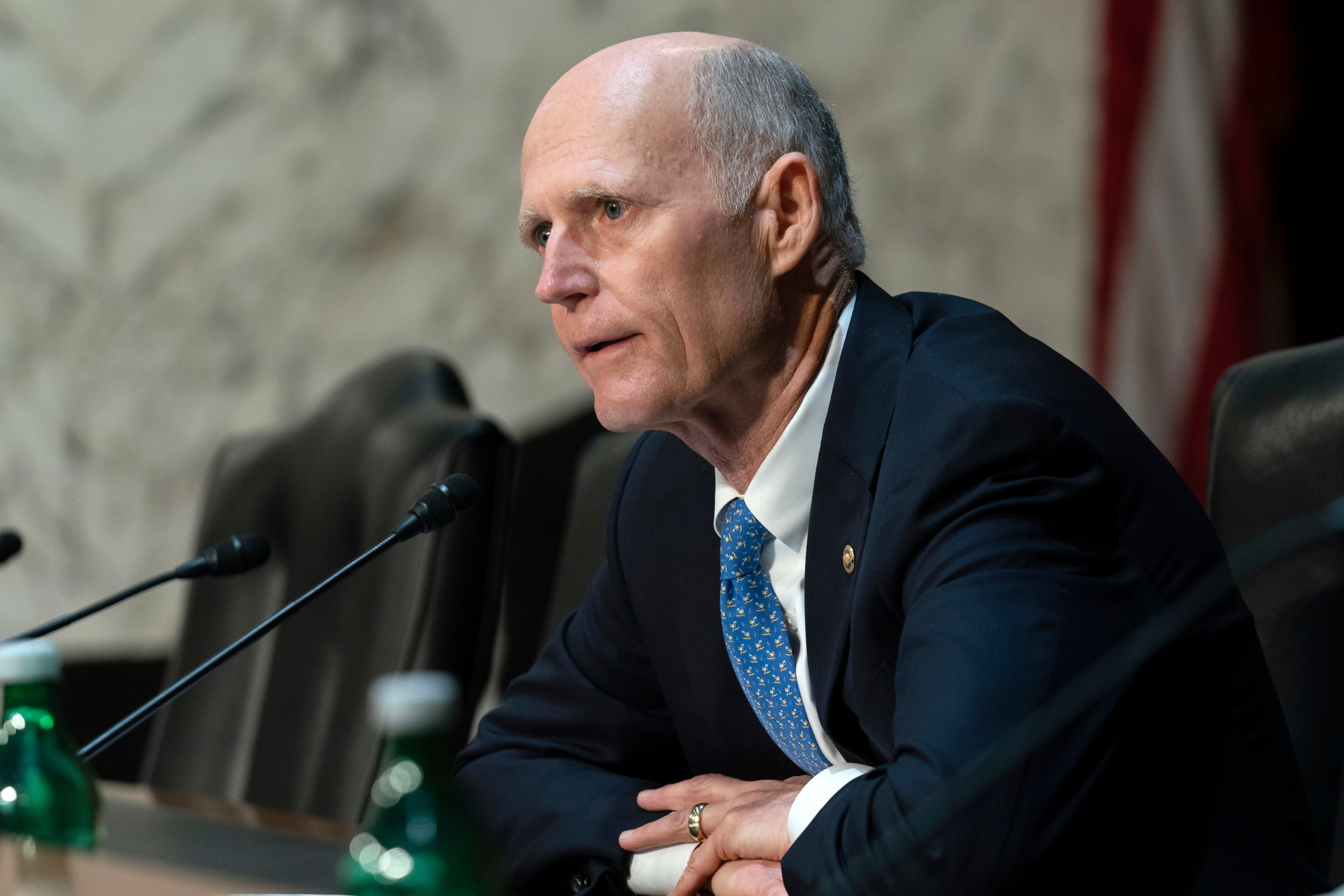 open image in galleryFlorida Senator Rick Scott’s plan would allow states to establish high-risk pools for sicker Americans, potentially isolating them from the rest of the market. (Copyright 2024 The Associated Press. All rights reserved.)
An analysis from the KFF found that Americans who receive health care subsidies, on average, will see their premiums more than double if the payments end in January.
“Expiration of the enhanced premium tax credits is estimated to more than double what subsidized enrollees currently pay annually for premiums—a 114 percent increase from an average of $888 in 2025 to $1,904 in 2026,” KFF’s report stated. IRA subsidies in 2024 and 2025 caused the average annual premium rate to remain stable, KFF noted, a reprieve for American consumers who are still battling the effects of inflation and persistenly high prices in other sectors of the economy.
For frontline Republicans, the effects could manifest at the ballot box in November. Affordability was seen as a driving issue behind a Democratic sweep of statewide races last month, both with far-left and more conservative candidates.
While most voters are likely to be unmoved by the Democrats’ stand on the issue during the shutdown, any shocks to the Obamacare exchanges will be felt, immediately, by millions. As polls show Trump’s approval rating on economic issues at its lowest point in years, the GOP is currently on course to make its biggest electoral issue much, much worse at precisely the worst time.
More about
Donald TrumpObamacareBill CassidyMike JohnsonRick ScottWhite HouseJoin our commenting forum
Join thought-provoking conversations, follow other Independent readers and see their replies
Comments